A Dream in Japanese 日本語のゆめ

N4 (est.) Chapter 52 of 60 of the Reading Trail, “Emma in Kanazawa” · 615 characters · 82 different kanji

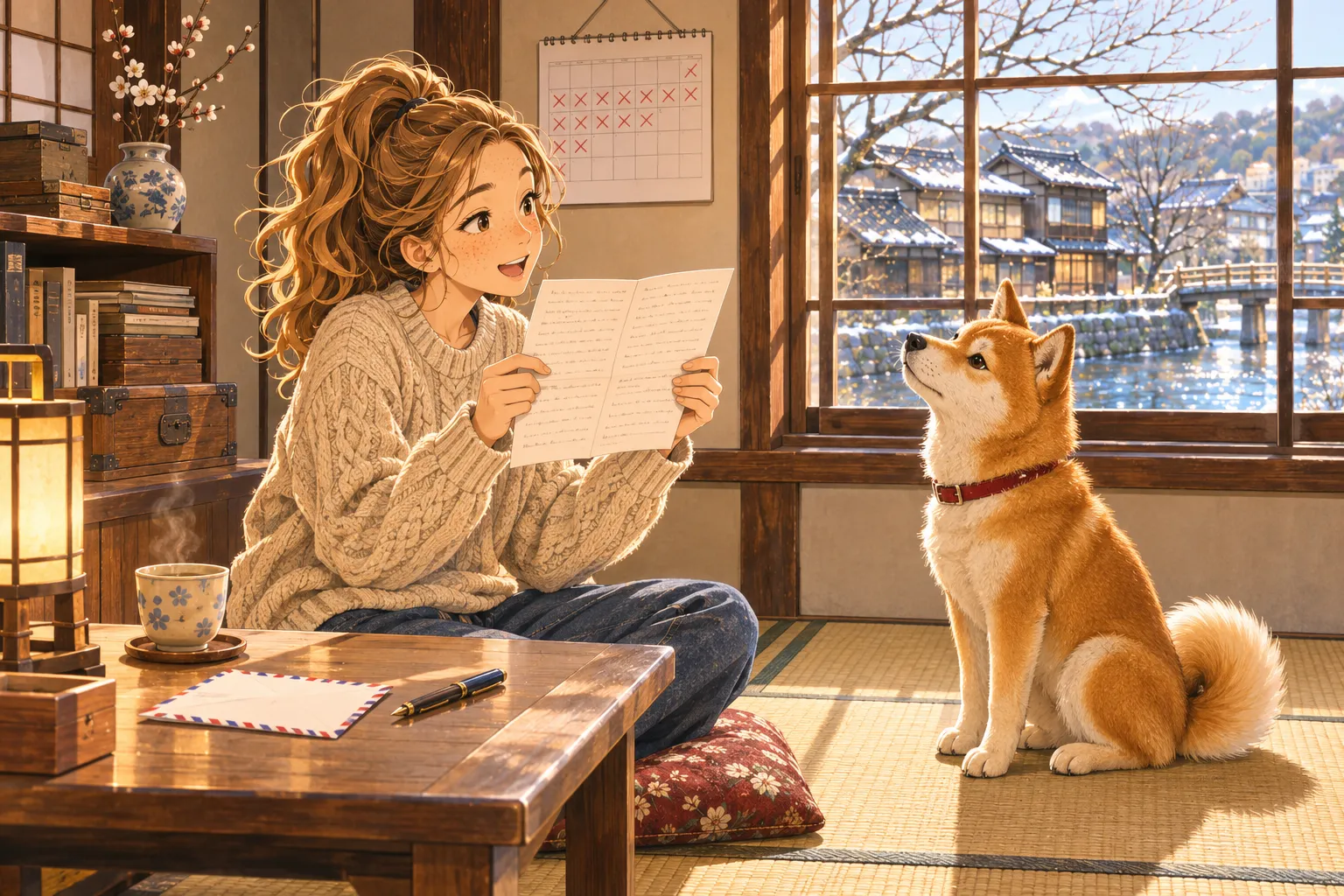
Illustration for the Japanese story A Dream in Japanese

Emma wakes from her first dream in Japanese and writes her brother Max a letter in two languages.

Tap any word for its meaning and sound.

日にち曜よう日びの朝あさ、エマはふとんの中なかで、少すこし考かんがえた。ゆめの中なかで、日本にほん語ごを話はなしていた。話はなし相あい手てはきなこで、きなこは金かな沢ざわのことばで「食たべまっし」と言いった。

On Sunday morning, Emma lay in her futon and thought for a moment. In her dream, she had been speaking Japanese. The one she was talking to was Kinako, and Kinako said "Eat up" in Kanazawa dialect.

「きなこ、ゆめの中なかで話はなしたよ。」

"Kinako, we talked in my dream."

きなこの耳みみだけが、少すこし動うごいた。

Only Kinako's ears twitched.

11時じごろ、葵あおいときなこと、川かわの道みちを歩あるいた。歩あるいているうちに、エマは近きん所じょの人ひとの名な前まえを全ぜん部ぶ知しっていることに気きがついた。川原かわらのおじいさんたちは、平へい日じつも日にち曜よう日びもボールを打うっている。葵あおいが投なげた石いしは、3回さんかいとんで、川かわにきえた。

Around eleven, Emma walked the river path with Aoi and Kinako. As they walked, Emma realized she knew the names of everyone in the neighborhood. The old men on the riverbank hit their balls on weekdays and Sundays alike. The stone Aoi threw skipped three times and vanished into the river.

「エマお姉ねえちゃん、今日きょう、しずかだね。」

"Emma, you're quiet today."

「日本にほん語ごでゆめを見みたの。」

"I had a dream in Japanese."

「へえ。じゃあ、もう日本にほん人じんだね。」

"Wow. Then you're Japanese now."

「うーん、その意い見けんには反はん対たいかな。」「和わ食しょくはすきだけど、なっとうだけはまだだめだもん。」

"Hmm, I'm going to disagree with that opinion." "I love Japanese food, but I still can't do natto."

「わたしもなっとう、きらい。でも和わ食しょくはすき。」

"I hate natto too. But I like Japanese food."

「じゃあ、葵あおいも日本にほん人じんじゃないね。」

"Then you're not Japanese either."

川かわの上うえでとりが鳴ないて、きなこもワンと鳴ないた。

A bird called over the river, and Kinako barked back.

午ご後ご、エマはマックスに手て紙がみを書かいた。左ひだりがえいご、右みぎが日本にほん語ご。

In the afternoon, Emma wrote Max a letter. English on the left, Japanese on the right.

「ニュースが三みっつある。第だい一いちに、日本にほん語ごでゆめを見みた。」「第だい二にに、せつぶんという文ぶん化かがあって、こっちのお父とうさんがオニになって、頭あたまを打うった。」「さいごに、陽翔はるとの絵えが県けんのコンテストに出でて、勝かちはしなかったけど、えらばれた。」

"I have three pieces of news. First, I had a dream in Japanese." "Second, there's this tradition called Setsubun, and my host dad was the demon and hit his head." "Last, Haruto's picture was in the prefectural contest, and it didn't win, but it was selected."

平へい日じつのことは、書かかなかった。学がっ校こうも茶さ道どう部ぶも店みせも、もうふつうのことだったからだ。それに、日本にほん語ごのほうが、気き持もちをよく表あらわせると感かんじた。

She didn't write about the weekdays. School, the tea club and the shop had all become ordinary. Besides, she felt Japanese said what she felt better now.

書かいたあと、日本にほん語ごのほうをきなこに読よんであげた。きなこはいい話はなし相あい手てだ。意い見けんを聞きいても、何なにも答こたえなかった。

When she had finished, she read the Japanese half to Kinako. Kinako is a good listener. When Emma asked her opinion, she didn't answer.

読よみながら、エマは自じ分ぶんの声こえが前まえと少すこしちがうと感かんじた。前まえは、毎まい日にちカレンダーの日ひを一ひとつずつけしていた。それをわすれているあいだに、2月にがつになっていた。そのことは、マックスへの手て紙がみには書かかなかった。

As she read, Emma felt that her voice sounded a little different from before. She used to cross off one day on the calendar every day. Somewhere while she had forgotten to, it had become February. She didn't put that in the letter to Max.

Check your understanding

3 questions about “A Dream in Japanese”. Tap an answer to check it.

1. エマのゆめの中なかで、話はなし相あい手てはだれでしたか。

2. エマは、どうして葵あおいの意い見けんに反はん対たいしましたか。

3. エマがマックスに書かいた手て紙がみは、どんな手て紙がみでしたか。

Words in this story

The first 40 of 134 different words in “A Dream in Japanese”, in the order you meet them, in dictionary form, with reading and English. Particles are left out.

WordReadingMeaning
日にち曜よう日びにちようびSunday
朝あさあさmorning; breakfast
エマエマEmma (name); Emma Carter, American exchange student
布ふ団とんふとんfuton; Japanese bedding consisting of a mattress and a duvet …
中なかなかinside; interior; among; within; middle
少すこしすこしa little; a bit; a small amount; a few; some
考かんがえるかんがえるto think (about, of); to think over; to ponder; to contemplate; to reflect (on)
夢ゆめゆめdream; dream; hope; wish; aspiration
日本にほん語ごにほんごJapanese (language)
話はなすはなすto talk; to speak; to converse; to chat; to tell
話はなし相あい手てはなしあいてperson with whom to speak; someone to talk to; companion; advisor; adviser
きなこきなこKinako (name); the Sato family's shiba
だだbe; is
金かな沢ざわかなざわKanazawa (city in Ishikawa)
言こと葉ばことばlanguage; dialect; word; phrase; expression
食たべるたべるto eat; to live on (e.g. a salary); to live off; to subsist on
ととif; when; and; as well as; with
言いういうto say; to utter; to declare; to name; to call
耳みみみみear; hearing; ear (for music, etc.)
動うごくうごくto move; to stir; to shift; to shake; to swing
十じゅう一いちじゅういちeleven; 11; jack
時じじhour; o'clock; (specified) time; when ...; during ...
ころころ(approximate) time; around; about; toward; suitable time (or condition)
葵あおいあおいAoi (female given name); the Sato daughter, 10
川かわかわriver; stream; River; the ... river
道みちみちroad; path; street; lane; passage
歩あるくあるくto walk
内うちうちinside; within; while (e.g. one is young); during; within (e.g. a day)
近きん所じょきんじょneighbourhood; neighborhood; vicinity
人ひとひとperson; someone; somebody; human beings; mankind
名な前まえなまえname; given name; first name
全ぜん部ぶぜんぶall; entire; whole; altogether
知しるしるto know; to be aware (of); to be conscious (of); to learn (of); to find out
ことことthing; matter; incident; occurrence; event
気きがつくきがつくto notice; to realize; to realise; to become aware (of); to perceive
河原かわらかわらdry riverbed; river beach
おじいさんおじいさんgrandfather; male senior-citizen; old man
たちたちpluralizing suffix (esp. for people and animals; formerly honorific)
平へい日じつへいじつweekday; ordinary days (i.e. non-holiday)
ボールボールball; ball (pitch delivered outside the strike zone)

Readings and meanings are adapted from JMdict and KANJIDIC2, property of the Electronic Dictionary Research and Development Group, used under its licence (CC BY-SA 4.0). Still learning the kana? See the hiragana chart and the katakana chart.

Keep reading

This is one of the free stories in Japanese reading practice. In the Literate Japanese app every word you tap is saved for review, a natural Japanese voice reads each sentence, and the next story is matched to the kanji you know. The app is coming soon to iOS and Android.

Read your way to 300 kanji

Literate Japanese has 280+ graded stories from kana-only to estimated N2, with furigana you can turn off, every word one tap away, and flashcards built from what you read. The 60-chapter Reading Trail to your first 300 kanji is free. Coming soon to iOS and Android.

Email me when it launches

Start today in the browser: read a free Japanese story →