Arriving in Kanazawa 金沢にきました

N5 (est.) Chapter 1 of 60 of the Reading Trail, “Emma in Kanazawa” · 370 characters · 14 different kanji

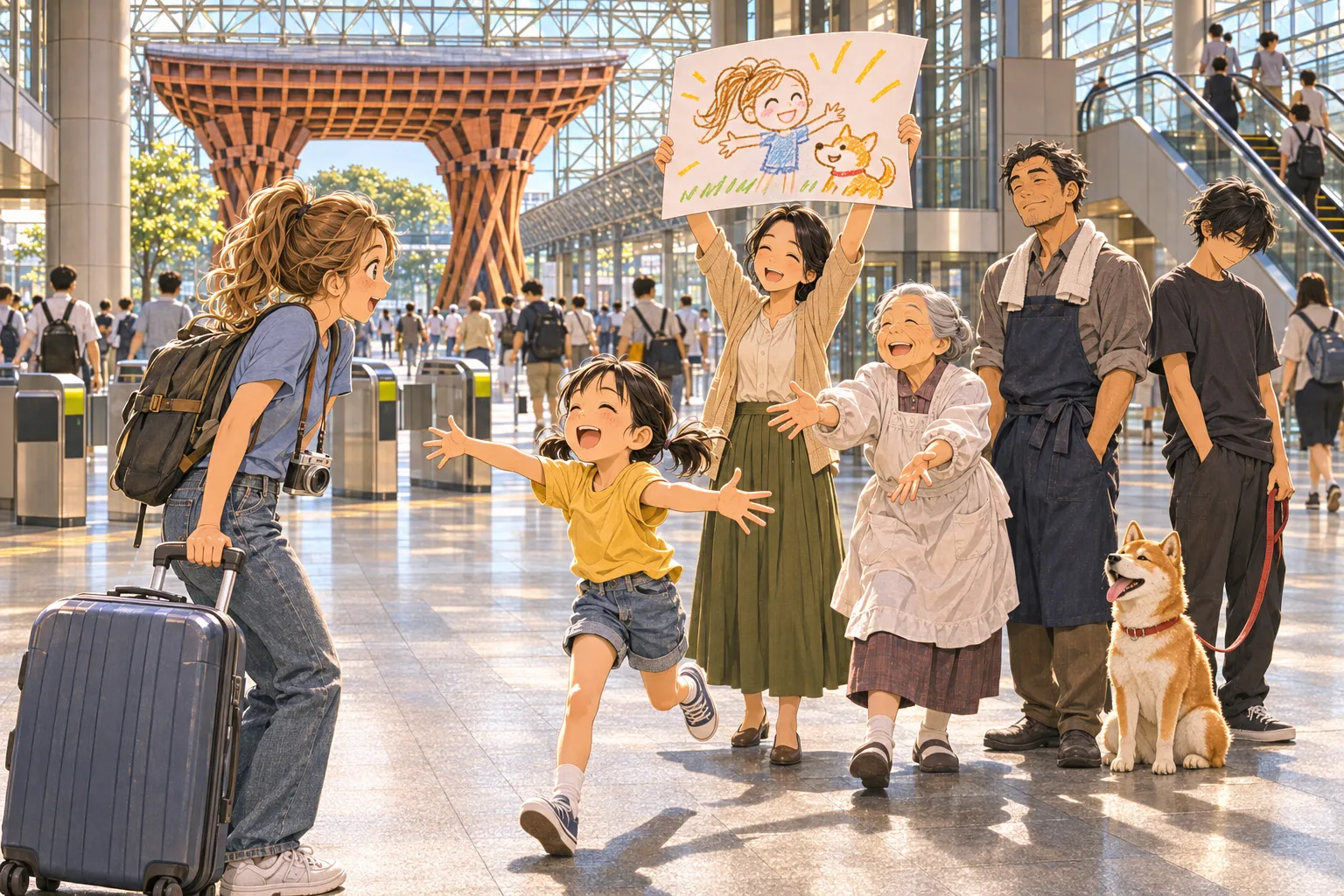
Illustration for the Japanese story Arriving in Kanazawa

After a long trip from Portland, Emma steps off the bullet train in Kanazawa and meets the Sato family.

Tap any word for its meaning and sound.

でんしゃのドアがあいて、エマはおりました。ポートランドから、とてもとおかったです。金かな沢ざわのなつは、あつかったです。エマは大おおきいかばんをもちました。エスカレーターでおりて、ひろいところに出でました。そこには、人ひとがたくさんいました。

The train doors opened, and Emma stepped off. It had been a very long way from Portland. Summer in Kanazawa was hot. Emma picked up her big bag. She rode the escalator down and came out into a wide hall. There were lots of people waiting there.

「エマちゃん!」

"Emma!"

葵あおいがはしってきました。うしろに、由美子ゆみこさんと浩ひろしさんとフミさんがいました。由美子ゆみこさんが、大おおきいかみをふりました。かみには、エマときなこのえがありました。陽翔はるとは、いちばんうしろに、きなこといました。

Aoi came running. Behind her were Yumiko, Hiroshi, and Fumi. Yumiko waved a big sheet of paper. On it was a drawing of Emma and Kinako. Haruto stood at the very back with Kinako.

「どうも。」

"Hey."

陽翔はるとは、ほかになにもいいませんでした。

Haruto didn't say anything else.

「エマです。よろしくおねがいします。」

"I'm Emma. It's very nice to meet you."

フミさんが、まえに出でました。

Fumi stepped forward.

「エマちゃん、あんやと。」

"Thank you, Emma dear."

エマは、そのことばがわかりませんでした。でも、きもちはわかりました。

Emma didn't know that word. But she understood the feeling.

くるまのなかで、みんなのはなしははやかったです。

In the van, everyone talked fast.

「金かな沢ざわは、はじめて?」

"Is this your first time in Kanazawa?"

「はい、はじめてです。」

"Yes, it's my first time."

エマは、はんぶんぐらいわかりました。

Emma understood about half of everything.

「今日きょうは、ゆっくりしてね。」

"Take it easy today, okay?"

きなこは、エマのとなりでねました。今日きょうから、エマは金かな沢ざわの人ひとです。

Kinako went to sleep next to Emma. As of today, Emma is a Kanazawa girl.

Check your understanding

3 questions about “Arriving in Kanazawa”. Tap an answer to check it.

1. 由美子ゆみこさんの大おおきいかみには、なにがありましたか。

2. 陽翔はるとは、どこにいましたか。

3. エマは、フミさんのことばがわかりましたか。

Words in this story

The first 40 of 65 different words in “Arriving in Kanazawa”, in the order you meet them, in dictionary form, with reading and English. Particles are left out.

WordReadingMeaning
電でん車しゃでんしゃtrain; electric train
ドアドアdoor
開あくあくto open (e.g. doors); to open (e.g. business, etc.); to be empty
エマエマEmma (name); Emma Carter, American exchange student
降おりるおりるto descend (e.g. a mountain); to go down; to come down; to alight (e.g. from bus) …
ポートランドポートランドPortland (city in Oregon, USA)
とてもとてもvery; awfully; exceedingly; (not) at all; by no means
遠とおいとおいfar; distant; far away; a long way off; in the distance
金かな沢ざわかなざわKanazawa (city in Ishikawa)
夏なつなつsummer
暑あついあついhot; warm; sultry; heated; passionate
大おおきいおおきいbig; large; great; loud; extensive
かばんかばんbag; satchel; briefcase; basket
持もつもつto hold (in one's hand); to take; to carry; to possess; to have
エスカレーターエスカレーターescalator
広ひろいひろいspacious; vast; wide
所ところところplace; spot; scene; site; address
出でるでるto leave; to exit; to go out; to come out; to get out
そこそこthere (place relatively near listener); there (place just mentioned); that place …
人ひとひとperson; someone; somebody; human beings; mankind
たくさんたくさんa lot; lots; plenty; many; a large number
いるいるto be (of animate objects); to exist; to stay; to be ...-ing
ちゃんちゃんsuffix for familiar person
葵あおいあおいAoi (female given name); the Sato daughter, 10
走はしるはしるto run; to run (of a vehicle); to drive; to travel; to move
後うしろうしろback; behind; rear
由美子ゆみこゆみこYumiko (female given name); Sato Yumiko, Emma's host mother
さんさんMr; Mrs; Miss; Ms; -san
ととif; when; and; as well as; with
浩ひろしひろしHiroshi (male given name); Sato Hiroshi, Emma's host father
フミフミFumi (female given name); the Sato grandmother
紙かみかみpaper
振ふるふるto wave; to shake; to swing; to sprinkle; to throw (dice)
きなこきなこKinako (name); the Sato family's shiba
絵ええpicture; drawing; painting; sketch; image (TV, film, etc.)
あるあるto be; to exist; to live; to have; to be located
陽翔はるとはるとHaruto (male given name); the Sato son, 16
一いち番ばんいちばんnumber one; first; first place; best; most
どうもどうもthank you; thanks; much (thanks); very (sorry); quite (regret)
他ほかほかanother place; some other place; somewhere else; outside; another (person or thing)

Readings and meanings are adapted from JMdict and KANJIDIC2, property of the Electronic Dictionary Research and Development Group, used under its licence (CC BY-SA 4.0). Still learning the kana? See the hiragana chart and the katakana chart.

Keep reading

This is one of the free stories in Japanese reading practice. In the Literate Japanese app every word you tap is saved for review, a natural Japanese voice reads each sentence, and the next story is matched to the kanji you know. The app is coming soon to iOS and Android.

Read your way to 300 kanji

Literate Japanese has 280+ graded stories from kana-only to estimated N2, with furigana you can turn off, every word one tap away, and flashcards built from what you read. The 60-chapter Reading Trail to your first 300 kanji is free. Coming soon to iOS and Android.

Email me when it launches

Start today in the browser: read a free Japanese story →