
First Snow はじめてのゆき

N4 (est.) Chapter 36 of 60 of the Reading Trail, “Emma in Kanazawa” · 412 characters · 53 different kanji

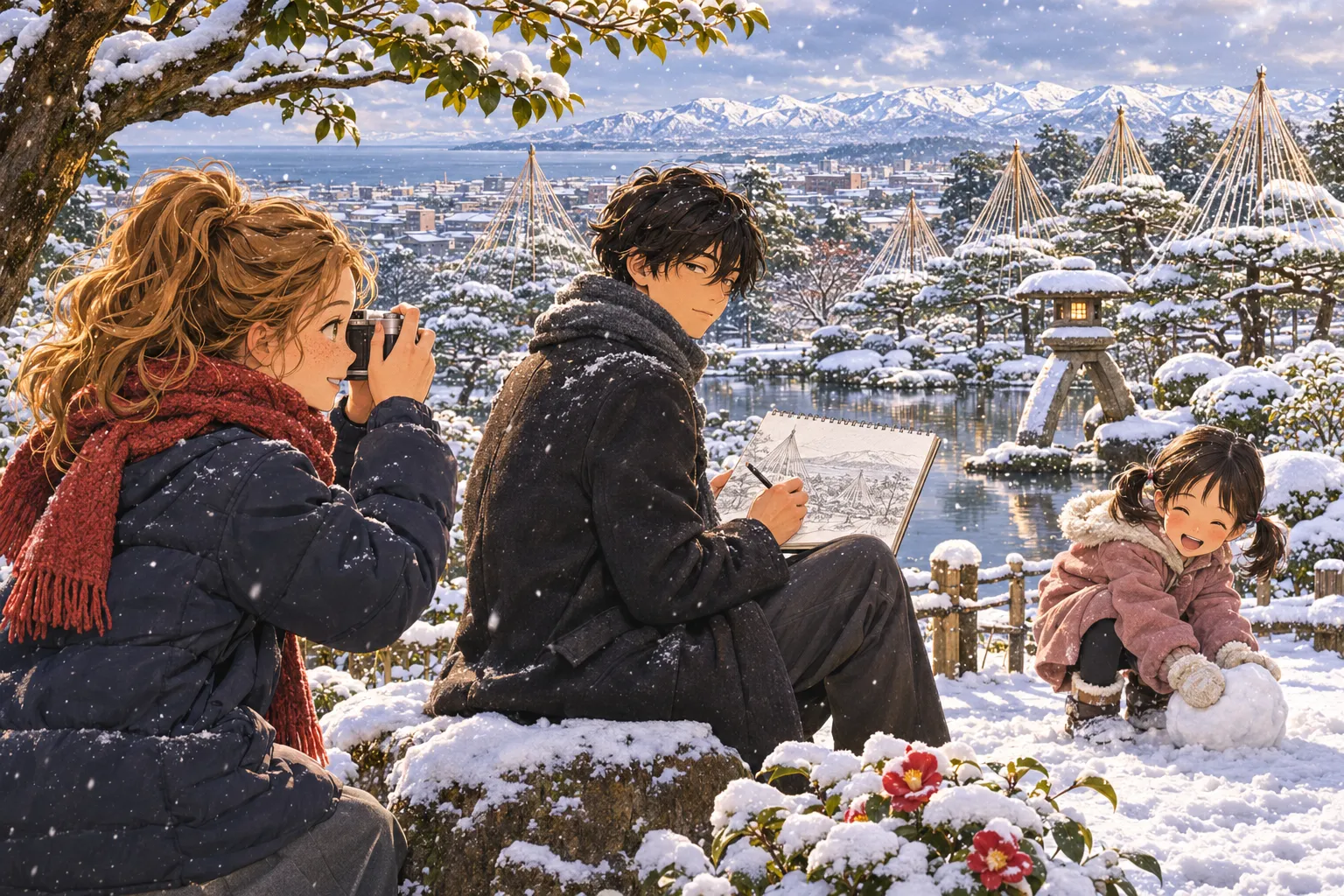
Illustration for the Japanese story First Snow

The first snow of the year turns Kinako into a puppy, and the family walks to Kenrokuen.

Tap any word for its meaning and sound.

12月じゅうにがつ20日はつか。夜よるに、ゆきがふった。家いえの前まえの車くるまも、じてんしゃ2台だいも、白しろくなっていた。

December 20. Snow fell in the night. The car out front and both bikes had turned white.

きなこは雨あめがきらいで、雨あめの日ひはあまり外そとに出でたがらない。でも、ゆきはちがった。戸とを引ひくと、きなこは走はしって出でていった。家いえの前まえで、きなこはぶるぶると体からだをふって、頭あたまの上うえのゆきをおとした。それから、また走はしった。

Kinako hates rain, and on rainy days she doesn't like to go out. But snow was different. When they slid the door open, Kinako shot outside. Out front, Kinako shook herself and knocked the snow off her head. Then she ran some more.

「ゆきがふると、きなこは元げん気きになるね。」

"When it snows, Kinako gets so lively."

葵あおいは子こども用ようのスコップで、ゆきをあつめた。

Aoi gathered snow with her child-size shovel.

午ご後ご、みんなで兼六園けんろくえんに行いった。木きの上うえから、ロープがたくさん出でていた。ゆきつりだ。

In the afternoon, everyone went to Kenrokuen. Lots of ropes came down from the tops of the trees. The yukitsuri.

「ゆきが多おおいと、えだがおれるの。だから、毎まい年とし11月じゅういちがつにかけるのよ。」

"When there's a lot of snow, the branches break. So they put these up every November."

上うえのほうから西にしを見みると、白しろい町まちと野の原はらの先さきに、海うみが見みえた。

Looking west from up high, they could see the sea beyond the white town and fields.

「日本にほん海かい。」

"The Sea of Japan."

西にしの海うみから、つめたい風かぜがふいてきた。うしろには、谷たにと山やまの先さきに、白山はくさんが見みえた。浩ひろしの話はなしでは、11月じゅういちがつから見みえなかったそうだ。白山はくさんは、野の原はらよりもっと白しろかった。

A cold wind blew in off the sea to the west. Behind them, past the valleys and hills, they could see Mt. Hakusan. According to Hiroshi, it hadn't been visible since November. Hakusan was even whiter than the fields.

陽翔はるとは、つめたい手てでスケッチをはじめた。スケッチの中なかにも、谷たにと海うみがあった。エマは、そんな陽翔はるとをとった。陽翔はるとは少すこしだけエマを見みた。

Haruto started sketching with cold hands. His sketch had the valleys and the sea in it, too. Emma took a picture of Haruto sketching. Haruto glanced at her.

「…いいよ。」

"…Fine."

そして、またスケッチにもどった。

And he went back to his sketch.

夕ゆう方がた、家いえに帰かえると、きなこはこたつの前まえで、もうねていた。

When they got home that evening, Kinako was already asleep in front of the kotatsu.

Check your understanding

3 questions about “First Snow”. Tap an answer to check it.

1. ゆきの日ひ、きなこはどうしましたか。

2. どうして兼六園けんろくえんの木きにロープをかけるのですか。

3. 上うえのほうから西にしを見みると、何なにが見みえましたか。

Words in this story

The first 40 of 92 different words in “First Snow”, in the order you meet them, in dictionary form, with reading and English. Particles are left out.

WordReadingMeaning
十じゅう二に月がつじゅうにがつDecember; twelfth month of the lunar calendar
二十日はつかはつか20th day of the month; 20 days
夜よるよるnight; evening; dinner
雪ゆきゆきsnow; snowfall
降ふるふるto fall (of rain, snow, ash, etc.); to come down; to form (of frost) …
家いえいえhouse; residence; dwelling; home; family
前まえまえin front (of); before (e.g. a building); before; earlier; previously
車くるまくるまcar; automobile; vehicle; wheel; castor
自じ転てん車しゃじてんしゃbicycle; bike
二ににtwo; 2
台だいだいstand; rest; base; pedestal; platform
白しろいしろいwhite; blank (e.g. paper); uncolored; unmarked; spotless
なるなるto become; to get; to grow; to turn; to reach
きなこきなこKinako (name); the Sato family's shiba
雨あめあめrain; rainy day; rainy weather; the November suit (in hanafuda)
嫌きらいきらいdisliking; hating; detesting; tendency; smack (of)
だだbe; is
日ひひday; days; sun; sunshine; sunlight
あまりあまり(not) very; (not) much; too much; excessively; so ... that
外そとそとoutside; exterior; the open (air); other place; somewhere else
出でるでるto leave; to exit; to go out; to come out; to get out
でもでもbut; however; though; nevertheless; still
違ちがうちがうto differ (from); to be different; to be distinct; to be unlike; to vary
戸ととdoor (esp. Japanese-style); shutter; window shutter; entrance (to a home)
引ひくひくto pull; to tug; to lead (e.g. a horse); to draw (attention, sympathy, etc.) …
ととif; when; and; as well as; with
走はしるはしるto run; to run (of a vehicle); to drive; to travel; to move
ぶるぶるぶるぶるtrembling (with fear, anger, etc.); shivering (with cold); shaking; quivering
体からだからだbody; torso; trunk; build; physique
振ふるふるto wave; to shake; to swing; to sprinkle; to throw (dice)
頭あたまあたまhead; hair (on one's head); mind; brains; intellect
上うえうえabove; over; up; top; summit
落おとすおとすto drop; to lose; to let fall; to shed (light); to cast (one's gaze)
それからそれからand then; after that
またまたagain; once more; once again; another time; some other time
元げん気きげんきlively; full of spirit; energetic; vigorous; vital
葵あおいあおいAoi (female given name); the Sato daughter, 10
子こ供ども用ようこどもようfor use by children; for children
スコップスコップshovel; spade; scoop
集あつめるあつめるto collect; to assemble; to gather

Readings and meanings are adapted from JMdict and KANJIDIC2, property of the Electronic Dictionary Research and Development Group, used under its licence (CC BY-SA 4.0). Still learning the kana? See the hiragana chart and the katakana chart.

Keep reading

This is one of the free stories in Japanese reading practice. In the Literate Japanese app every word you tap is saved for review, a natural Japanese voice reads each sentence, and the next story is matched to the kanji you know. The app is coming soon to iOS and Android.

Read your way to 300 kanji

Literate Japanese has 280+ graded stories from kana-only to estimated N2, with furigana you can turn off, every word one tap away, and flashcards built from what you read. The 60-chapter Reading Trail to your first 300 kanji is free. Coming soon to iOS and Android.

Email me when it launches

Start today in the browser: read a free Japanese story →