
Omicho Market 近江町市場

N5 (est.) Chapter 5 of 60 of the Reading Trail, “Emma in Kanazawa” · 346 characters · 30 different kanji

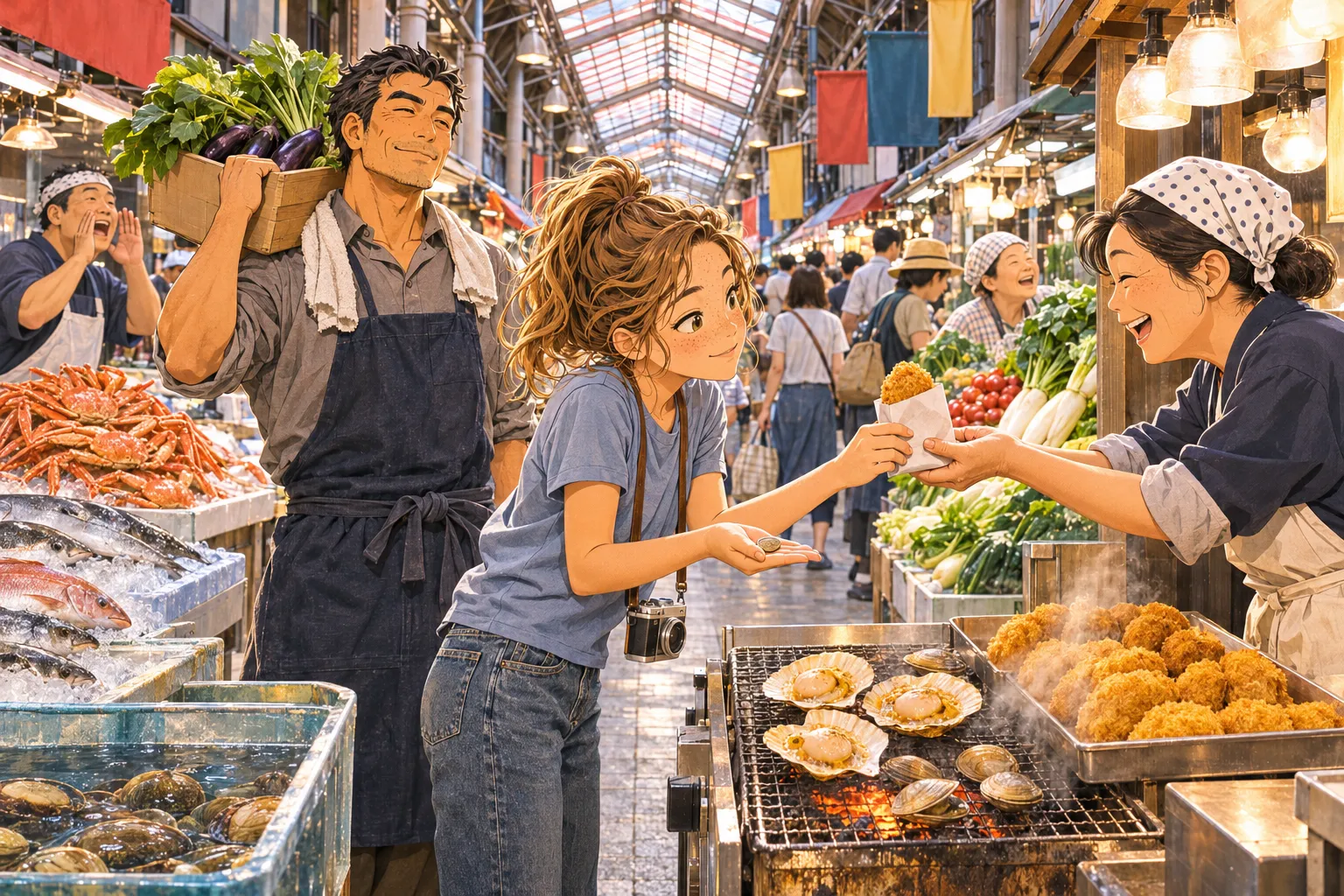
Illustration for the Japanese story Omicho Market

Emma gets up before dawn to buy vegetables with Hiroshi and meets the shop's oldest customer.

Tap any word for its meaning and sound.

まだくらかったです。エマは、浩ひろしさんのくるまにのりました。くるまは川かわをわたって、市しのやさいのいちばへいきました。やさいが、たくさんたくさんありました。浩ひろしさんは、一ひとつずつおしえました。

It was still dark. Emma got into Hiroshi's truck. The truck crossed the river and went to the city's produce market. There were vegetables everywhere, piles and piles of them. Hiroshi showed them to her one at a time.

「なす。みつば。」

"Eggplant. Mitsuba."

「みつば……草くさですか。」

"Mitsuba... is that grass?"

「ちがう。」

"No."

それから、二人ふたりは近江町市場おうみちょういちばへいきました。近江町市場おうみちょういちばは、市しでいちばんにぎやかです。あちこちで、大おおきいこえがしました。エマの耳みみは、とてもいそがしかったです。水みずの中なかには、貝かいがたくさんいました。となりでは、火ひの上うえで、貝かいが口くちをあけました。

Then the two of them went to Omicho Market. Omicho Market is the liveliest place in the city. Loud voices rang out everywhere. Emma's ears were very busy. There were lots of shellfish in the water. Next door, shellfish opened their mouths over a fire.

「いくらですか。」

"How much is it?"

コロッケは、一ひとつ200円えんでした。エマは、百円玉ひゃくえんだまを二ふたつ出だしました。はじめての百円玉ひゃくえんだまでした。

The croquettes were two hundred yen each. Emma handed over two hundred-yen coins. They were her very first hundred-yen coins.

みせには、もう竹田たけださんがいました。竹田たけださんは、82さいです。足あしがよくありませんが、いつもきます。竹田たけださんは、エマを上うえから下したまでみました。エマは、やさいのきもちでした。

At the shop, Mrs. Takeda was already waiting. Mrs. Takeda is eighty-two. Her legs aren't good, but she always comes. Mrs. Takeda looked Emma over from top to bottom. Emma felt like a vegetable on display.

「ふうん。いい手てね。」「犬いぬのきなこちゃんは、げんき?」

"Hmm. Good hands." "And how's Kinako, your dog?"

「げんきです。なす二に本ほんですね。」

"She's fine. Two eggplants, right?"

Check your understanding

3 questions about “Omicho Market”. Tap an answer to check it.

1. エマは、だれのくるまにのりましたか。

2. コロッケは、一ひとついくらでしたか。

3. 竹田たけださんは、なにをかいましたか。

Words in this story

The first 40 of 72 different words in “Omicho Market”, in the order you meet them, in dictionary form, with reading and English. Particles are left out.

WordReadingMeaning
まだまだstill; as yet; only; (not) yet; more
暗くらいくらいdark; gloomy; murky; depressed; dispirited
エマエマEmma (name); Emma Carter, American exchange student
浩ひろしひろしHiroshi (male given name); Sato Hiroshi, Emma's host father
さんさんMr; Mrs; Miss; Ms; -san
車くるまくるまcar; automobile; vehicle; wheel; castor
乗のるのるto get on (train, plane, bus, ship, etc.); to get in; to board; to take; to embark
川かわかわriver; stream; River; the ... river
渡わたるわたるto cross over; to go across; to extend; to cover; to range
市ししcity
野や菜さいやさいvegetable; marijuana; cannabis
市いち場ばいちば(town) market; (street) market; marketplace
行いくいくto go; to move (towards); to head (towards); to leave (for); to move through
たくさんたくさんa lot; lots; plenty; many; a large number
あるあるto be; to exist; to live; to have; to be located
一ひとつひとつone; for one thing; only
ずつずつapiece; each; at a time; piecemeal
教おしえるおしえるto teach; to instruct; to tell; to inform; to show
なすなすeggplant (Solanum melongena); aubergine
みつばみつばmitsuba (Cryptotaenia japonica); Japanese honewort; Japanese honeywort; Japanese chervil …
草くさくさgrass; weed; herb; thatch; ninja
ですですbe; is
違ちがうちがうto differ (from); to be different; to be distinct; to be unlike; to vary
それからそれからand then; after that
二人ふたりふたりtwo persons; two people; pair; couple
近江町市場おうみちょういちばおうみちょういちばOmicho Market (Kanazawa)
一いち番ばんいちばんnumber one; first; first place; best; most
賑にぎやかにぎやかbustling; busy; crowded; lively; prosperous
あちこちあちこちhere and there; various places; all around; all over; everywhere
大おおきいおおきいbig; large; great; loud; extensive
声こえこえvoice; singing (of a bird); chirping (of an insect); hoot; voice
するするto do; to carry out; to perform; to cause to become; to make (into)
耳みみみみear; hearing; ear (for music, etc.)
とてもとてもvery; awfully; exceedingly; (not) at all; by no means
忙いそがしいいそがしいbusy; occupied; hectic; restless; hurried
水みずみずwater (esp. cool or cold); fluid (esp. in an animal tissue); liquid; flood; floodwaters
中なかなかinside; interior; among; within; middle
貝かいかいshellfish; seashell; shell
いるいるto be (of animate objects); to exist; to stay; to be ...-ing
隣となりとなりnext (to); adjoining; adjacent; house next door; neighbouring house

Readings and meanings are adapted from JMdict and KANJIDIC2, property of the Electronic Dictionary Research and Development Group, used under its licence (CC BY-SA 4.0). Still learning the kana? See the hiragana chart and the katakana chart.

Keep reading

This is one of the free stories in Japanese reading practice. In the Literate Japanese app every word you tap is saved for review, a natural Japanese voice reads each sentence, and the next story is matched to the kanji you know. The app is coming soon to iOS and Android.

Read your way to 300 kanji

Literate Japanese has 280+ graded stories from kana-only to estimated N2, with furigana you can turn off, every word one tap away, and flashcards built from what you read. The 60-chapter Reading Trail to your first 300 kanji is free. Coming soon to iOS and Android.

Email me when it launches

Start today in the browser: read a free Japanese story →