
Piano ピアノ

Kana only Letter 18 of 20 of “Aoi's Letters” · 188 characters · kana only

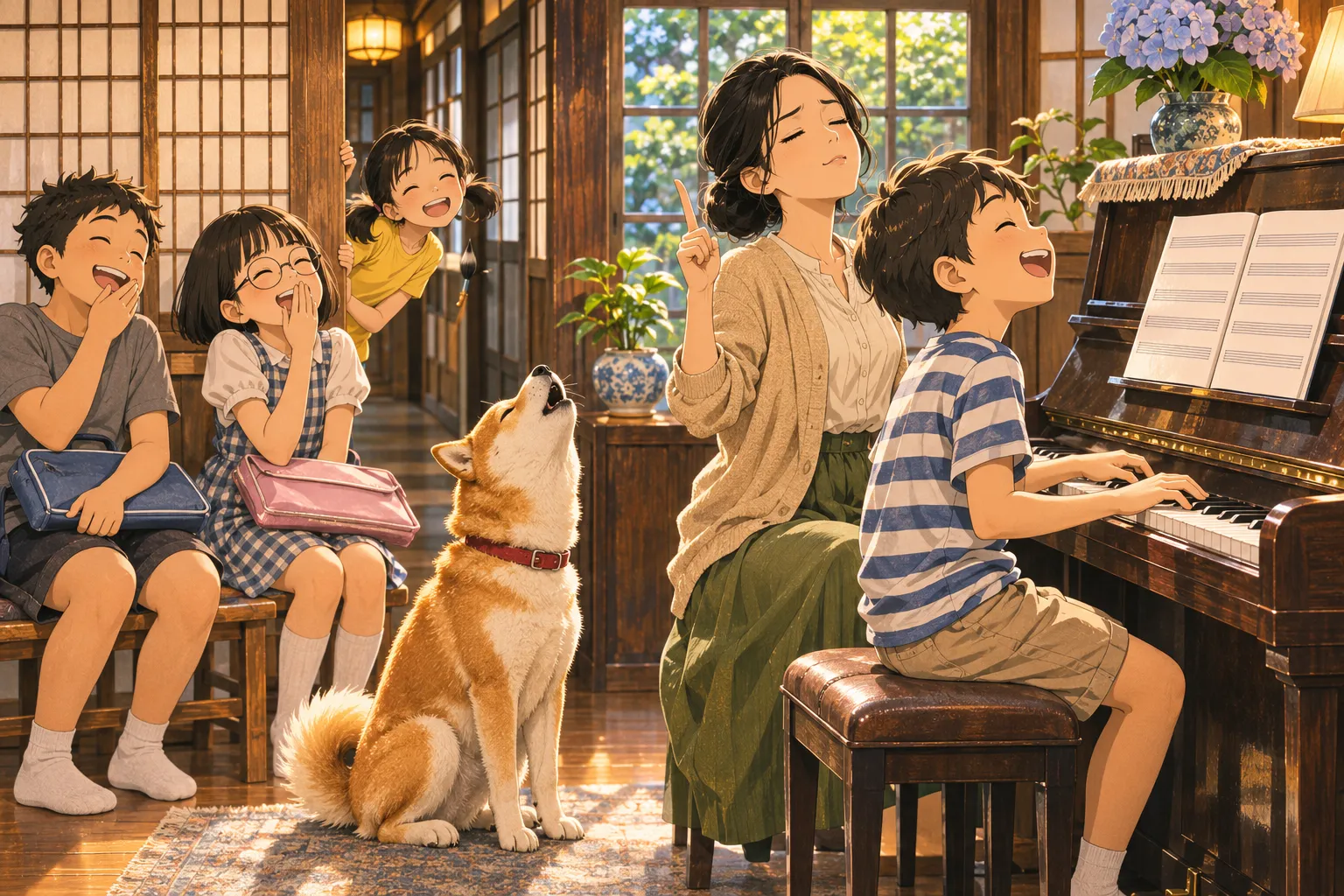
Illustration for the Japanese story Piano

Mom teaches piano at home twice a week, Aoi quit after a year, and Kinako sings along.

Tap any word for its meaning and sound.

エマさん、こんにちは。おかあさんは、ピアノのせんせいです。かようびともくようびに、こどもがうちにきます。ひるからよるまで、ピアノです。うちは、とてもうるさいです。おかあさんのピアノは、とてもきれいです。

Hi, Emma. My mom is a piano teacher. On Tuesdays and Thursdays, kids come to our house. It's piano from afternoon until night. Our house gets really loud. Mom plays really beautifully.

わたしも、1ねんピアノをならいました。でも、やめました。いまは、しゅうじです。

I took piano lessons for a year too. But I quit. Now I do calligraphy instead.

きなこも、ピアノといっしょにうたいます。おかあさんは、すこしこまります。こどもたちは、とてもよろこびます。

Kinako sings along with the piano. Mom is a little bit annoyed. The kids love it.

エマさんは、ピアノをひきますか。あおいより

Emma, do you play the piano? From Aoi

Check your understanding

3 questions about “Piano”. Tap an answer to check it.

1. おかあさんは、なんのせんせいですか。

2. こどもたちは、なんようびにきますか。

3. ピアノといっしょに、だれがうたいますか。

Words in this story

All 35 different words in “Piano”, in the order you meet them, in dictionary form, with reading and English. Particles are left out.

WordReadingMeaning
エマエマEmma (name); Emma Carter, American exchange student
さんさんMr; Mrs; Miss; Ms; -san
こんにちはこんにちはhello; good day; good afternoon
お母かあさんおかあさんmother; mom; mum; ma; wife
ピアノピアノpiano (instrument); piano (dynamic)
先せん生せいせんせいteacher; instructor; master; sensei …
ですですbe; is
火か曜よう日びかようびTuesday
ととif; when; and; as well as; with
木もく曜よう日びもくようびThursday
子こ供どもこどもchild; children
うちうちone's house; one's home; one's family; one's household; house
来くるくるto come (spatially or temporally); to approach; to arrive; to come back …
昼ひるひるnoon; midday; daytime; lunch
夜よるよるnight; evening; dinner
とてもとてもvery; awfully; exceedingly; (not) at all; by no means
うるさいうるさいnoisy; loud; annoying; troublesome; tiresome
綺き麗れいきれいpretty; lovely; beautiful; fair; clean
私わたしわたしI; me
一いちいちone; 1; best; first; foremost
年ねんねんyear; counter for years (e.g. of an era), grades (e.g. school) …
習ならうならうto take lessons in; to be taught; to learn (from a teacher); to study (under a teacher) …
でもでもbut; however; though; nevertheless; still
やめるやめるto stop (an activity); to cease; to discontinue; to end; to quit
今いまいまnow; the present time; just now; soon; immediately
習しゅう字じしゅうじpenmanship; calligraphy
きなこきなこKinako (name); the Sato family's shiba
一いっ緒しょいっしょ(doing) together; one lump; one mixture; the same category; the same
歌うたううたうto sing; to sing of (love, beauty, etc.) in a poem; to express in the form of a poem …
少すこしすこしa little; a bit; a small amount; a few; some
困こまるこまるto be troubled; to have difficulty; to be in a fix; to be at a loss; to be stumped
子こ供どもたちこどもたちchildren; kids
喜よろこぶよろこぶto be delighted; to be glad; to be pleased; to rejoice; to congratulate
弾ひくひくto play (a stringed or keyboard instrument)
葵あおいあおいAoi (female given name); the Sato daughter, 10

Readings and meanings are adapted from JMdict and KANJIDIC2, property of the Electronic Dictionary Research and Development Group, used under its licence (CC BY-SA 4.0). Still learning the kana? See the hiragana chart and the katakana chart.

Keep reading

This is one of the free stories in Japanese reading practice. In the Literate Japanese app every word you tap is saved for review, a natural Japanese voice reads each sentence, and the next story is matched to the kanji you know. The app is coming soon to iOS and Android.

Read your way to 300 kanji

Literate Japanese has 280+ graded stories from kana-only to estimated N2, with furigana you can turn off, every word one tap away, and flashcards built from what you read. The 60-chapter Reading Trail to your first 300 kanji is free. Coming soon to iOS and Android.

Email me when it launches

Start today in the browser: read a free Japanese story →