The Hats for the Jizo 笠地蔵

N4 (est.) From “Japanese Folktales” · 514 characters · 60 different kanji

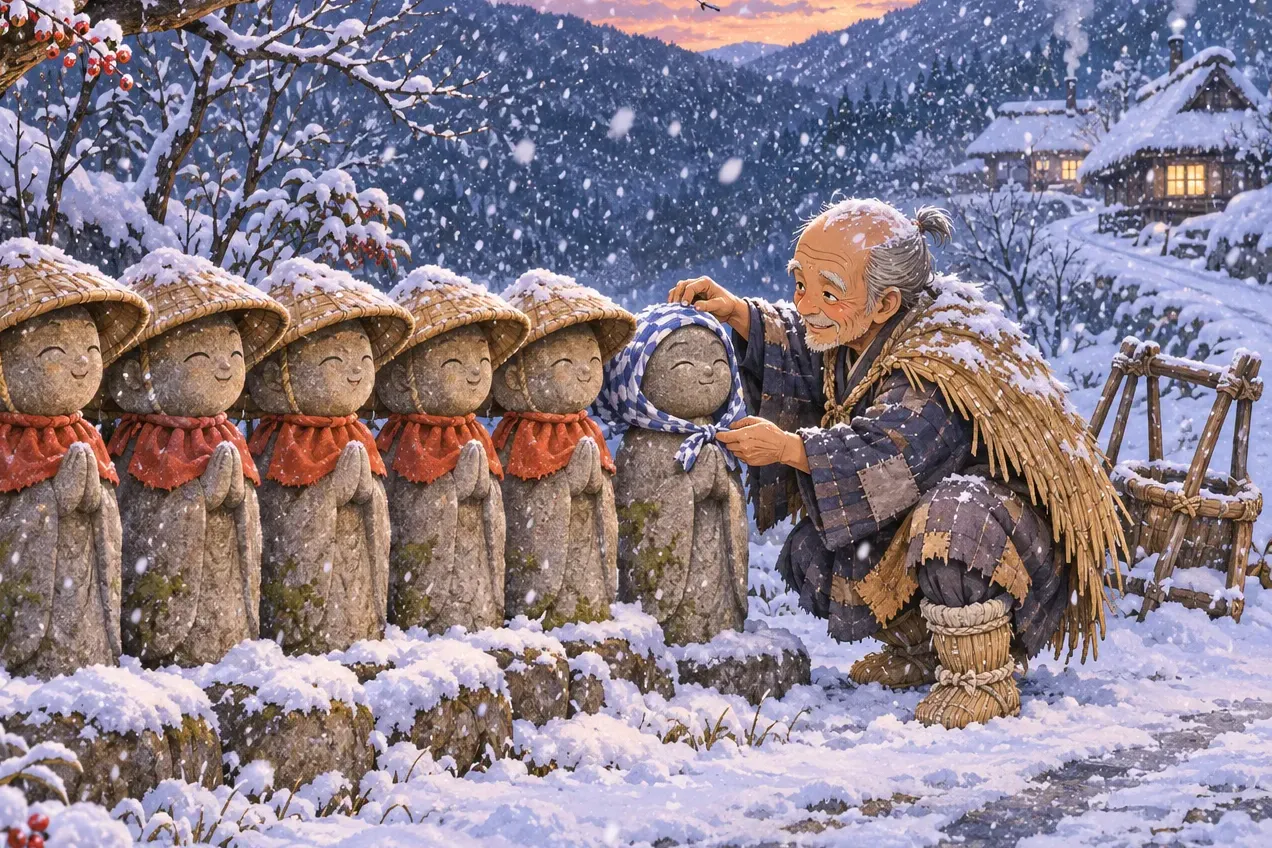
Illustration for the Japanese story The Hats for the Jizo

On New Year's Eve a poor old man who could not sell one straw hat gives them all to six snowy statues.

Tap any word for its meaning and sound.

むかしむかし、ある山やまの村むらに、貧まずしいおじいさんとおばあさんがすんでいた。大おおみそかの日ひ、家いえにはおもちを買かうお金かねもなかった。おじいさんは、わらで笠かさを五いつつ作つくっていた。

Once upon a time, in a village in the mountains, there lived a poor old man and old woman. It was New Year's Eve, and they didn't even have money to buy rice cakes. The old man had made five hats out of straw.

「おじいさん、この笠かさを町まちで売うってきたらどう?」

"Why don't you go and sell these hats in town?"

おじいさんは笠かさをせおって、雪ゆきの道みちを町まちへ歩あるいていった。「笠かさ、いりませんか。あたたかい笠かさですよ。」町まちは人ひとでいっぱいだったが、だれも笠かさを買かってくれなかった。夕ゆう方がたになっても、笠かさは一ひとつも売うれなかった。

The old man put the hats on his back and walked the snowy road to town. "Hats! Anyone need a hat? They're nice and warm!" The town was full of people, but nobody bought a hat. Even when evening came, he hadn't sold a single one.

帰かえり道みち、雪ゆきはどんどん強つよくなった。村むらの入いり口ぐちに、6人にんのお地じ蔵ぞうさまが立たっていた。お地じ蔵ぞうさまの頭あたまにも顔かおにも、雪ゆきが白しろくつもっていた。「お地じ蔵ぞうさま、さむいでしょう。」

On the way home, the snow fell harder and harder. At the edge of the village stood six stone Jizo statues. Snow lay white on their heads and faces. "You must be cold, Jizo."

おじいさんは雪ゆきをはらって、売うれなかった笠かさを一人ひとりずつかぶせてあげた。でも、笠かさは五いつつしかなかった。そこで、自じ分ぶんの手てぬぐいを取とって、さいごのお地じ蔵ぞうさまの頭あたまにまいてあげた。

The old man brushed off the snow and put the unsold hats on them, one by one. But he had only five hats. So he took off his own hand towel and tied it around the head of the last Jizo.

家いえに帰かえって話はなすと、おばあさんはにこにこわらった。「それはいいことをしたねえ。」

When he got home and told her, the old woman smiled. "That was a good thing you did."

その夜よる、二人ふたりはおかゆを少すこし食たべて、早はやくねた。夜よ中なか、外そとから歌うたが聞きこえてきた。「笠かさをくれたおじいさんの家いえはどこだ。」重おもい足あし音おとが、家いえの前まえで止とまった。

That night the two of them ate a little rice porridge and went to bed early. In the middle of the night, they heard singing outside. "Where is the house of the old man who gave us hats?" Heavy footsteps stopped in front of the house.

朝あさ、二人ふたりが戸とを開あけると、お米こめやおもち、魚さかな、それにお金かねが、山やまのようにおいてあった。遠とおくの雪ゆきの中なかを、6人にんのお地じ蔵ぞうさまが歩あるいて帰かえっていくのが見みえた。一人ひとりだけ、手てぬぐいをかぶっていた。その年とし、貧まずしい二人ふたりの家いえにも、あたたかいお正月しょうがつが来きた。

In the morning, when the two of them opened the door, there was a mountain of rice, rice cakes, fish and money. Far off in the snow, they could see the six Jizo walking away. Just one of them was wearing a hand towel. That year, a warm New Year came even to the poor old couple's house.

Check your understanding

3 questions about “The Hats for the Jizo”. Tap an answer to check it.

1. おじいさんは、何なにを売うりに町まちへ行いきましたか。

2. さいごのお地じ蔵ぞうさまに、おじいさんは何なにをしましたか。

3. 朝あさ、家いえの前まえには何なにがありましたか。

Words in this story

The first 40 of 107 different words in “The Hats for the Jizo”, in the order you meet them, in dictionary form, with reading and English. Particles are left out.

WordReadingMeaning
昔むかし々むかしむかしむかしlong ago; once upon a time
あるあるa certain ...; some ...
山やまやまmountain; hill; mine; (mountain) forest
村むらむらvillage
貧まずしいまずしいpoor; needy; lacking (quantity and quality-wise); poor; scanty
おじいさんおじいさんgrandfather; male senior-citizen; old man
ととif; when; and; as well as; with
おばあさんおばあさんgrandmother; old woman; female senior citizen
住すむすむto live (of humans); to reside; to inhabit; to dwell; to abide
大おお晦日みそかおおみそかNew Year's Eve
日ひひday; days; sun; sunshine; sunlight
家いえいえhouse; residence; dwelling; home; family
おおhonorific/polite/humble prefix
餅もちもちmochi; small rice cake made from glutinous rice
買かうかうto buy; to purchase; to value (highly); to think highly of; to have a high opinion of
お金かねおかねmoney
ないないnonexistent; not being (there); unowned; not had; unpossessed
わらわらstraw
笠かさかさconical hat (East-Asian style); coolie hat …
五いつついつつfive; five years of age; eight o'clock (old time system)
作つくるつくるto make; to produce; to manufacture; to build; to construct
このこのthis; last (couple of years, etc.); these; past; this
町まちまちtown; block; neighbourhood; neighborhood; street
売うるうるto sell; to betray; to sell out (one's friend, country, etc.); to make (oneself) known …
どうどうhow; in what way; how about
背せ負おうせおうto carry on one's back; to be burdened with; to take responsibility for …
雪ゆきゆきsnow; snowfall
道みちみちroad; path; street; lane; passage
歩あるくあるくto walk
いるいるto be needed; to be necessary; to be required; to be wanted; to need
暖あたたかいあたたかいwarm; mild; (pleasantly) hot; warm (of a colour); mellow
ですですbe; is
人ひとひとperson; someone; somebody; human beings; mankind
一いっ杯ぱいいっぱいone cup (of); one glass (of); one bowl (of); cupful; glassful
だっただったwas; were
誰だれだれwho
夕ゆう方がたゆうがたearly evening (usu. from 3pm to 6pm); dusk
なるなるto become; to get; to grow; to turn; to reach
一ひとつひとつone; for one thing; only
売うれるうれるto sell (well); to be well known; to be popular; to be famous

Readings and meanings are adapted from JMdict and KANJIDIC2, property of the Electronic Dictionary Research and Development Group, used under its licence (CC BY-SA 4.0). Still learning the kana? See the hiragana chart and the katakana chart.

Keep reading

This is one of the free stories in Japanese reading practice. In the Literate Japanese app every word you tap is saved for review, a natural Japanese voice reads each sentence, and the next story is matched to the kanji you know. The app is coming soon to iOS and Android.

Read your way to 300 kanji

Literate Japanese has 280+ graded stories from kana-only to estimated N2, with furigana you can turn off, every word one tap away, and flashcards built from what you read. The 60-chapter Reading Trail to your first 300 kanji is free. Coming soon to iOS and Android.

Email me when it launches

Start today in the browser: read a free Japanese story →