
The Museum びじゅつかん

N4 (est.) Chapter 27 of 60 of the Reading Trail, “Emma in Kanazawa” · 427 characters · 54 different kanji

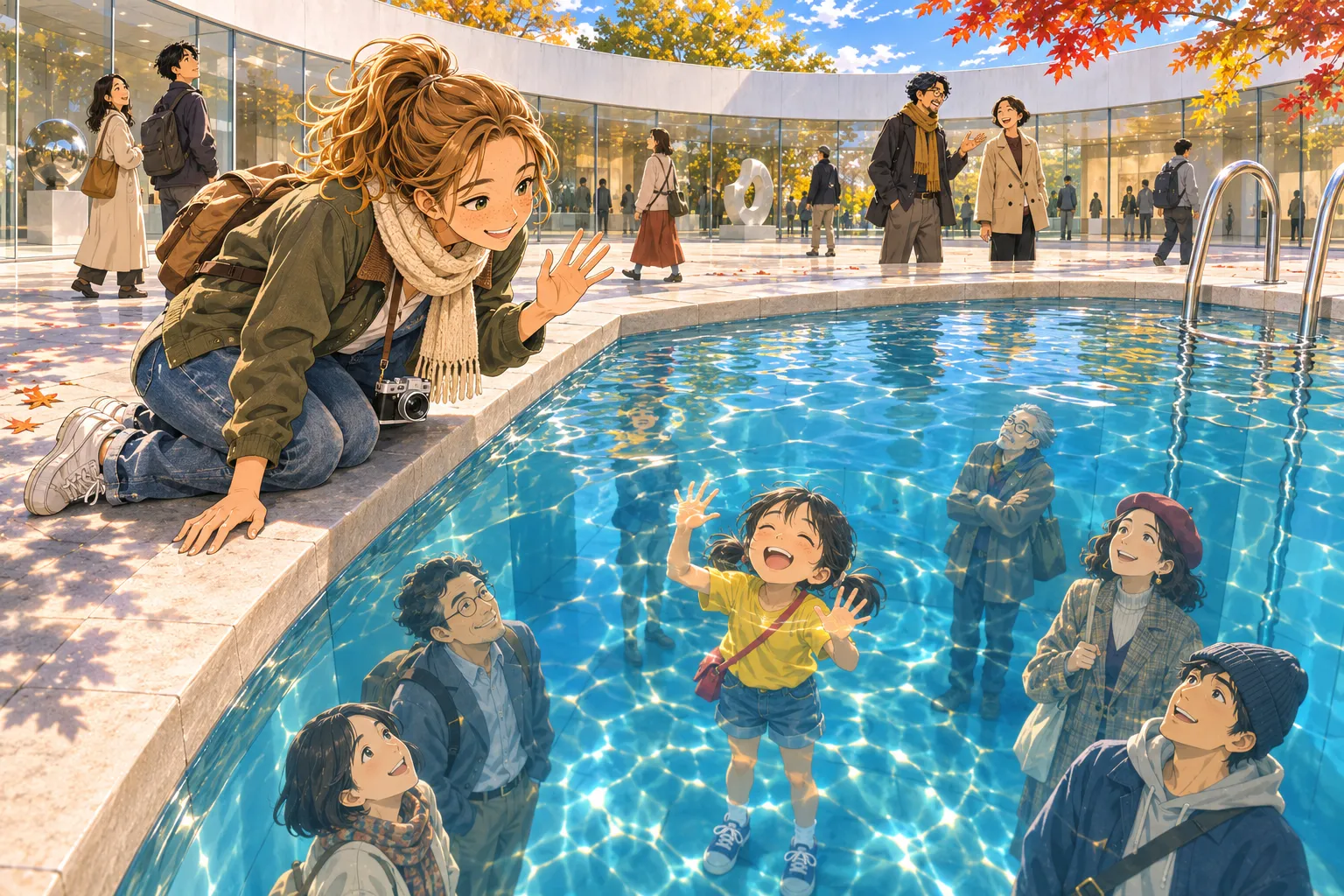
Illustration for the Japanese story The Museum

At Kanazawa's round glass art museum, Haruto says out loud what he wants to do with his life.

Tap any word for its meaning and sound.

11月じゅういちがつ3日みっか、学がっ校こうは休やすみだった。この日ひは浩ひろしも店みせを休やすんで、みんなで出でかけた。行いったのは、町まちの中ちゅう心しんの、丸まるいガラスのびじゅつかん。外そとからも、中なかが見みえる。中なかは、とても明あかるかった。

On November 3, there was no school. Hiroshi took the day off from the shop too, and the whole family went out. Where they went was the round glass art museum in the middle of town. You can see inside even from the outside. Inside, it was very bright.

一ひとつのへやに、大おおきいプールがあった。上うえから見みると、水みずの下したに人ひとが立たっている。「エマちゃん、下したに行いけるよ!これ、だれが作つくったの?」葵あおいは下したへ行いった。エマは上うえにのこって、水みずの中なかを見みた。水みずの光ひかりの下したで、葵あおいが手てを上あげた。光ひかりがゆれて、葵あおいもゆれた。「こんなびじゅつかん、見みたことがない。」

In one room, there was a big swimming pool. When you look down from above, there are people standing under the water. "Emma, you can go underneath! Who made this?" Aoi went down below. Emma stayed up top and looked into the water. Down in the watery light, Aoi raised her hand. The light rippled, and Aoi rippled too. "I've never seen a museum like this."

陽翔はるとは、ある画が家かのへやから出でてこなかった。一いち時じ間かん、そこに立たっていた。「陽翔はるとは?」「まだ、あのへや。」葵あおいは、売ばい店てんで新あたらしいえんぴつを買かった。

Haruto didn't come out of one artist's room. He stood there for an hour. "Where's Haruto?" "Still in that room." Aoi bought a new pencil at the museum shop.

ひるは、外そとの公こう園えんで食たべた。由美子ゆみこが、りんごを切きってきた。公こう園えんの木きの上うえに、明あかるい光ひかりがあった。陽翔はるとは空そらを見みていた。それから、小ちいさく言いった。「びだい、行いきたい。」だれに言いったのか、わからなかった。

For lunch, they ate in the park outside. Yumiko had brought cut apples. There was bright light on top of the trees in the park. Haruto was looking at the sky. Then he said, quietly, "I want to go to art school." It wasn't clear who he was saying it to.

浩ひろしは、おにぎりを食たべるのをやめた。でも、何なにも言いわなかった。おばあちゃんは、太ふとい木きのそばで目めをとじていた。エマは、あんな陽翔はるとを見みたことがなかった。

Hiroshi stopped eating his rice ball. But he didn't say anything. Grandma sat by a thick tree with her eyes closed. Emma had never seen Haruto like that.

バスまで、だれも話はなさなかった。バスの中なかで、葵あおいだけが楽たのしそうに話はなした。外そとは、もう夕ゆう方がたの光ひかりだった。

Nobody talked all the way to the bus. On the bus, only Aoi chattered happily. Outside, it was already evening light.

Check your understanding

3 questions about “The Museum”. Tap an answer to check it.

1. 11月じゅういちがつ3日みっか、みんなはどこへ行いったか。

2. 陽翔はるとは、一いち時じ間かんどこにいたか。

3. 公こう園えんで、陽翔はるとは小ちいさくなんと言いったか。

Words in this story

The first 40 of 89 different words in “The Museum”, in the order you meet them, in dictionary form, with reading and English. Particles are left out.

WordReadingMeaning
十じゅう一いち月がつじゅういちがつNovember; eleventh month of the lunar calendar
三みっ日かみっか3rd day of the month; three days
学がっ校こうがっこうschool
休やすみやすみrest; recess; respite; vacation; holiday
だっただったwas; were
このこのthis; last (couple of years, etc.); these; past; this
日ひひday; days; sun; sunshine; sunlight
浩ひろしひろしHiroshi (male given name); Sato Hiroshi, Emma's host father
店みせみせstore; shop; establishment; restaurant
休やすむやすむto be absent; to take a day off; to rest; to have a break; to go to bed
みなみなeveryone; everybody; all; everything; all
出でかけるでかけるto go out (e.g. on an excursion or outing); to leave; to depart; to start; to set out
行いくいくto go; to move (towards); to head (towards); to leave (for); to move through
町まちまちtown; block; neighbourhood; neighborhood; street
中ちゅう心しんちゅうしんcenter; centre; middle; heart; core
丸まるいまるいround; circular; spherical; curved; smooth
ガラスガラスglass; pane
美び術じゅつ館かんびじゅつかんart museum; art gallery
外そとそとoutside; exterior; the open (air); other place; somewhere else
中なかなかinside; interior; among; within; middle
見みえるみえるto be seen; to be visible; to be in sight; to look; to seem
とてもとてもvery; awfully; exceedingly; (not) at all; by no means
明あかるいあかるいlight; bright; well-lit; well-lighted; bright (colour)
一ひとつひとつone; for one thing; only
部屋へやへやroom; chamber; apartment; flat; pad
大おおきいおおきいbig; large; great; loud; extensive
プールプール(swimming) pool; pool (cue sport); pooling (money, resources, etc.)
あるあるto be; to exist; to live; to have; to be located
上うえうえabove; over; up; top; summit
見みるみるto see; to look; to watch; to view; to observe
ととif; when; and; as well as; with
水みずみずwater (esp. cool or cold); fluid (esp. in an animal tissue); liquid; flood; floodwaters
下したしたbelow; down; under; younger (e.g. daughter); bottom
人ひとひとperson; someone; somebody; human beings; mankind
立たつたつto stand (up); to rise; to get to one's feet; to stand on end (e.g. of hairs); to stick up
エマエマEmma (name); Emma Carter, American exchange student
ちゃんちゃんsuffix for familiar person
これこれthis; this one; this person; now; this point (in time)
誰だれだれwho
作つくるつくるto make; to produce; to manufacture; to build; to construct

Readings and meanings are adapted from JMdict and KANJIDIC2, property of the Electronic Dictionary Research and Development Group, used under its licence (CC BY-SA 4.0). Still learning the kana? See the hiragana chart and the katakana chart.

Keep reading

This is one of the free stories in Japanese reading practice. In the Literate Japanese app every word you tap is saved for review, a natural Japanese voice reads each sentence, and the next story is matched to the kanji you know. The app is coming soon to iOS and Android.

Read your way to 300 kanji

Literate Japanese has 280+ graded stories from kana-only to estimated N2, with furigana you can turn off, every word one tap away, and flashcards built from what you read. The 60-chapter Reading Trail to your first 300 kanji is free. Coming soon to iOS and Android.

Email me when it launches

Start today in the browser: read a free Japanese story →