The Notebook's Story ノートの話

N4 (est.) Chapter 49 of 60 of the Reading Trail, “Emma in Kanazawa” · 577 characters · 62 different kanji

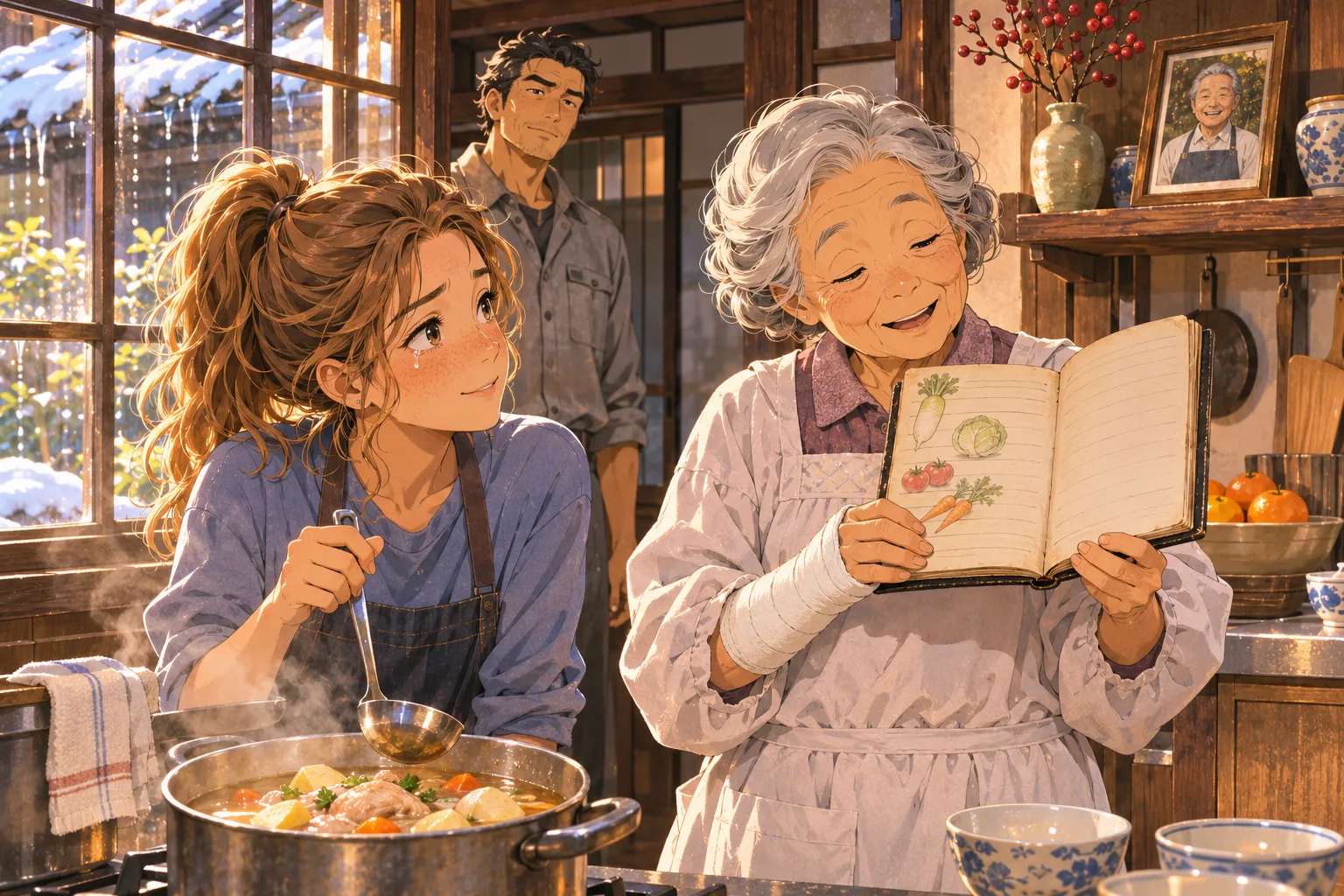
Illustration for the Japanese story The Notebook's Story

Grandma and Emma cook jibuni properly, and Emma finally learns why Grandpa wrote the black notebook.

Tap any word for its meaning and sound.

24日にじゅうよっかの日にち曜よう日び、雪ゆきは少すこしずつとけ始はじめた。家いえの外そとで、とけた雪ゆきがぽたぽたとおちていた。おばあちゃんは、黒くろいノートを手てに取とった。

On Sunday the 24th, the snow began to melt little by little. Outside the house, melting snow was dripping down. Grandma picked up the black notebook.

「今日きょうは、じぶにを作つくろうか。ちゃんとしたのを。」

"Let's make jibuni today. Properly."

入にゅう院いんしてから、おばあちゃんが台だい所どころに立たつのは、今日きょうがはじめてだ。おばあちゃんは左ひだり手てでノートを持もって、ページを開ひらいた。

It was the first time Grandma had stood in the kitchen since her hospital stay. Grandma held the notebook in her left hand and opened it to the page.

とりにくも、ほかのものも、店みせの品しな物ものを使つかった。エマは、とりにくを切きった。

The chicken and everything else came from the shop. Emma cut up the chicken.

「こなは、うすく。」

"Just a light dusting of flour."

「わさびは?」

"And the wasabi?"

「食たべる前まえに、少すこしだけ。」

"Just a little, right before you eat."

おばあちゃんは、一ひと口くち食たべて言いった。

Grandma tasted it and said,

「少すこし、しょうゆを足たしまっし。」

"Add a little soy sauce, dear."

食たべ物もののにおいの中なかで、エマは聞きいた。

Surrounded by the smell of the food, Emma asked,

「おじいちゃんは、どうしてこのノートを書かいたんですか。」

"Why did Grandpa write this notebook?"

おばあちゃんは、エマに向むかって、ゆっくり言いった。

Grandma turned to Emma and spoke slowly.

「実じつはね、おじいさんは1980年ねんから書かき始はじめたんや。」

"Well, you see, Grandpa started writing it in 1980."

「自じ分ぶんが先さきに死しんだら、わたしが店みせの台だい所どころをやれるように。」

"So that if he died first, I could run the shop's kitchen."

「わたしは、いらんって言いったのに、毎まい年とし書かいとった。」

"I told him I didn't need it, but he kept writing every year."

「それで、ほんとうに先さきに死しんでしまった。」

"And then he really did die first."

「6年ねん前まえの2月にがつやった。」

"It was six years ago, in February."

エマは、何なにも言いえなかった。浩ひろしも、ノートの話はなしは知しらなかったらしい。台だい所どころの戸との前まえで、だまって立たっていた。

Emma couldn't say anything. Apparently even Hiroshi hadn't known the story of the notebook. He stood silently at the kitchen door.

おばあちゃんは、ノートのさいごのページを開ひらいた。字じは、半はん分ぶんでおわっていた。ふきのとうみそ。

Grandma opened the notebook to its last page. The writing stopped halfway. Fukinoto miso.

「ふきのとうは、春はるに、雪ゆきの中なかから出でてくるんや。」

"Fukinoto come up through the snow in spring."

「春はるに、いっしょに作つくろう。」

"Let's make it together in the spring."

「実じつは、わたしもノートを書かきたいんです。」

"Actually, I want to keep a notebook too."

「今こん度どは、わたしが書かきます。」

"This time, I'll write it down."

「エマがいると、安あん心しんや。」

"I feel at ease with you here."

その夜よる、エマは自じ分ぶんの新あたらしいノートを出だした。一いちページ目めに、今日きょうのじぶにの作つくり方かたを、何なん度どもノートを見みながら書かいた。さいごに、一いち行ぎょうだけ書かいた。次つぎは、ふきのとうみそ。

That night, Emma took out a new notebook of her own. On the first page she wrote down how to make today's jibuni, checking the notebook again and again. At the end, she wrote just one line. Next: fukinoto miso.

Check your understanding

3 questions about “The Notebook's Story”. Tap an answer to check it.

1. おじいさんがノートを書かいたのは、どうしてですか。

2. ノートのさいごのページは、どうなっていましたか。

3. エマは、新あたらしいノートのさいごの一いっ行こうに、何なにを書かきましたか。

Words in this story

The first 40 of 106 different words in “The Notebook's Story”, in the order you meet them, in dictionary form, with reading and English. Particles are left out.

WordReadingMeaning
二に十じゅう四よっ日かにじゅうよっか24th day of the month; 24 days
日にち曜よう日びにちようびSunday
雪ゆきゆきsnow; snowfall
少すこしすこしa little; a bit; a small amount; a few; some
ずつずつapiece; each; at a time; piecemeal
溶とけるとけるto melt; to liquefy; to soften (e.g. through heat); to thaw; to dissolve (in a liquid)
家いえいえhouse; residence; dwelling; home; family
外そとそとoutside; exterior; the open (air); other place; somewhere else
解とけるとけるto be solved; to be worked out; to come loose; to come untied; to come undone
ポタポタポタポタdripping; trickling; drop by drop; in drops
ととif; when; and; as well as; with
落おちるおちるto fall; to drop; to come down; to crash; to collapse
おばあちゃんおばあちゃんgranny; grandma; gran; old lady; old woman
黒くろいくろいblack; dark; blackish; sun-tanned (skin); suspicious
ノートノートnotebook; copy-book; exercise book; note; noting down
手ててhand; arm; forepaw; foreleg; handle
取とるとるto take; to pick up; to grab; to catch; to hold
今日きょうきょうtoday; this day
治部煮じぶにじぶにjibuni (Kanazawa stew of duck or chicken dusted with flour, simmered with wheat gluten …
作つくるつくるto make; to produce; to manufacture; to build; to construct
ちゃんとちゃんとdiligently; seriously; earnestly; reliably; steadily
するするto do; to carry out; to perform; to cause to become; to make (into)
入にゅう院いんにゅういんhospitalization; hospitalisation
台だい所どころだいどころkitchen; financial situation; finances
立たつたつto stand (up); to rise; to get to one's feet; to stand on end (e.g. of hairs); to stick up
初はじめてはじめてfor the first time; only after ... is it ...; only when ... do you ... …
だだbe; is
左ひだり手てひだりてleft hand; left-hand side; left-hand direction; (on) the left
持もつもつto hold (in one's hand); to take; to carry; to possess; to have
ページページpage; nth page; page ...
開ひらくひらくto open; to undo; to unseal; to unpack; to bloom
鶏とり肉にくとりにくchicken meat
他ほかほかanother place; some other place; somewhere else; outside; another (person or thing)
物ものものthing; object; article; stuff; substance
店みせみせstore; shop; establishment; restaurant
品しな物ものしなものarticle; item; thing; goods; wares
使つかうつかうto use (a tool, method, etc.); to make use of; to put to use …
エマエマEmma (name); Emma Carter, American exchange student
切きるきるto cut; to cut through; to perform (surgery); to sever (connections, ties) …
粉こなこなflour; meal; powder; dust; heroin

Readings and meanings are adapted from JMdict and KANJIDIC2, property of the Electronic Dictionary Research and Development Group, used under its licence (CC BY-SA 4.0). Still learning the kana? See the hiragana chart and the katakana chart.

Keep reading

This is one of the free stories in Japanese reading practice. In the Literate Japanese app every word you tap is saved for review, a natural Japanese voice reads each sentence, and the next story is matched to the kanji you know. The app is coming soon to iOS and Android.

Read your way to 300 kanji

Literate Japanese has 280+ graded stories from kana-only to estimated N2, with furigana you can turn off, every word one tap away, and flashcards built from what you read. The 60-chapter Reading Trail to your first 300 kanji is free. Coming soon to iOS and Android.

Email me when it launches

Start today in the browser: read a free Japanese story →