The Son Who Came Home 帰ってきた息子

N3 (est.) From “Parables Retold” · 834 characters · 79 different kanji

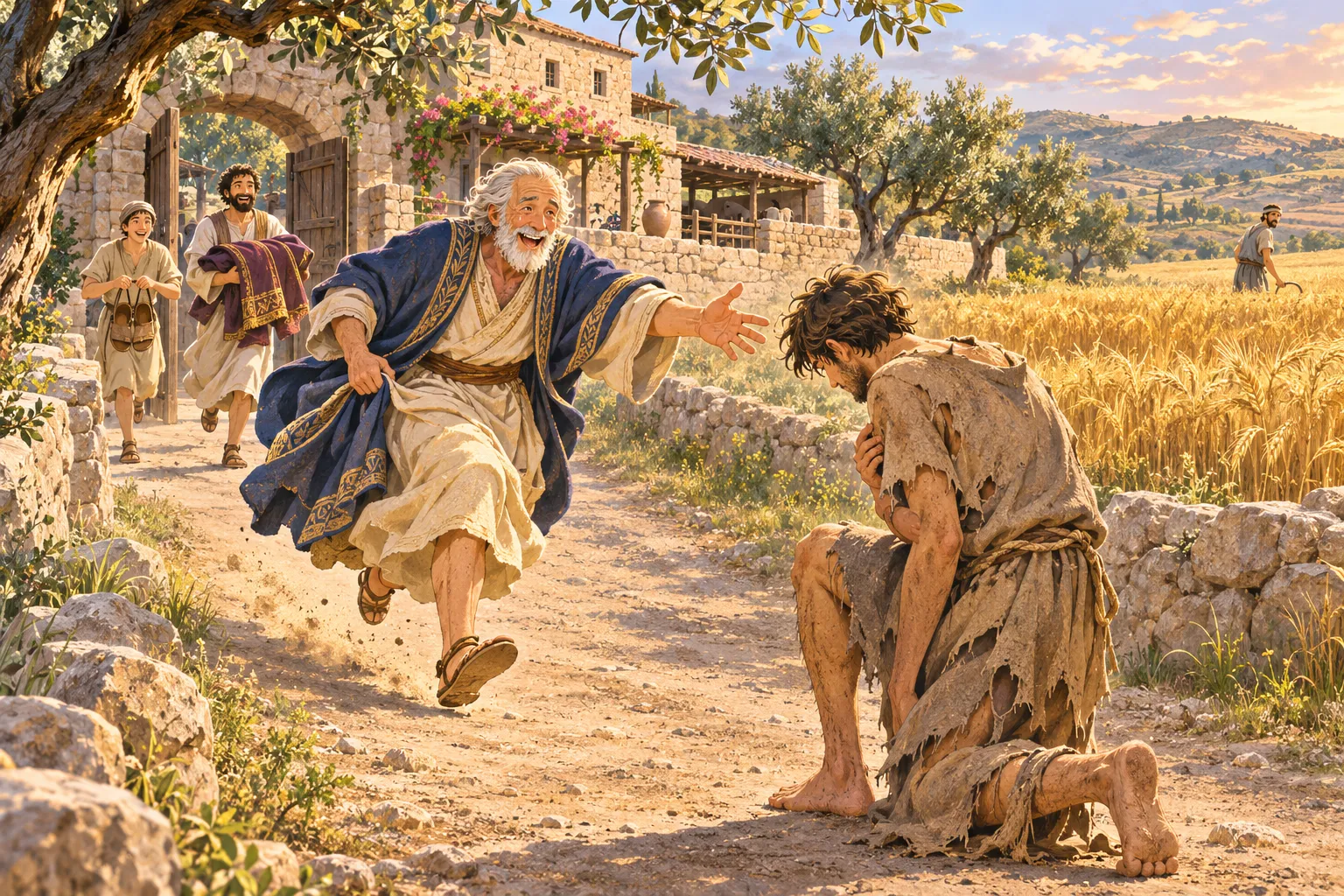
Illustration for the Japanese story The Son Who Came Home

A younger son takes his share, wastes it far from home, and walks back with a speech ready.

Tap any word for its meaning and sound.

イエスは、こんな話はなしをした。

Jesus told this story.

ある人ひとに、二人ふたりの息子むすこがいた。ある日ひ、弟おとうとが父ちちに言いった。

There was a man who had two sons. One day, the younger son said to his father,

「お父とうさん、いつかわたしがもらう財ざい産さんを、今いまください。」

"Father, give me now the share of the property I'll get someday."

父ちちは財ざい産さんを分わけて、二人ふたりの息子むすこにわたした。しばらくすると、弟おとうとは自じ分ぶんの分ぶんを売うってお金かねにして、遠とおい国くにへ行いってしまった。その国くにで、弟おとうとは毎まい日にち遊あそんでくらし、お金かねを好すきなだけ使つかった。やがて、お金かねはすっかりなくなった。

The father divided his property and gave it to his two sons. Soon after, the younger son sold his share for money and went off to a faraway country. There he spent his days having fun and spent his money however he liked. Before long, every bit of it was gone.

ちょうどそのころ、その国くにでは雨あめがふらず、食たべる物ものがなくなった。弟おとうとは、ある人ひとの家いえで働はたらかせてもらい、ぶたの世せ話わをすることになった。ぶたのえさでもいいから食たべたいと思おもったが、だれも何なにもくれなかった。そのとき、弟おとうとはやっと気きがついた。

Right about then, no rain fell in that country, and the food ran out. He got someone to give him work, and ended up looking after pigs. He would gladly have eaten the pigs' feed, but no one gave him anything. That was when he finally came to his senses.

「父ちちの家いえでは、やとわれている人ひとたちでさえ、パンがあまるほどあるのに。」「家いえに帰かえって、こう言いおう。」「お父とうさん、わたしは神かみさまにも、お父とうさんにも、悪わるいことをしました。」「もう、息子むすことよんでもらえるような者ものではありません。やとっている人ひとたちと同おなじように、ここで働はたらかせてください。」

"At my father's house, even the hired workers have more bread than they can eat." "I'll go home and say this:" "Father, I have done wrong against God and against you." "I'm not fit to be called your son anymore. Let me work here like one of your hired workers."

弟おとうとは立たち上あがって、父ちちの家いえに向むかった。家いえまではまだずいぶんあったが、父ちちのほうが先さきに弟おとうとを見みつけた。父ちちは胸むねがいっぱいになって、走はしって行いき、弟おとうとをだきしめた。弟おとうとは、用よう意いしておいたことばを言いい始はじめた。

He got up and set off for his father's house. The house was still a long way off, but his father saw him first. His father's heart filled, and he ran to his son and threw his arms around him. The son began the words he had prepared.

「お父とうさん、わたしは神かみさまにも、お父とうさんにも、悪わるいことをしました。もう、息子むすことよんでもらえるような者ものでは……」

"Father, I have done wrong against God and against you. I'm not fit to be called your…"

でも、父ちちは最さい後ごまで聞きかずに、家いえの使し用よう人にんたちに言いった。

But his father didn't let him finish, and said to the servants,

「すぐに、家いえにある服ふくの中なかで、いちばんいいのを着きせてやりなさい。指ゆび輪わとくつも持もってきなさい。」「太ふとった子こ牛うしを料りょう理りして、みんなでお祝いわいをしよう。」「この子ことは、もう二に度どと会あえないと思おもっていた。でも、生いきて帰かえってきたんだ。」

"Quickly, dress him in the best clothes in the house. Bring a ring and shoes too." "Cook the fattened calf, and let's all celebrate." "I thought I would never see this boy again. But he has come home alive."

そのころ、兄あには畑はたけで働はたらいていた。家いえの近ちかくまで来くると、音おん楽がくやおどりの音おとが聞きこえてきた。使し用よう人にんからわけを聞きくと、兄あには腹はらを立たてて、家いえの中なかに入はいらなかった。父ちちが家いえから出でてきて、中なかに入はいるようにたのむと、兄あには答こたえた。

Meanwhile, the older son was working in the field. As he came near the house, he heard music and dancing. When a servant told him why, he got angry and refused to go inside. When his father came out of the house and begged him to come in, he answered,

「お父とうさんのために、わたしはもう何なん年ねんも、休やすまずに働はたらいてきました。」「それなのに、友ともだちとお祝いわいをするための子こやぎ一いっ頭とうも、もらったことがありません。」

"I've worked for you for years now without a break." "And yet you've never given me so much as a young goat to celebrate with my friends."

父ちちは言いった。「おまえとは、毎まい日にちいっしょにくらしてきた。この家いえの物ものは、みんなおまえの物ものでもあるんだ。」「でも、おまえの弟おとうとが帰かえってきたんだ。いっしょによろこぼう。」

His father said, "You and I have lived together every day. Everything in this house is yours too." "But your brother has come home. Be glad with us."

Check your understanding

3 questions about “The Son Who Came Home”. Tap an answer to check it.

1. 弟おとうとは、もらった財ざい産さんをどうしましたか。

2. 弟おとうとが家いえに帰かえってきたとき、父ちちはどうしましたか。

3. 音おん楽がくの音おとを聞きいて、わけを知しった兄あにはどうしましたか。

Words in this story

The first 40 of 142 different words in “The Son Who Came Home”, in the order you meet them, in dictionary form, with reading and English. Particles are left out.

WordReadingMeaning
イエスイエスJesus (Christ)
こんなこんなthis sort of; this kind of; like this; such
話はなしはなしtalk; speech; chat; conversation; topic
するするto do; to carry out; to perform; to cause to become; to make (into)
あるあるa certain ...; some ...
人ひとひとperson; someone; somebody; human beings; mankind
二人ふたりふたりtwo persons; two people; pair; couple
息子むすこむすこson; penis
いるいるto be (of animate objects); to exist; to stay; to be ...-ing
日ひひday; days; sun; sunshine; sunlight
弟おとうとおとうとyounger brother; little brother; kid brother …
父ちちちちfather; father (e.g. of a discipline); pioneer (e.g. of field of research); founder; God
言いういうto say; to utter; to declare; to name; to call
お父とうさんおとうさんfather; dad; papa; pa; pop
いつかいつかsometime; someday; one day; some time or other; the other day
私わたしわたしI; me
もらうもらうto receive; to take; to accept; to get someone to do something …
財ざい産さんざいさんproperty; fortune; assets
今いまいまnow; the present time; just now; soon; immediately
くださいくださいplease (give me); please (do for me)
分わけるわけるto divide (into); to split (into); to part; to separate; to divide up
渡わたすわたすto ferry across (e.g. a river); to carry across; to traverse; to lay across …
しばらくしばらくfor a moment; for a minute; for a while; for some time; for the time being
ととif; when; and; as well as; with
自じ分ぶんじぶんmyself; yourself; oneself; himself; herself
分ぶんぶんpart; portion; share; amount; worth (as in "two days' worth")
売うるうるto sell; to betray; to sell out (one's friend, country, etc.); to make (oneself) known …
お金かねおかねmoney
遠とおいとおいfar; distant; far away; a long way off; in the distance
国くにくにcountry; state; region; national government; central government
行いくいくto go; to move (towards); to head (towards); to leave (for); to move through
そのそのthat; the; part (as in "part two"); um ...; er ...
毎まい日にちまいにちevery day; daily
遊あそぶあそぶto play (games, sports); to enjoy oneself; to have a good time …
暮くらすくらすto live (on, by, etc.); to lead a life; to get along; to get by; to make a living
好すきすきliking; being fond of; to one's liking; to one's taste; preferred
だだbe; is
使つかうつかうto use (a tool, method, etc.); to make use of; to put to use …
やがてやがてbefore long; soon; shortly; almost; nearly
すっかりすっかりall; completely; totally; entirely; thoroughly

Readings and meanings are adapted from JMdict and KANJIDIC2, property of the Electronic Dictionary Research and Development Group, used under its licence (CC BY-SA 4.0). Still learning the kana? See the hiragana chart and the katakana chart.

Keep reading

This is one of the free stories in Japanese reading practice. In the Literate Japanese app every word you tap is saved for review, a natural Japanese voice reads each sentence, and the next story is matched to the kanji you know. The app is coming soon to iOS and Android.

Read your way to 300 kanji

Literate Japanese has 280+ graded stories from kana-only to estimated N2, with furigana you can turn off, every word one tap away, and flashcards built from what you read. The 60-chapter Reading Trail to your first 300 kanji is free. Coming soon to iOS and Android.

Email me when it launches

Start today in the browser: read a free Japanese story →