The Workers in the Vineyard ぶどう園の働く人

N3 (est.) From “Parables Retold” · 725 characters · 62 different kanji

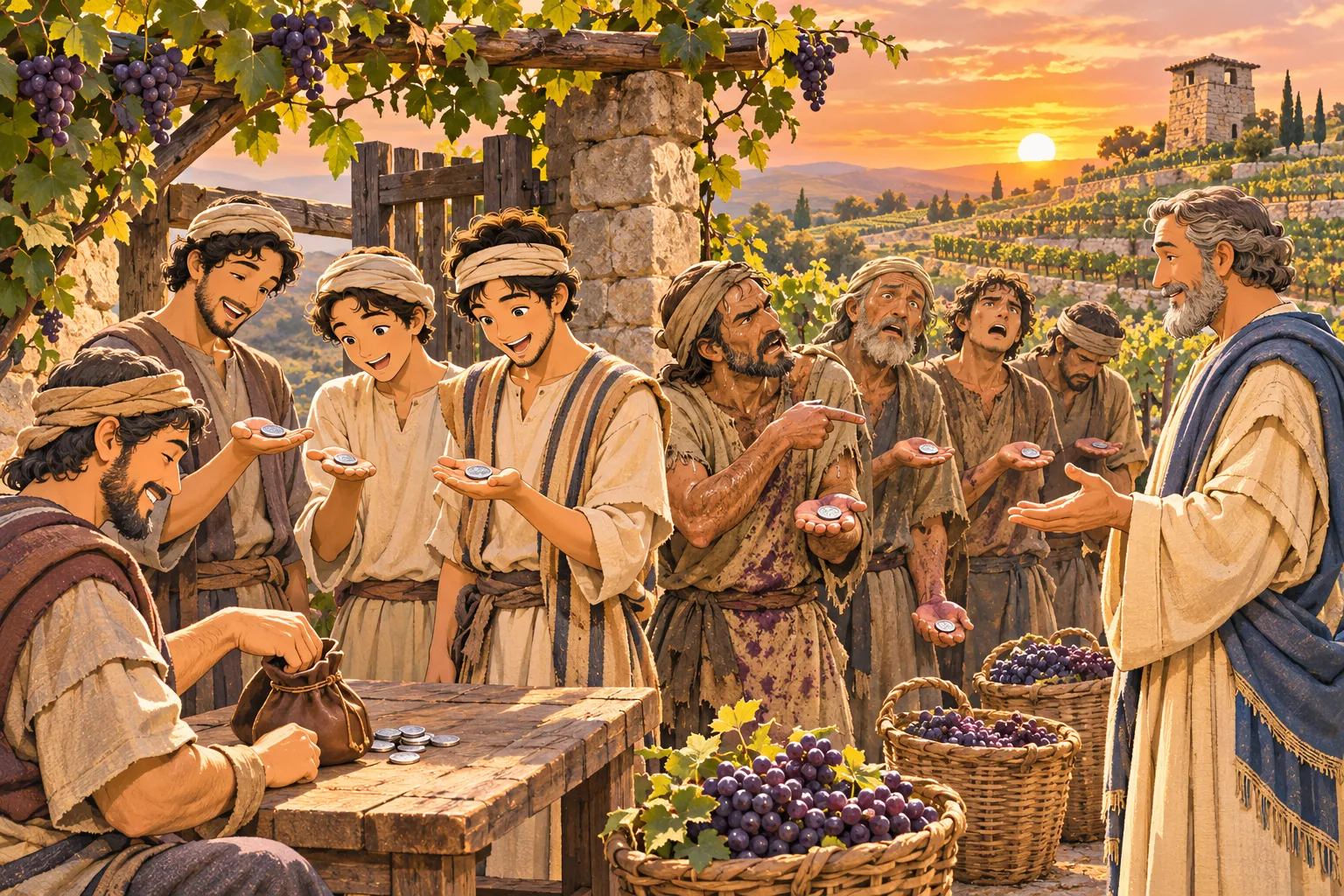
Illustration for the Japanese story The Workers in the Vineyard

A vineyard owner hires workers at dawn, at noon, and at five, then pays every one of them the same.

Tap any word for its meaning and sound.

イエスは、こんな話はなしをした。

Jesus told this story.

ある朝あさ早はやく、ぶどう園えんの主しゅ人じんが、働はたらく人ひとをさがしに町まちの広ひろ場ばへ出でかけた。広ひろ場ばには、仕し事ごとをさがしている人ひとたちが集あつまっていた。主しゅ人じんは何なん人にんかを雇やとって、こう約やく束そくした。

Early one morning, the owner of a vineyard went out to the town square to find workers. People looking for work had gathered in the square. The owner hired several of them and made them this promise.

「一いち日にち働はたらいたら、一いち日にち分ぶんの賃ちん金ぎんをはらいます。」

"Work for the day, and I'll pay you a day's wage."

その人ひとたちは、よろこんで、ぶどう園えんへ行いった。

The workers gladly went off to the vineyard.

朝あさ9時じごろ、主しゅ人じんがもう一いち度ど広ひろ場ばに行いくと、何なにもしないで立たっている人ひとたちがいた。

Around nine in the morning, the owner went back to the square and found people standing around with nothing to do.

「あなたたちも、うちのぶどう園えんで働はたらきませんか。ちゃんとした賃ちん金ぎんをはらいます。」

"Why don't you come work in my vineyard too? I'll pay you what's right."

主しゅ人じんは、昼ひるの12時じごろにも、午ご後ご3時さんじごろにも広ひろ場ばに行いって、同おなじように人ひとを雇やとった。

He went to the square again around noon and around three in the afternoon, and hired people the same way.

夕ゆう方がた5時じごろ、主しゅ人じんがまた広ひろ場ばに行いくと、まだ立たっている人ひとたちがいた。

Around five in the evening, he went to the square once more and found people still standing there.

「朝あさからずっと、ここで何なにをしているのですか。」

"What have you been doing here since morning?"

「だれも、わたしたちを雇やとってくれなかったんです。」

"Nobody would hire us."

「それなら、うちのぶどう園えんで働はたらきなさい。」

"Then come work in my vineyard."

日ひがしずむと、主しゅ人じんは、ぶどう園えんの仕し事ごとをまとめる人ひとに言いった。

When the sun went down, the owner said to his foreman,

「みんなをよんで、賃ちん金ぎんをわたしてください。来きた順じゅん番ばんとは反はん対たいに、5時じに来きた人ひとたちからです。」

"Call everyone and give them their wages. Go in reverse order of arrival: the ones who came at five go first."

夕ゆう方がた5時じに来きた人ひとたちは、一いち日にち分ぶんの賃ちん金ぎんをもらった。それを見みて、朝あさから働はたらいた人ひとたちは、自じ分ぶんたちはもっと多おおくもらえるだろうと思おもった。ところが、その人ひとたちがもらったのも、一いち日にち分ぶんの賃ちん金ぎんだった。その人ひとたちは、主しゅ人じんに文もん句くを言いった。

The ones who had come at five got a full day's wage. Seeing that, the ones who had worked since morning thought they would surely get more. But what they got was a day's wage too. They complained to the owner.

「あとから来きた人ひとたちは、一いち時じ間かんしか働はたらいていません。」「わたしたちは、一いち日にち中じゅう、暑あつい日ひざしの中なかで働はたらいたんです。」「それなのに、同おなじ賃ちん金ぎんなんて、不ふ公こう平へいです。」

"The ones who came last worked only one hour." "We worked all day under the hot sun." "And we get the same wage? That's not fair."

主しゅ人じんは、その中なかの一人ひとりに答こたえた。

The owner answered one of them.

「友ともよ、わたしはあなたをだましてはいません。」「朝あさ、一いち日にち分ぶんの賃ちん金ぎんで働はたらくと、二人ふたりで決きめたではありませんか。」「あなたの賃ちん金ぎんはこれです。持もって帰かえりなさい。」「最さい後ごに来きた人ひとにも、同おなじ賃ちん金ぎんをあげたいのです。」「わたしのお金かねです。どう使つかうかは、わたしが決きめていいはずです。」「それとも、わたしが人ひとにやさしくするのが、気きに入いらないのですか。」

"Friend, I haven't cheated you." "Didn't we agree this morning that you would work for a day's wage?" "Here is your wage. Take it and go home." "I want to give the one who came last the same wage." "It's my money. Surely I can decide how to use it." "Or do you resent it when I'm generous to others?"

話はなしの最さい後ごに、イエスは言いった。

At the end of the story, Jesus said,

「このように、最さい後ごの人ひとが最さい初しょになって、最さい初しょの人ひとが最さい後ごになるのだ。」

"In the same way, the last will be first, and the first will be last."

Check your understanding

3 questions about “The Workers in the Vineyard”. Tap an answer to check it.

1. 朝あさ早はやく、主しゅ人じんは雇やとった人ひとたちに何なにを約やく束そくしましたか。

2. 夕ゆう方がた5時じに、その人ひとたちはどうしてまだ広ひろ場ばにいましたか。

3. 朝あさから働はたらいた人ひとたちは、どうして文もん句くを言いいましたか。

Words in this story

The first 40 of 114 different words in “The Workers in the Vineyard”, in the order you meet them, in dictionary form, with reading and English. Particles are left out.

WordReadingMeaning
イエスイエスJesus (Christ)
こんなこんなthis sort of; this kind of; like this; such
話はなしはなしtalk; speech; chat; conversation; topic
するするto do; to carry out; to perform; to cause to become; to make (into)
あるあるa certain ...; some ...
朝あさあさmorning; breakfast
早はやくはやくearly; soon; quickly; swiftly; rapidly
ぶどうぶどうgrape; grapevine
園えんえんgarden; orchard; park; plantation; kindergarten
主しゅ人じんしゅじんhead (of a household); proprietor (of a store); proprietress; landlord; landlady
働はたらくはたらくto work; to labor; to labour; to function; to operate
人ひとひとperson; someone; somebody; human beings; mankind
探さがすさがすto search for; to look for; to hunt for; to seek; to search (a house, pocket, etc.)
町まちまちtown; block; neighbourhood; neighborhood; street
広ひろ場ばひろばpublic square; square; plaza; piazza; forum
出でかけるでかけるto go out (e.g. on an excursion or outing); to leave; to depart; to start; to set out
仕し事ごとしごとwork; job; labor; labour; business
人ひとたちひとたちpeople
集あつまるあつまるto gather; to collect; to assemble
何なん人にんなんにんhow many people; a number of people
雇やとうやとうto employ; to hire; to take on; to charter (a car, boat, etc.); to hire
こうこうin this way; like this; so; thus; this (much)
約やく束そくやくそくpromise; agreement; arrangement; one's word; contract
一いち日にちいちにちone day; all day (long); the whole day; from morning till night; first day of the month
分ぶんぶんpart; portion; share; amount; worth (as in "two days' worth")
賃ちん金ぎんちんぎんwages; pay
払はらうはらうto pay (e.g. money, bill); to brush off; to wipe away; to clear away; to dust off
そのそのthat; the; part (as in "part two"); um ...; er ...
喜よろこぶよろこぶto be delighted; to be glad; to be pleased; to rejoice; to congratulate
行いくいくto go; to move (towards); to head (towards); to leave (for); to move through
九きゅうきゅうnine; 9
時じじhour; o'clock; (specified) time; when ...; during ...
ころころ(approximate) time; around; about; toward; suitable time (or condition)
もう一いち度どもういちどonce more; again
ととif; when; and; as well as; with
何なになにwhat; you-know-what; that thing; whatsit; whachamacallit
立たつたつto stand (up); to rise; to get to one's feet; to stand on end (e.g. of hairs); to stick up
いるいるto be (of animate objects); to exist; to stay; to be ...-ing
あなたあなたyou; dear; honey
たちたちpluralizing suffix (esp. for people and animals; formerly honorific)

Readings and meanings are adapted from JMdict and KANJIDIC2, property of the Electronic Dictionary Research and Development Group, used under its licence (CC BY-SA 4.0). Still learning the kana? See the hiragana chart and the katakana chart.

Keep reading

This is one of the free stories in Japanese reading practice. In the Literate Japanese app every word you tap is saved for review, a natural Japanese voice reads each sentence, and the next story is matched to the kanji you know. The app is coming soon to iOS and Android.

Read your way to 300 kanji

Literate Japanese has 280+ graded stories from kana-only to estimated N2, with furigana you can turn off, every word one tap away, and flashcards built from what you read. The 60-chapter Reading Trail to your first 300 kanji is free. Coming soon to iOS and Android.

Email me when it launches

Start today in the browser: read a free Japanese story →