
Tsuda Umeko Crosses the Ocean at Six 津田梅子
N3 (est.) From “Remarkable Lives” · 689 characters · 107 different kanji

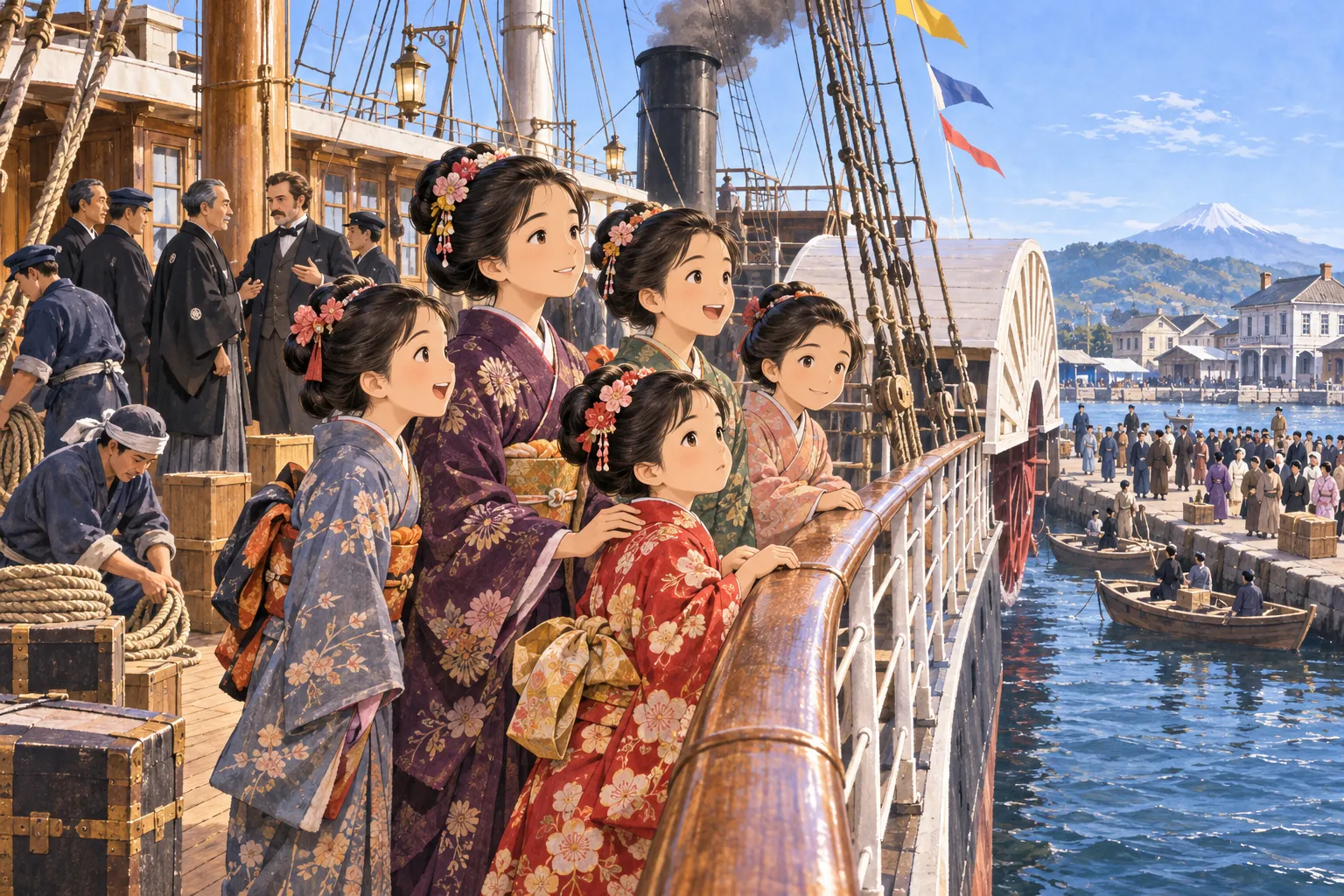
Illustration for the Japanese story Tsuda Umeko Crosses the Ocean at Six

In 1871 a six-year-old girl sails for America as one of Japan's first female students abroad.

Tap any word for its meaning and sound.

1871年ねん12月じゅうにがつ23日にじゅうさんにち、横よこ浜はまの港みなとから、アメリカへ向むかう船ふねが出でた。船ふねには、外がい国こくを見みて回まわる政せい府ふの人ひとたちといっしょに、5人にんの少しょう女じょが乗のっていた。日本にほんで初はじめての女じょ子し留りゅう学がく生せいだった。5人にんの中なかで一いち番ばん年とし下したの津田梅子つだうめこは、まだ6歳さいだった。

On December 23, 1871, a ship bound for America left the port of Yokohama. On board, along with a party of government men going to see the world, were five girls. They were Japan's first female students to study abroad. The youngest of the five, Tsuda Umeko, was only six.

留りゅう学がくは10年ねんの予よ定ていだった。10年ねんがどれほど長ながいのか、6歳さいの梅子うめこには、まだよくわからなかっただろう。

They were to study abroad for ten years. At six, Umeko probably could not yet understand just how long ten years was.

船ふねは冬ふゆの太たい平へい洋ようを渡わたり、3週しゅう間かんあまりでサンフランシスコに着ついた。そこからさらに東ひがしへ向むかい、梅子うめこはワシントンの近ちかくに住すむランマン夫ふ妻さいの家いえで暮くらすことになった。子こどものいなかった夫ふ妻さいは、梅子うめこを自じ分ぶんの娘むすめのように大たい切せつに育そだてた。梅子うめこはアメリカの学がっ校こうに通かよい、英えい語ごで考かんがえ、英えい語ごで夢ゆめを見みる少しょう女じょになっていった。

The ship crossed the winter Pacific and reached San Francisco in a little over three weeks. From there they traveled farther east, and Umeko was placed in the home of Mr. and Mrs. Lanman, who lived near Washington. The couple had no children of their own, and they raised Umeko with great care, as if she were their daughter. Umeko went to American schools and grew into a girl who thought in English and dreamed in English.

留りゅう学がくは1年いちねんのびて、梅子うめこが日本にほんに帰かえったのは1882年ねん、17歳さいの時ときだった。11年ねんぶりの日本にほんで、梅子うめこは困こまってしまった。日本にほん語ごをすっかり忘わすれていて、家か族ぞくとさえ思おもうように話はなせなかったのだ。

Her stay was extended by a year, and it was 1882 when she returned to Japan, at seventeen. Back in Japan after eleven years, Umeko found herself at a loss. She had completely forgotten Japanese and could not talk freely even with her own family.

それ以い上じょうにおどろいたのは、日本にほんの女じょ性せいの立たち場ばだった。女じょ性せいが高たかい教きょう育いくを受うけられる学がっ校こうはほとんどなく、アメリカで学まなんだことを生いかせる仕し事ごとも見みつからなかった。梅子うめこは英えい語ごの教きょう師しとして働はたらいたあと、もう一いち度どアメリカに渡わたり、大だい学がくで生せい物ぶつ学がくを学まなんだ。そして、日本にほんの女じょ性せいのための学がっ校こうを、自じ分ぶんの手てで作つくろうと決けっ心しんした。

What shocked her even more was the position of women in Japan. There were almost no schools where women could get a higher education, and she could find no work that used what she had learned in America. After working as an English teacher, Umeko went to America once more and studied biology at a college there. And she made up her mind to build, with her own hands, a school for the women of Japan.

1900年ねん、梅子うめこは東とう京きょうに女子英学塾じょしえいがくじゅくという小ちいさな学がっ校こうを開ひらいた。最さい初しょの学がく生せいは、たった10人にんだった。梅子うめこは英えい語ごを教おしえるだけでなく、自じ分ぶんの頭あたまで考かんがえられる女じょ性せいを育そだてようとした。授じゅ業ぎょうはきびしかったが、学がく生せいは少すこしずつ増ふえていった。

In 1900, Umeko opened a small school in Tokyo called Joshi Eigaku Juku, the Women's Institute for English Studies. It began with just ten students. Umeko did not only teach English; she tried to raise women who could think for themselves. Her teaching was strict, but little by little the number of students grew.

1929年ねん、梅子うめこは64歳さいで亡なくなった。梅子うめこの学がっ校こうは今いま、津田塾大学つだじゅくだいがくと呼よばれている。2024年ねんからは、5000円えん札さつに梅子うめこの顔かおが使つかわれている。6歳さいで海うみを渡わたった少しょう女じょは、あとに続つづく女じょ性せいたちのために道みちを開ひらいた。

In 1929, Umeko died at the age of sixty-four. Her school is now called Tsuda University. Since 2024, her face has been on the 5,000-yen bill. The girl who crossed the sea at six opened a road for the women who came after her.

Check your understanding

3 questions about “Tsuda Umeko Crosses the Ocean at Six”. Tap an answer to check it.

1. 1871年ねんに船ふねに乗のった時とき、梅子うめこは何なん歳さいでしたか。

2. 日本にほんに帰かえった梅子うめこは、まず何なにに困こまりましたか。

3. 1900年ねんに梅子うめこが開あいた学がっ校こうは、どんな学がっ校こうでしたか。

Words in this story

The first 40 of 141 different words in “Tsuda Umeko Crosses the Ocean at Six”, in the order you meet them, in dictionary form, with reading and English. Particles are left out.

WordReadingMeaning
年ねんねんyear; counter for years (e.g. of an era), grades (e.g. school) …
十じゅう二に月がつじゅうにがつDecember; twelfth month of the lunar calendar
二に十じゅう三さん日にちにじゅうさんにち23rd day of the month; 23 days
横よこ浜はまよこはまYokohama (city)
港みなとみなとharbour; harbor; port
アメリカアメリカ(United States of) America; United States; US; USA; America (land mass)
向むかうむかうto face; to go towards; to head towards
船ふねふねship; boat; watercraft; vessel; seaplane
出でるでるto leave; to exit; to go out; to come out; to get out
外がい国こくがいこくforeign country
見みるみるto see; to look; to watch; to view; to observe
政せい府ふせいふgovernment; administration; ministry
人ひとたちひとたちpeople
ととif; when; and; as well as; with
一いっ緒しょいっしょ(doing) together; one lump; one mixture; the same category; the same
五ごごfive; 5
人にんにんcounter for people
少しょう女じょしょうじょgirl (usu. between 7 and 17); young lady …
乗のるのるto get on (train, plane, bus, ship, etc.); to get in; to board; to take; to embark
日本にほんにほんJapan
初はじめてはじめてfor the first time; only after ... is it ...; only when ... do you ... …
女じょ子しじょしwoman; girl
留りゅう学がく生せいりゅうがくせいoverseas student; exchange student
だっただったwas; were
中なかなかinside; interior; among; within; middle
一いち番ばんいちばんnumber one; first; first place; best; most
年とし下したとししたyounger; junior
津田梅子つだうめこつだうめこTsuda Umeko (1864-1929), educator who founded a school for women in 1900 (female)
まだまだstill; as yet; only; (not) yet; more
六ろくろくsix; 6
歳さいさい... years old; age (of) ...
留りゅう学がくりゅうがくstudying abroad; (temporarily) studying at another school (to learn a specific skill)
十じゅうじゅうten; 10
予よ定ていよていplans; arrangement; schedule; program; programme
どれどれwhich (of three or more); well; now; c'mon
ほどほどextent; degree; measure; limit; bounds
長ながいながいlong (distance, length); long (time); protracted; prolonged
梅子うめこうめこUmeko (given name of Tsuda Umeko, the educator) (female)
よくよくnicely; properly; well; skillfully; skilfully
わかるわかるto understand; to comprehend; to grasp; to see; to get

Readings and meanings are adapted from JMdict and KANJIDIC2, property of the Electronic Dictionary Research and Development Group, used under its licence (CC BY-SA 4.0). Still learning the kana? See the hiragana chart and the katakana chart.

Keep reading

This is one of the free stories in Japanese reading practice. In the Literate Japanese app every word you tap is saved for review, a natural Japanese voice reads each sentence, and the next story is matched to the kanji you know. The app is coming soon to iOS and Android.

Read your way to 300 kanji

Literate Japanese has 280+ graded stories from kana-only to estimated N2, with furigana you can turn off, every word one tap away, and flashcards built from what you read. The 60-chapter Reading Trail to your first 300 kanji is free. Coming soon to iOS and Android.

Email me when it launches

Start today in the browser: read a free Japanese story →