
Rise at the Rooster’s Crow
Story behind the idiom: 聞雞起舞 - 'Rise at the Rooster’s Crow'
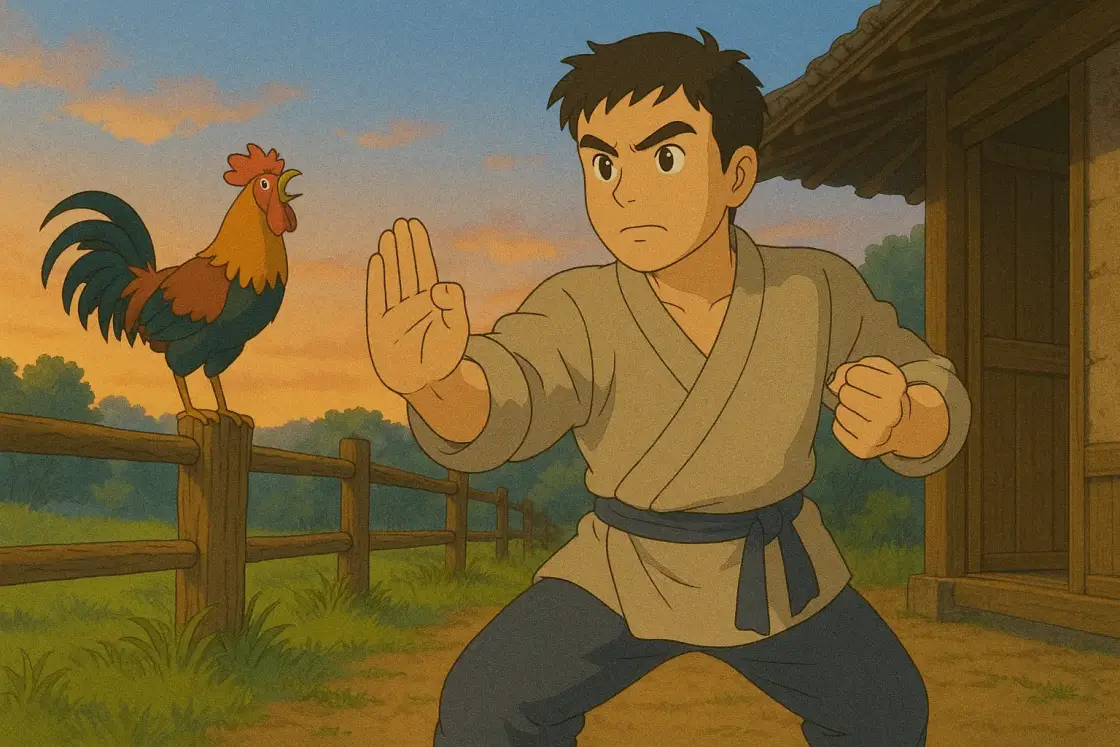
从前东晋时期,有个热血青年叫祖逖。Long ago, during the Eastern Jin period, there was a passionate young man named Zu Ti.他和好朋友刘琨一起在京城求仕。He and his good friend Liu Kun sought official positions together in the capital.两人家里穷,只能同睡一张床。The two came from poor families and could only share one bed.一天凌晨,他们听见远处公鸡打鸣——「喔喔喔——」。One early morning, they heard a rooster crowing in the distance — 'cock-a-doodle-doo.'祖逖立刻翻身起来,拔剑对剑、挥舞练功。Zu Ti immediately rolled over, got up, drew his sword, and practiced sword techniques.他还叫醒刘琨一起练。He also woke Liu Kun to practice together.祖逖说:「大丈夫听到鸡叫就该动起来,不能再睡!」。Zu Ti said, 'A true man should get moving when he hears the rooster crow and not sleep any longer!'「要趁天还没亮把身手练好,将来为国家出力。」'We should train our skills before dawn and serve the country in the future.'从此他们天天「闻鸡起舞」。From then on, they 'rose at the rooster’s crow' every day.无论冬夏,只要鸡叫就起床练剑。Regardless of winter or summer, whenever the rooster crowed they got up to practice swordsmanship.终于成了当时有名的将领。Eventually, they became famous generals of their time.
所以,「闻鸡起舞」这个成语,字面是「听见鸡叫就起来舞剑」。Thus, the idiom ‘聞雞起舞’ literally means ‘upon hearing the rooster’s crow, one gets up and practices swordsmanship.’它引申为听到号召就立刻、抓紧时间努力的意思。By extension, it means that when one hears a call, one immediately strives and makes the most of the time.多用来称赞一个人勤奋自励。It is often used to praise someone’s diligence and self-motivation.
比如:小张每天清晨六点听到闹钟就去跑步和背单字,从不赖床。For example: every morning at six, Xiao Zhang hears the alarm, goes running and studies vocabulary, and never sleeps in.大家都说他真是「闻鸡起舞」。Everyone says he is truly '闻鸡起舞.'
Want to read along with audio? Every story in the Literate Chinese app is narrated by a native speaker — in Mainland or Taiwan Mandarin — so you can listen while you read, and tap any word to save it as a flashcard. See what's in the app.