
HSK 5–6 Stories: 27 Advanced Chinese Stories + 7 Tang Poems
Graded material thins out above HSK 4 — everywhere, including here. These are the 27 free stories on this site estimated at HSK 5 or above, plus 7 Tang poems, and a plan for the step that really matters at this stage: moving on to native Chinese.
- 27advanced stories
- 7Tang poems
- 5,386words through HSK 6
- 301characters in a typical story
繁 Prefer Traditional characters? Traditional reading practice
What advanced Chinese reading looks like
Advanced reading (HSK 5 and 6) is dense: idioms (成语), formal connectors like 从而, 何况 and 以至于, literary turns of phrase, and long sentences with several clauses. Our stories at this level are short but dense — Journey to the West chapters, legends and brand histories packed with names and less common words — and the real goal becomes bridging to native books, news and web novels.
- 3,592–5,386 words / 1,527–1,940 characters — the 2026 HSK 3.0 lists through HSK 5 and through HSK 6.
- The 27 stories here run from 102 to 1,220 characters; sentences average 19.5 characters.
- 94% of their characters are HSK 1–6 characters — the rest come from names, idioms and literary vocabulary.
Read 3 advanced stories right now
Pinyin off, translation off: read each opening and see how much you get on the first pass. Tap words only when the sentence stops making sense.
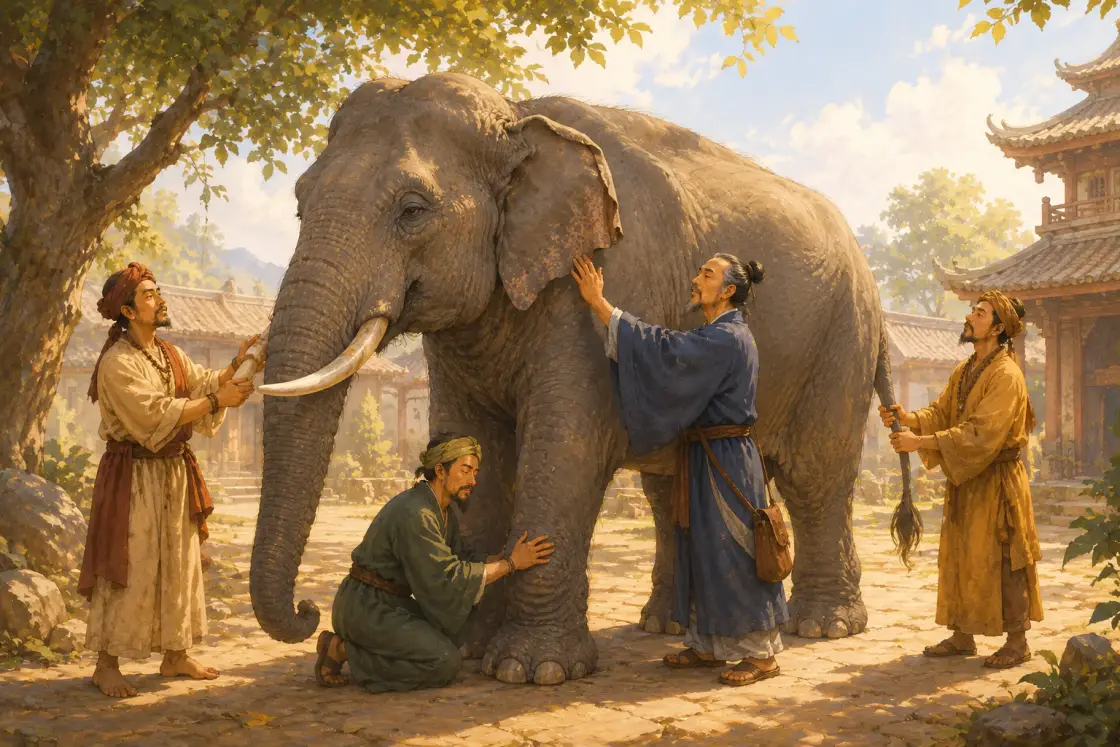
1Touching the Elephant
Four men who cannot see want to know what an elephant looks like. Each one is sure he has the answer.
从前,有四个人,眼睛都看不见。Long ago, there were four men whose eyes could not see.他们想知道大象是什么样子。They wanted to know what an elephant looks like.他们只能用手摸。They could only touch it with their hands.
第一个人摸到牙齿:“大象像萝卜!”The first man touched a tusk: "An elephant is like a radish!"
第二个人摸到耳朵:“大象像扇子!”The second man touched an ear: "An elephant is like a fan!"
第三个人摸到腿:“大象像大树!”The third man touched a leg: "An elephant is like a big tree!"
第四个人摸到尾巴:“大象像绳子!”The fourth man touched the tail: "An elephant is like a rope!"
四个人都说自己对,吵了起来。All four said they were right and started to argue.其实,他们都错了。In fact, they were all wrong.每个人只摸到了一点点。Each of them had only touched one little part.
这个成语是“盲人摸象”。This idiom is "blind men touching an elephant."意思是:只看到一点,就觉得都知道了。It means: you see only a little, but think you know it all.小明只看了一页书,就说这本书不好,真是盲人摸象。Xiao Ming read only one page and said the book was bad — truly blind men touching an elephant.
Check your understanding
Why did the four men touch the elephant with their hands?
What did the man who touched the ear say?
Why were all four men wrong?
2Recruiting Bajie at Gao Village
A family at Gao Village is crying over a son-in-law with a pig's head. Sun Wukong has a plan to catch him.
师徒走到高老庄,一户人家正哭哭啼啼。The master and his disciples arrived at Gao Village, where a family was wailing.原来,三年前招了个能干女婿。As it turned out, three years ago they had taken on a capable son-in-law.谁知他竟是猪头人身的妖怪!Who knew he was a demon with a pig's head and a human body!
孙悟空拍胸脯:“看老孙抓他!”Sun Wukong pounded his chest and said, 'Watch Old Sun catch him!'他变成小姐模样坐在屋里。He transformed into a young lady and sat in the house.晚上,黑脸大耳的猪妖进屋。At night, the pig demon with a black face and large ears entered the house.
他喊:“娘子,俺老猪回来啦!”He shouted, 'My dear wife, your old pig has returned!'
悟空现出原形,举棒要打。Wukong revealed his true form and raised his staff to strike.猪妖吓得丢下钉耙,“菩萨让我等取经人,饶命啊!”The pig demon, terrified, dropped his rake and pleaded, 'Bodhisattva said you were pilgrims; spare my life!'
玄奘给他起名“猪八戒”,叹气道:Xuanzang gave him the name 'Zhu Bajie' and sighed.“唉,你这贪吃的性子,路上可怎么好……”'Alas, with your gluttonous nature, how will you behave on the journey...?'
寓意:人都有缺点,但要努力改正。Moral: Everyone has flaws, but must strive to correct them.
Check your understanding
师徒到高老庄的时候,那户人家为什么哭哭啼啼?
孙悟空用什么办法等猪妖?
玄奘给猪妖起名“猪八戒”以后,为什么叹气?
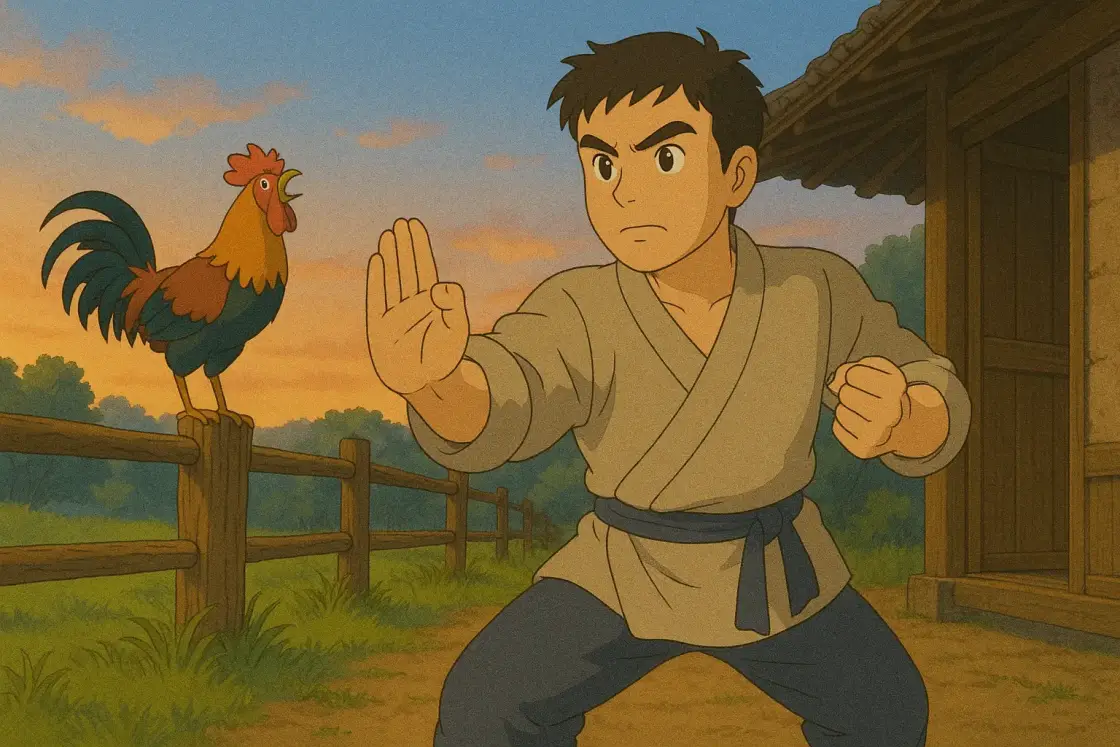
3Rise at the Rooster’s Crow
Story behind the idiom: 闻鸡起舞 - 'Rise at the Rooster’s Crow'
从前东晋时期,有个热血青年叫祖逖。Long ago, during the Eastern Jin period, there was a passionate young man named Zu Ti.他和好朋友刘琨一起在京城求仕。He and his good friend Liu Kun sought official positions together in the capital.两人家里穷,只能同睡一张床。The two came from poor families and could only share one bed.一天凌晨,他们听见远处公鸡打鸣——「喔喔喔——」。One early morning, they heard a rooster crowing in the distance — 'cock-a-doodle-doo.'祖逖立刻翻身起来,拔剑对剑、挥舞练功。Zu Ti immediately rolled over, got up, drew his sword, and practiced sword techniques.他还叫醒刘琨一起练。He also woke Liu Kun to practice together.祖逖说:「大丈夫听到鸡叫就该动起来,不能再睡!」。Zu Ti said, 'A true man should get moving when he hears the rooster crow and not sleep any longer!'「要趁天还没亮把身手练好,将来为国家出力。」'We should train our skills before dawn and serve the country in the future.'从此他们天天「闻鸡起舞」。From then on, they 'rose at the rooster’s crow' every day.无论冬夏,只要鸡叫就起床练剑。Regardless of winter or summer, whenever the rooster crowed they got up to practice swordsmanship.终于成了当时有名的将领。Eventually, they became famous generals of their time.
所以,「闻鸡起舞」这个成语,字面是「听见鸡叫就起来舞剑」。Thus, the idiom ‘聞雞起舞’ literally means ‘upon hearing the rooster’s crow, one gets up and practices swordsmanship.’它引申为听到号召就立刻、抓紧时间努力的意思。By extension, it means that when one hears a call, one immediately strives and makes the most of the time.多用来称赞一个人勤奋自励。It is often used to praise someone’s diligence and self-motivation.
比如:小张每天清晨六点听到闹钟就去跑步和背单字,从不赖床。For example: every morning at six, Xiao Zhang hears the alarm, goes running and studies vocabulary, and never sleeps in.大家都说他真是「闻鸡起舞」。Everyone says he is truly '闻鸡起舞.'
Check your understanding
祖逖听到公鸡打鸣以后,做了什么?
祖逖和刘琨天天早起练剑,后来怎么样?
“闻鸡起舞”多用来称赞什么样的人?
All 27 advanced stories
Start with these 5
The five gentlest advanced stories on this page that stand on their own, shortest and easiest first, each with a picture and a quick quiz.
- 1Chapter 1: The Birth of the Monkey KingA stone on a mountaintop bursts open, and out jumps a monkey. Then the other monkeys make a dare.
- 2
 The Space PenBallpoint pens fail in zero gravity, so scientists spent years and a fortune on a pen that writes anywhere.…
- 3
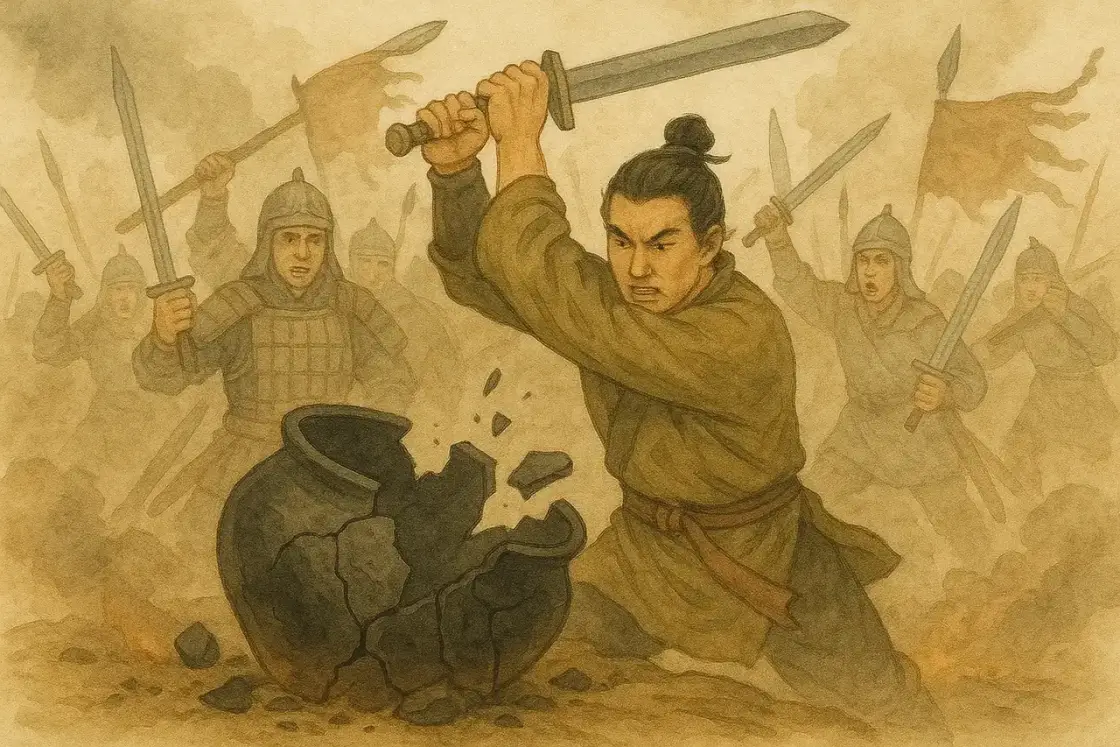 Breaking Pots and Sinking BoatsStory behind the idiom: 破釜沉舟 - to break the cauldrons and sink the boats.
- 4
 The Origin of AirbnbSan Francisco, 2007: two designers can't make rent and every hotel in town is booked, so they inflate three…
- 5
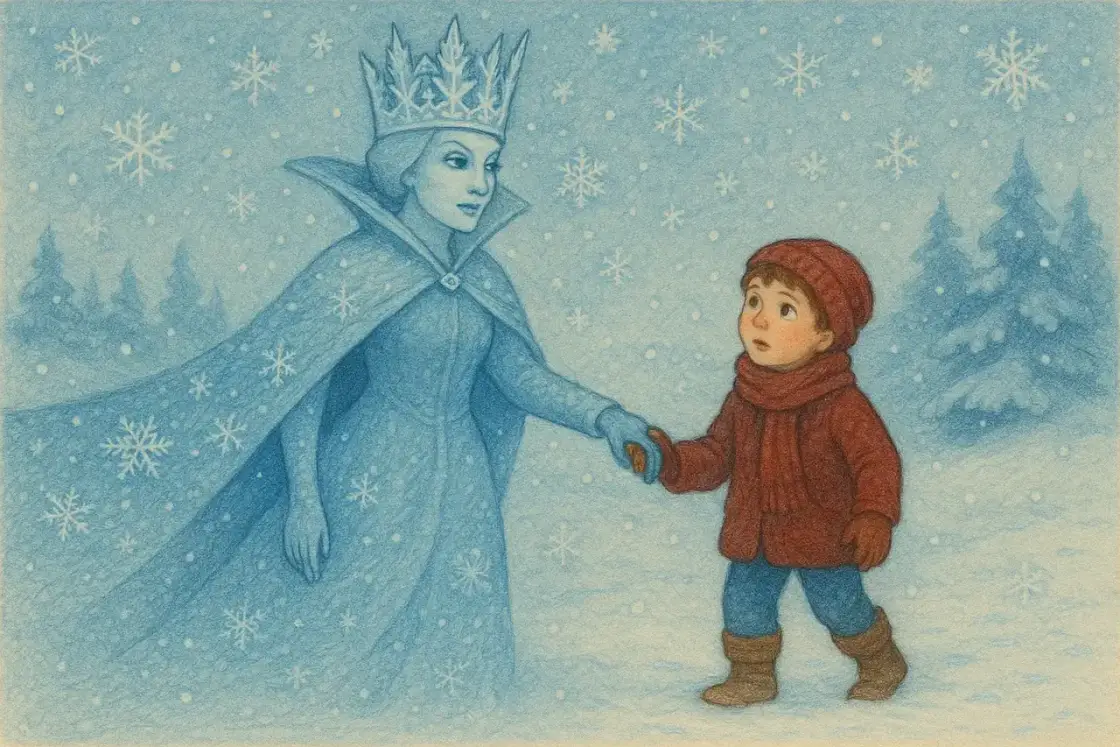 The Snow QueenA tale of friendship and courage.
Sorted easiest to hardest within each theme. Estimated level is HSK 5 or above (HSK 3.0).
Chinese Idioms 3 stories
- Rise at the Rooster’s Crow从前东晋时期,有个热血青年叫祖逖。他…
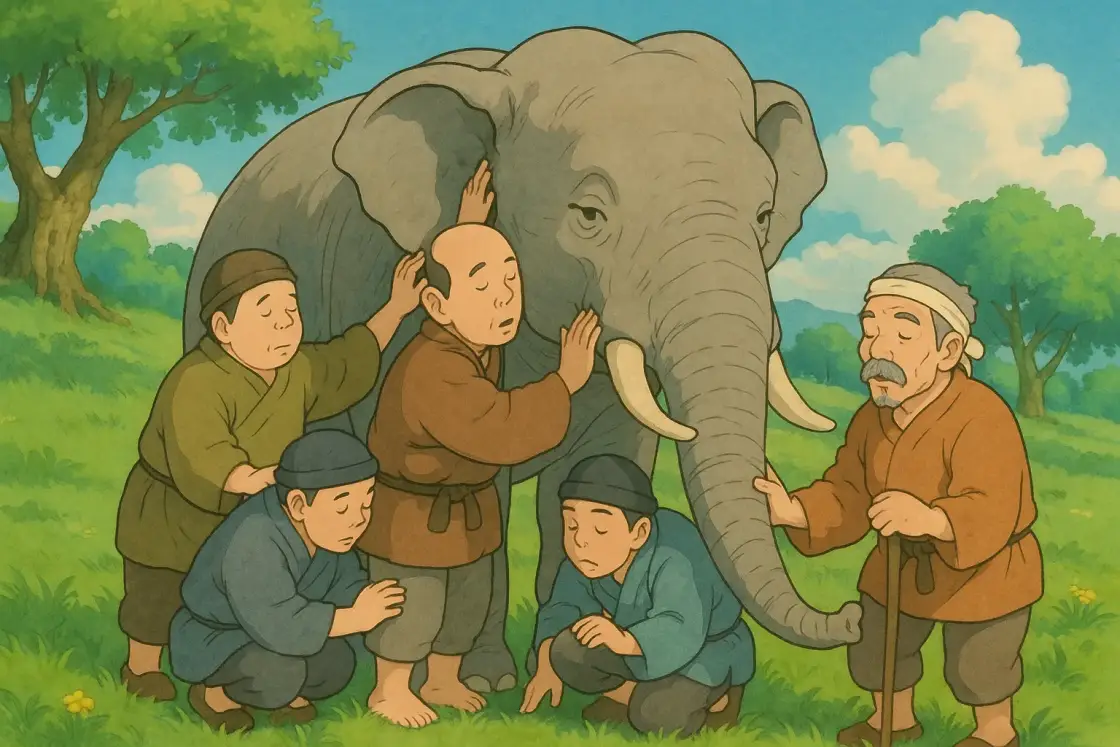 Blind Men Touching the Elephant很久很久以前,有四个盲人很想知道大象…
- Breaking Pots and Sinking Boats很久以前,在古代中国,勇敢的将军项羽…
Journey to the West 8 stories
- Chapter 1: The Birth of the Monkey King海外有座花果山,山顶立着一块闪闪发光…
- Chapter 3: The Havoc in Heaven孙悟空嫌龙宫借的兵器太轻,抢走定海神…
- Chapter 4: Tang Sanzang’s Pilgrimage for Scriptures唐朝的玄奘和尚发愿去西天取经。观音菩…
- Recruiting Bajie at Gao Village师徒走到高老庄,一户人家正哭哭啼啼…
- Chapter 6: Recruiting Sha Monk at the Flowing Sand River一条大河拦住去路,浪里钻出红发妖怪…
- Chapter 8: The Clever Battle with the Red Boy火云洞前,红孩儿喷出三昧神火,烧得八…
- Chapter 9: Crossing the Flaming Mountain火焰山热得像蒸笼。土地公说:“须借铁…
- Chapter 10: The Kingdom of Women and the True Scriptures女儿国没有男人。国王一见唐僧就笑…
Christian Stories 4 stories
 The Restoration of the Gospel神是我们的天父,祂照着自己的形像造了…
 The Sermon on the Mount - Part 1 (Matthew 5)1耶稣看见这许多的人,就上了山,既已…
- The Sermon on the Mount - Part 2 (Matthew 6)1你们要小心,不可将善事行在人的面前…
- The Sermon on the Mount - Part 3 (Matthew 7)1你们不要论断人,免得你们被论断。2…
Business Chinese 8 stories
- The Origin of Airbnb在2007年冬季,两位住在旧金山的室…
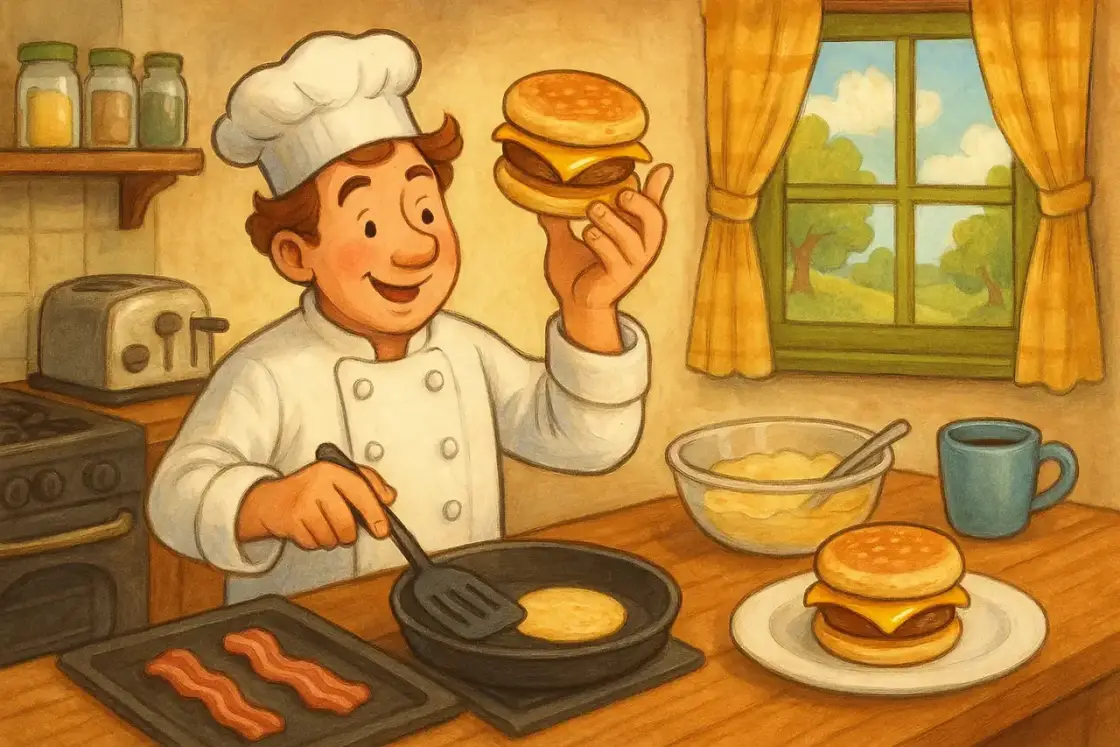 The McGriddle在1990年代末,麦当劳正寻找下一个…
- The Space Pen太空人在环绕地球时发现,普通原子笔在…
 The Dream Creator: The Story of Walt Disney很久以前,有一个叫华特的男孩。他特别…
 The Story of Post-it Notes很多人日常会用到一种小纸条,叫做“便…
 The Story of PatagoniaPatagonia是一家以独特价值观…
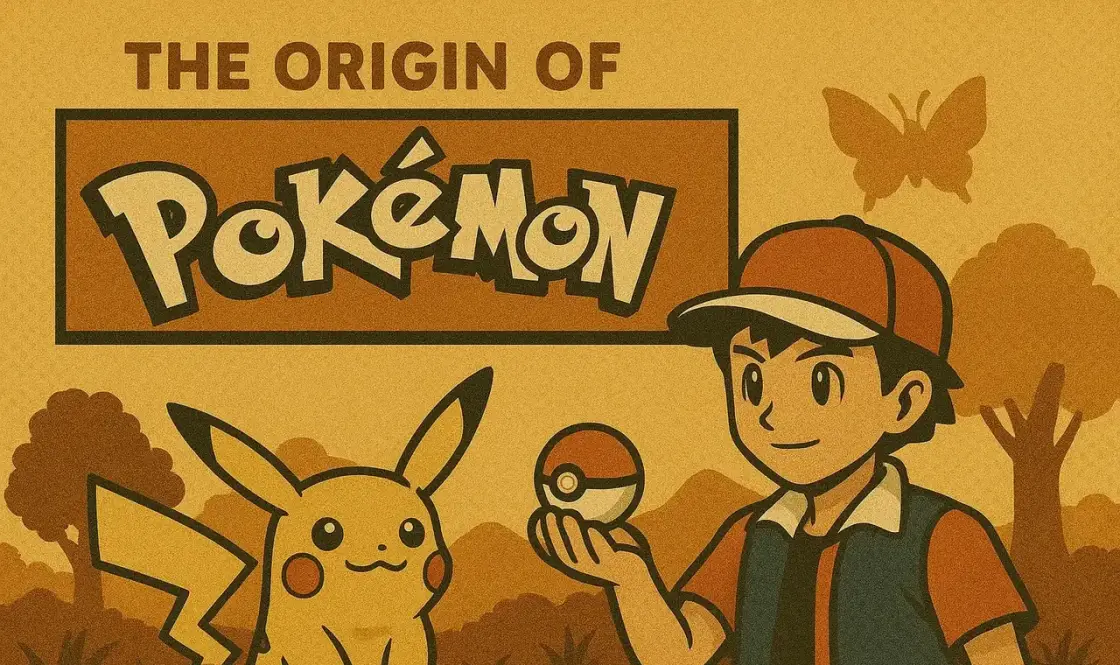 The Story of Pokémon很多人都喜爱“宝可梦”,但是你知道宝…
 The Story of Flamin' Hot Cheetos很多人都喜爱辣味奇多,这种零食香辣可…
More Stories 4 stories
- Touching the Elephant从前,有四个人,眼睛都看不见。他们想…
 Sun Yat-sen: The Doctor Who Chose Revolution (Part 2)一八九四年,中国在战争中被日本打败…
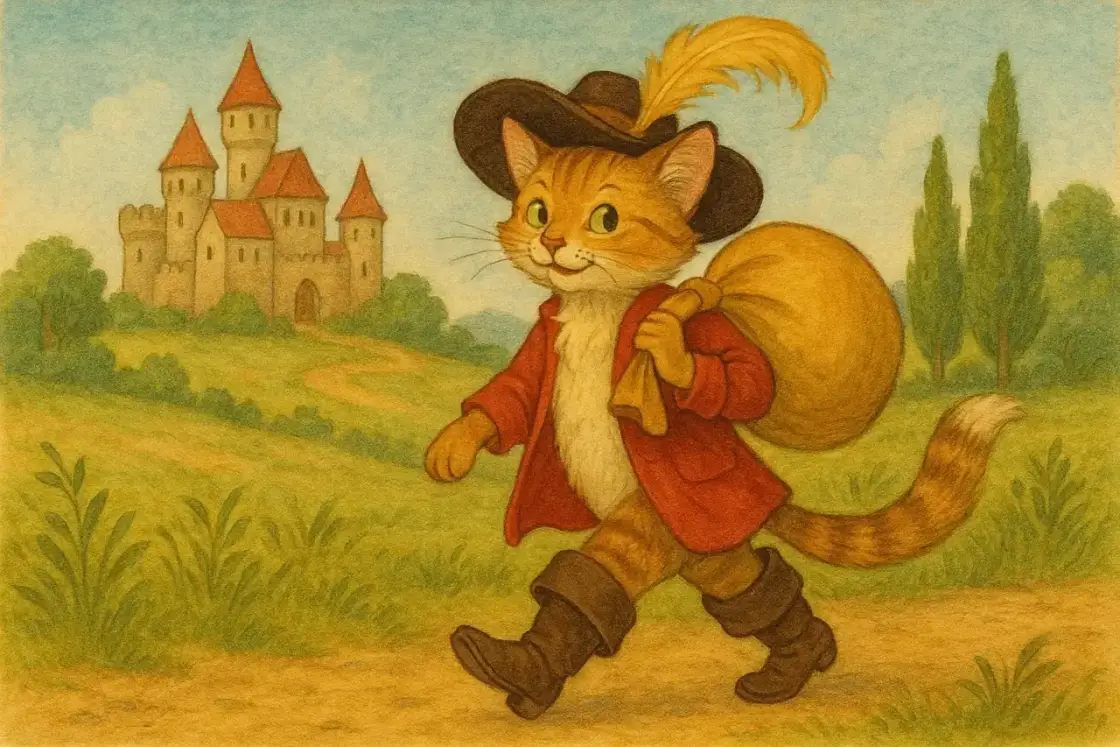 The Cat in Boots从前,一个磨坊主去世后,留给三个儿子…
- The Snow Queen从前,有一对好朋友叫凯和格尔达。一天…
Classical Tang poems 7 poems
Only 18–20 characters each — too short for a level estimate — but written in classical Chinese, so they belong here: every native speaker knows them, and they reward slow, line-by-line reading with pinyin and the translation on.
Bridging to native Chinese
At HSK 5–6 the goal changes: graded stories are no longer the destination, they are the ramp. A plan that works:
- Build stamina on long graded texts. Difficulty is not only rare words — it is staying with a text for 20 minutes. Our longest free stories (The Sermon on the Mount - Part 1 (Matthew 5) — 1,220 characters; The Dream Creator: The Story of Walt Disney — 738 characters; After Twenty Years — 514 characters) are easier in vocabulary but make good stamina tests: if you can read one in a sitting without the translation, you are ready for native material.
- Read adapted classics before originals. Journey to the West, the Art of War and Liaozhai-style strange tales are far easier in modern adaptation, and you will know the story when you meet the original.
- Pick native material with context. Young-adult novels, web novels in a genre you love, and news about events you already followed in English. Knowing the plot covers for the words you don't.
- Learn idioms from their stories. A 成语 sticks when you know its story — start with our idiom stories (守株待兔, 塞翁失马 and more).
- Keep reading easy things too. Speed comes from volume at 98% known words, so mix one hard text with several comfortable ones.
Advanced grammar in these stories
- 明明 + Fact,却 / 还 / 怎么 …Obviously (yet…): 明明practiced in Blind Men Touching the Elephant
- 何必 + Verb Phrase(呢)?Why bother: 何必practiced in Chapter 8: The Clever Battle with the Red Boy
- 宁可 + Lesser Evil,也不 + Rejected OptionWould rather: 宁可…也不practiced in The Sermon on the Mount - Part 1 (Matthew 5)
- 由于 + Cause,(因此)+ EffectFormal cause and effect: 由于…因此practiced in The Story of Flamin' Hot Cheetos
- Event 1,于是 + Event 2And so: 于是practiced in Breaking Pots and Sinking Boats
- Statement,(更)何况 + Stronger Case(呢)?Let alone: 何况practiced in The Sermon on the Mount - Part 2 (Matthew 6)
- Do X,以免 / 免得 + Bad OutcomeTo avoid: 以免 / 免得practiced in The Sermon on the Mount - Part 3 (Matthew 7)
- …,难免 + Verb Phrase / 是难免的Hard to avoid: 难免practiced in The Sermon on the Mount - Part 1 (Matthew 5)
Key HSK 5–6 words in these stories
These are the HSK 5–6 words (HSK 3.0 list) that turn up most often across the stories on this page, so they are the ones worth knowing before you start — you'll see each of them again and again. Browse the full HSK 5 word list and full HSK 6 word list for everything else.
- 当當dàngto treat asin 9 of 27 stories
- 便biànconvenientin 7 of 27 stories
- 为爲wèivariant of 为/為 (wéi)in 7 of 27 stories
- 中zhòngto hit (a target)in 6 of 27 stories
- 从前從前cóng qiánin the pastin 4 of 27 stories
- 于於yúsurname Yuin 4 of 27 stories
- 如何rú héhowin 4 of 27 stories
- 如今rú jīnnowadaysin 3 of 27 stories
- 冲沖chōngto dashin 3 of 27 stories
- 自由zì yóufreedomin 3 of 27 stories
- 公主gōng zhǔprincessin 3 of 27 stories
- 虫子蟲子chóng ziinsectin 3 of 27 stories
- 同tóngsamein 3 of 27 stories
- 救jiùto savein 3 of 27 stories
- 体验體驗tǐ yànto experiencein 3 of 27 stories
- 神shéndivinein 3 of 27 stories
Long-form reading in the app
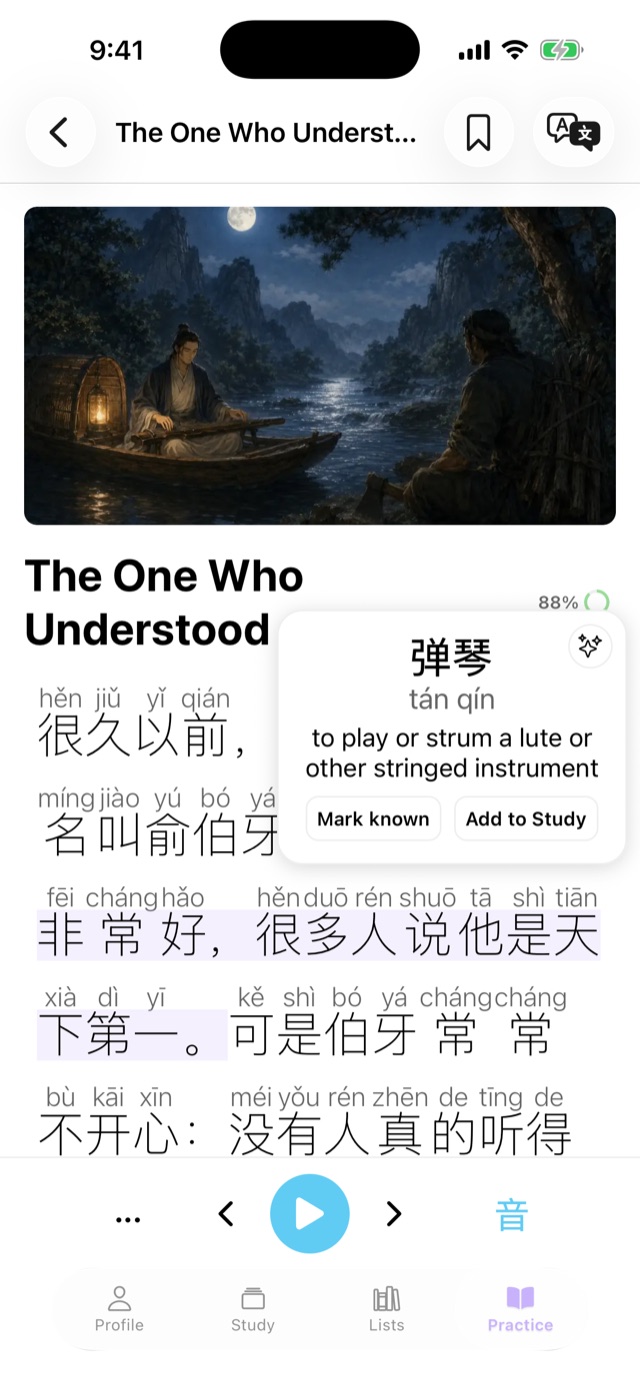
The app doesn't hide a stash of extra HSK 6 stories — on our estimate, the hardest material is the same set you see above. Where it helps an advanced reader is long, connected reading at upper-intermediate level, with native audio in Mainland or Taiwan Mandarin and tap-to-save flashcards:
- Journey to the West — the Monkey King saga, chapter by chapter. 10 parts, estimated HSK 4–6; 10 free on the web.
- The Art of War — Sunzi, retold in readable modern Chinese. 14 parts, estimated HSK 3–4; 2 free on the web.
- Seneca's Letters — Stoic letters adapted into Chinese. 10 parts, estimated HSK 3; 2 free on the web.
- Strange Tales — ghost and fox-spirit tales in the Liaozhai tradition. 14 parts, estimated HSK 3–4; 2 free on the web.
- Ming Dynasty Tales — classic stories from the Ming story collections. 7 parts, estimated HSK 3; 1 free on the web.
- The Hound of Bai Manor — a full Sherlock Holmes novel, reimagined with Detective Shen Mo. 12 parts, estimated HSK 3–4; 2 free on the web.
- Book Summaries — Atomic Habits, How to Win Friends, The Psychology of Money, Deep Work and Mindset. 20 chapters in all.
Every story shows how familiar its words are to you, so you can find the ones that stretch you.


Frequently asked questions
How many characters do I need to read at HSK 5–6?
The 2026 HSK 3.0 syllabus has 3,592 words (1,527 characters) through HSK 5 and 5,386 words (1,940 characters) through HSK 6. Comfortable reading of native novels and news is usually put at 2,500–3,000 characters, which is why HSK 7–9 exists.
Is HSK 5–6 reading hard?
Yes — and the difficulty is different. Grammar is mostly known; what slows you down is vocabulary breadth, idioms and written style. A native novel at this stage often means a new word every line, which is why long graded texts and adapted classics are still worth your time.
Why are there so few advanced stories?
Graded readers are most valuable below HSK 5, so that is where most graded writing — ours included — is concentrated. We would rather be honest about the count (27 stories plus 7 poems on the web) than pad it. At this level, native material becomes the main course and graded stories the warm-up.
What should I read after graded readers?
Start with native material that has strong context: young-adult and children's novels, web novels in a genre you already like, and news on stories you have followed in English. Keep a tap-to-define reader handy and accept a few unknown words per page.
Also useful: Not sure of your level? Take the 2-minute character test · HSK 5 and HSK 6 word lists · How many characters to read Chinese · Traditional reading practice