Gon the Fox, Part 1 ごんぎつね(前編)

N3 (est.) From “Classics Retold” · 741 characters · 103 different kanji

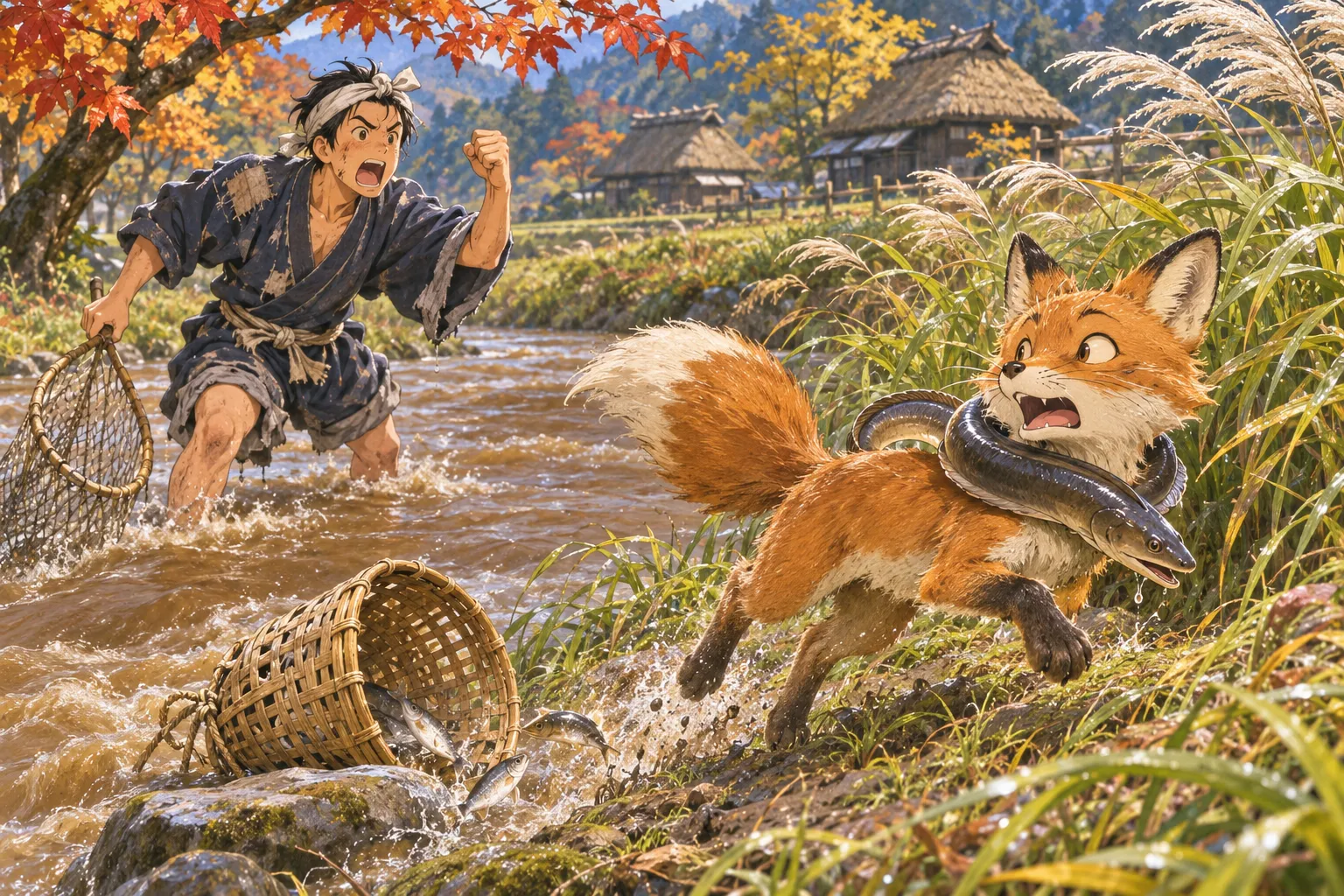
Illustration for the Japanese story Gon the Fox, Part 1

A lonely little fox plays one trick too many on a villager named Hyoju. From Niimi Nankichi's 1932 story.

Tap any word for its meaning and sound.

昔むかし、ある村むらの近ちかくの山やまに、ごんというきつねが住すんでいた。ごんは一人ひとりぼっちで、森もりの中なかに掘ほった穴あなで暮くらしていた。寂さびしいからか、ごんは毎まい日にちのように村むらへやって来きては、何なにかいたずらをして帰かえっていった。畑はたけのいもを掘ほり出だしたり、家いえの前まえの野や菜さいを取とっていったりするので、村むらの人ひとたちは困こまっていた。

Long ago, on a mountain near a certain village, there lived a fox named Gon. Gon was all alone and lived in a hole he had dug in the forest. Maybe because he was lonely, Gon came down to the village almost every day, played some trick or other, and went home again. He dug up potatoes in the fields and made off with vegetables left outside the houses, and the villagers were fed up.

ある秋あきのこと、雨あめが何なん日にちも続つづいて、ごんは穴あなから出でられなかった。やっと雨あめが上あがった日ひ、ごんは村むらの小お川がわまで出でかけていった。川かわの水みずはいつもよりずっと多おおく、茶ちゃ色いろくなって流ながれていた。見みると、川かわの中なかに兵十ひょうじゅうという男おとこが立たって、網あみで魚さかなを取とっている。兵十ひょうじゅうは、取とれた魚さかなやうなぎをかごに入いれると、何なにかを探さがしに川かわ上かみのほうへ行いってしまった。それを見みていたごんは、急きゅうにいたずらがしたくなった。

One autumn, it rained for days on end, and Gon could not leave his hole. On the day the rain finally stopped, Gon went out as far as the village stream. The stream was far higher than usual, and the water ran brown. There in the stream stood a man named Hyoju, catching fish with a net. Hyoju put the fish and eels he had caught in a basket, then went off upstream to look for something. Watching this, Gon suddenly felt like playing a trick.

ごんは草くさの中なかから飛とび出だして、かごの魚さかなを一いっ匹ぴきずつ川かわへ投なげこんだ。最さい後ごに太ふというなぎをつかもうとしたが、ぬるぬるしていて、手てではつかめない。ごんが口くちでくわえると、うなぎはごんの首くびに巻まきついた。そのとき、兵十ひょうじゅうが戻もどってきて、大おお声ごえでどなった。

He jumped out of the grass and threw the fish from the basket back into the stream, one by one. Last, he tried to grab a fat eel, but it was so slippery that he could not hold it in his paws. When Gon took it in his mouth, the eel wrapped itself around his neck. Just then, Hyoju came back and shouted at the top of his voice.

「こら、待まて、泥どろ棒ぼう!」

"Hey! Stop, thief!"

ごんはびっくりして、うなぎを首くびに巻まいたまま、一いっ生しょう懸けん命めい逃にげた。

Startled, Gon ran for his life with the eel still wrapped around his neck.

それから10日とおかほどして、ごんが村むらを通とおると、兵十ひょうじゅうの家いえに人ひとがたくさん集あつまっていた。女おんなの人ひとたちは大おおきな鍋なべで何なにかを料りょう理りしていて、誰だれも笑わらっていない。

About ten days later, Gon passed through the village and saw a crowd of people gathered at Hyoju's house. The women were cooking something in a big pot, and nobody was smiling.

「葬そう式しきか。兵十ひょうじゅうの家いえで、誰だれか亡なくなったんだな。」

"A funeral. So somebody at Hyoju's house has died."

ごんは先さきに墓ぼ地ちへ行いって、赤あかい彼岸花ひがんばなのかげに隠かくれた。しばらくすると、鐘かねの音おとが聞きこえてきて、白しろい着き物ものの人ひとたちの列れつがやって来きた。兵十ひょうじゅうは、いつもは元げん気きな赤あかい顔かおをしているのに、その日ひはすっかり元げん気きをなくしていた。

Gon went ahead to the graveyard and hid behind the red spider lilies. After a while he heard a bell, and a line of people in white kimonos came along. Hyoju's face was usually red and full of life, but that day all the life had gone out of him.

「そうか、亡なくなったのは兵十ひょうじゅうのおっかあか。」

"So that's it. It was Hyoju's mother who died."

その夜よる、ごんは穴あなの中なかで考かんがえた。

That night, Gon lay in his hole and thought.

「兵十ひょうじゅうは、病びょう気きのおっかあにうなぎを食たべさせたくて、あの日ひ、川かわに出でていたんだな。」「それなのにおれは、おもしろがって、そのうなぎを持もっていってしまった。」「おっかあは、最さい後ごまで、うなぎを待まっていたのかもしれない。」「あんないたずら、しなければよかった。」

"Hyoju must have been out in the stream that day because he wanted his sick mother to have some eel." "And I went and made off with that eel, just for fun." "Maybe she was waiting for that eel right up to the end." "I wish I had never played that trick."

Check your understanding

3 questions about “Gon the Fox, Part 1”. Tap an answer to check it.

1. ごんは、兵十ひょうじゅうのかごの魚さかなをどうしたか。

2. ごんが兵十ひょうじゅうの家いえで見みたのは、何なんだったか。

3. その夜よる、ごんは穴あなの中なかでどう思おもったか。

Words in this story

The first 40 of 146 different words in “Gon the Fox, Part 1”, in the order you meet them, in dictionary form, with reading and English. Particles are left out.

WordReadingMeaning
昔むかしむかしthe old days; the past; former times; a long time ago; the past ten years
あるあるa certain ...; some ...
村むらむらvillage
近ちかくちかくnear; neighbourhood; neighborhood; vicinity; nearly (e.g. "it took nearly one year")
山やまやまmountain; hill; mine; (mountain) forest
ごんごんGon (the fox in Niimi Nankichi's Gon the Fox); male
というというcalled; named; that says; that; as many as
きつねきつねfox (esp. the red fox, Vulpes vulpes); fox (i.e. a sly person) …
住すむすむto live (of humans); to reside; to inhabit; to dwell; to abide
一人ひとりぼっちひとりぼっちaloneness; loneliness; solitude
だだbe; is
森もりもりforest; shrine grove
中なかなかinside; interior; among; within; middle
掘ほるほるto dig; to excavate; to hollow; to delve into; to dig up (vegetables, treasure, etc.)
穴あなあなhole; opening; orifice; perforation; pit
暮くらすくらすto live (on, by, etc.); to lead a life; to get along; to get by; to make a living
寂さびしいさびしいlonely (e.g. person, feeling); lonesome; forlorn; desolate; deserted
毎まい日にちまいにちevery day; daily
ようようappearing ...; looking ...; way to ...; method of ...ing; form
やってくるやってくるto come along; to come around; to turn up; to arrive at the present; to get where one is
何なになにwhat; you-know-what; that thing; whatsit; whachamacallit
いたずらいたずらmischief; prank; trick; practical joke; mischievous
するするto do; to carry out; to perform; to cause to become; to make (into)
帰かえるかえるto return; to come home; to go home; to go back; to leave (of a guest, customer, etc.)
畑はたけはたけfield (for growing wheat, fruit, vegetables, etc.); cultivated land; vegetable plot …
芋いもいもtuber; taro; potato; yam; yokel
掘ほり出だすほりだすto dig out; to pick up
家いえいえhouse; residence; dwelling; home; family
前まえまえin front (of); before (e.g. a building); before; earlier; previously
野や菜さいやさいvegetable; marijuana; cannabis
取とるとるto take; to pick up; to grab; to catch; to hold
のでのでbecause; as; since; so; therefore
人ひとたちひとたちpeople
困こまるこまるto be troubled; to have difficulty; to be in a fix; to be at a loss; to be stumped
秋あきあきautumn; fall
ことことthing; matter; incident; occurrence; event
雨あめあめrain; rainy day; rainy weather; the November suit (in hanafuda)
何なん日にちなんにちwhat day; how many days
続つづくつづくto continue; to last; to go on; to continue (without a break); to be unbroken
出でるでるto leave; to exit; to go out; to come out; to get out

Readings and meanings are adapted from JMdict and KANJIDIC2, property of the Electronic Dictionary Research and Development Group, used under its licence (CC BY-SA 4.0). Still learning the kana? See the hiragana chart and the katakana chart.

Keep reading

This is one of the free stories in Japanese reading practice. In the Literate Japanese app every word you tap is saved for review, a natural Japanese voice reads each sentence, and the next story is matched to the kanji you know. The app is coming soon to iOS and Android.

Read your way to 300 kanji

Literate Japanese has 280+ graded stories from kana-only to estimated N2, with furigana you can turn off, every word one tap away, and flashcards built from what you read. The 60-chapter Reading Trail to your first 300 kanji is free. Coming soon to iOS and Android.

Email me when it launches

Start today in the browser: read a free Japanese story →