Gon the Fox, Part 2 ごんぎつね(後編)

N3 (est.) From “Classics Retold” · 791 characters · 90 different kanji

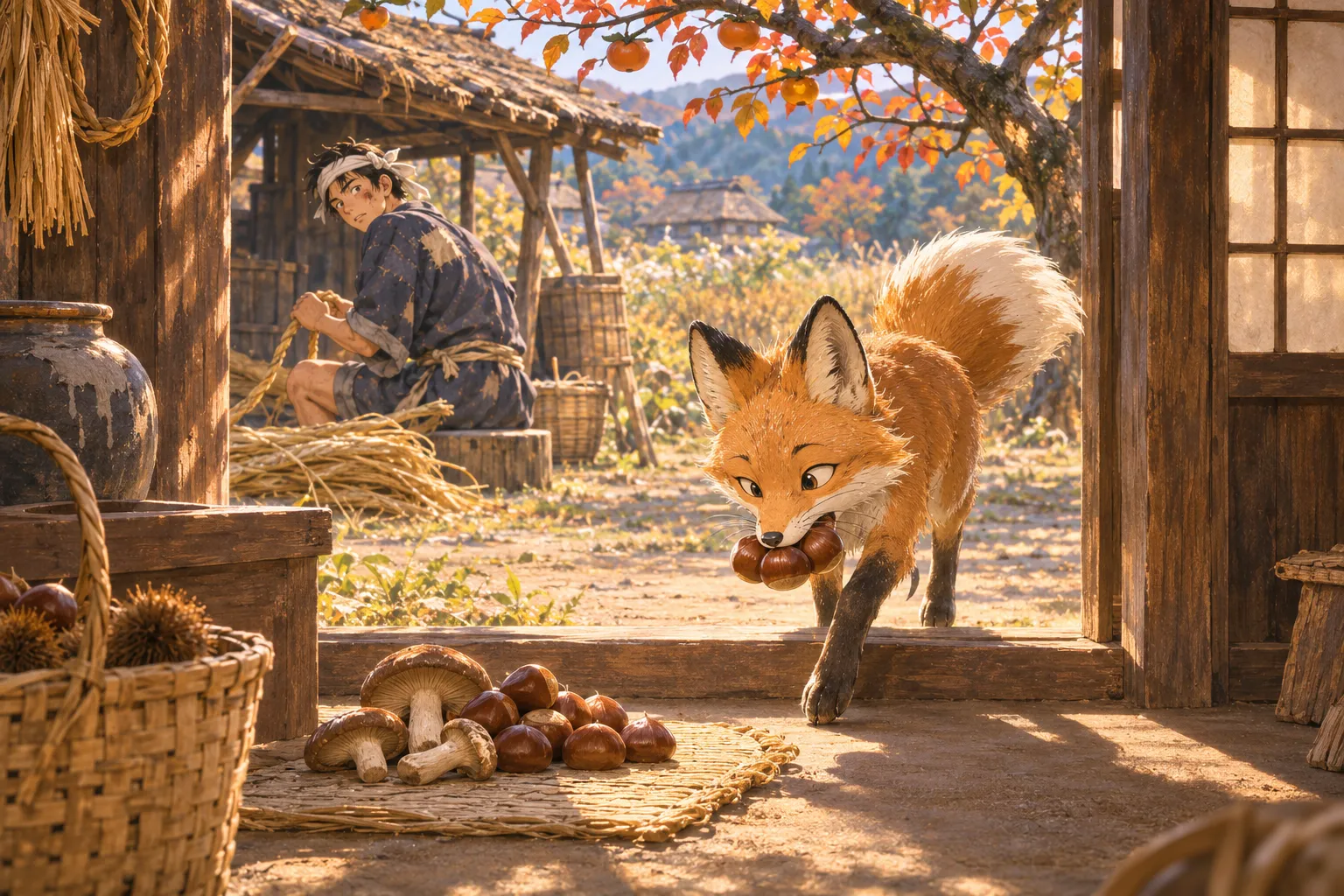
Illustration for the Japanese story Gon the Fox, Part 2

Gon tries to make up for his trick by secretly bringing Hyoju chestnuts. The second half of Niimi's story.

Tap any word for its meaning and sound.

兵十ひょうじゅうは、おっかあと二人ふたりだけで、貧まずしく暮くらしていた。おっかあが死しんで、兵十ひょうじゅうも一人ひとりぼっちになってしまった。一人ひとりで米こめを洗あらっている兵十ひょうじゅうを物もの置おきの後うしろから見みながら、ごんは、おれと同おなじだなと思おもった。

Hyoju had lived in poverty, just he and his mother. Now that she was dead, Hyoju was all alone too. Watching from behind the shed as Hyoju washed his rice alone, Gon thought, "He's just like me."

そこへ、いわしを売うる男おとこの声こえが聞きこえてきた。ごんは、男おとこが見みていないときに、かごからいわしをつかみ出だした。そして兵十ひょうじゅうの家いえの中なかへ投なげこんで、山やまへ走はしって帰かえった。これで少すこしは、うなぎのおわびになる。ごんはそう思おもった。

Just then, he heard the voice of a man selling sardines. While the man was not looking, Gon grabbed some sardines out of his basket. He threw them into Hyoju's house and ran back to the mountain. Gon felt he had made up, a little, for the eel.

ところが次つぎの日ひ、兵十ひょうじゅうの家いえへ行いってみると、兵十ひょうじゅうの顔かおに傷きずがついている。

But the next day, when he went to Hyoju's house, there was a cut on Hyoju's face.

「家いえにいわしを投なげこんでいったのは、どこの誰だれだ。泥どろ棒ぼうとまちがえられて、いわし屋やにたたかれたじゃないか。」

"Who was it that threw sardines into my house? I got taken for a thief, and the sardine seller gave me a beating!"

ごんは、悪わるいことをしたと思おもった。それからは、山やまで栗くりを拾ひろっては、毎まい日にち兵十ひょうじゅうの家いえへ持もっていった。栗くりだけでなく、きのこを持もっていく日ひもあった。

Gon saw that he had only made things worse. After that, he gathered chestnuts on the mountain and took them to Hyoju's house every day. Some days he took mushrooms as well as chestnuts.

月つきのきれいな晩ばん、ごんは、兵十ひょうじゅうと加助かすけという村むら人びとが歩あるきながら話はなしているのを聞きいた。

One evening when the moon was beautiful, Gon overheard Hyoju talking with a villager named Kasuke as they walked.

「なあ加助かすけ、近ちかごろ、おかしなことが続つづくんだ。知しらないうちに、誰だれかが毎まい日にち、栗くりやきのこを家いえに置おいていく。」

"Say, Kasuke, odd things keep happening lately. Every day, somebody leaves chestnuts and mushrooms at my house when I'm not looking."

「それはきっと、神かみ様さまだよ。おっかあを亡なくしたお前まえのことを、見みていてくださるんだ。」「ちゃんと手てを合あわせて、お礼れいを言いっておけよ。」

"That has to be the gods. They're watching over you now that you've lost your mother." "Be sure to put your hands together and thank them."

ごんは、聞きいていておもしろくなかった。

Gon, listening, did not like that one bit.

「栗くりを持もっていくのはおれなのに、お礼れいは神かみ様さまに言いうのか。それじゃ、おれは損そんだなあ。」

"I'm the one bringing the chestnuts, and he's going to thank the gods? That's a bad deal for me."

それでもごんは、次つぎの日ひも栗くりを拾ひろって、兵十ひょうじゅうの家いえへ届とどけに行いった。兵十ひょうじゅうは物もの置おきで仕し事ごとをしていた。ごんは、裏うら口ぐちからそっと家いえの中なかへ入はいった。そのとき兵十ひょうじゅうが顔かおを上あげると、きつねが家いえに入はいっていくのが見みえた。

Even so, the next day Gon gathered chestnuts again and went to deliver them to Hyoju's house. Hyoju was working in the shed. Gon slipped quietly into the house through the back door. Just then Hyoju looked up and saw a fox going into his house.

「この前まえうなぎを取とっていったごんぎつねだな。今こん度どは何なにをする気きだ。」

"That's the fox Gon who made off with my eel the other day. What is he up to this time?"

兵十ひょうじゅうは鉄てっ砲ぽうを取とると、足あし音おとを立たてないように近ちかづいた。そして、家いえから出でてくるごんを撃うった。ごんは、その場ばに倒たおれた。兵十ひょうじゅうが走はしっていって家いえの中なかを見みると、入いり口ぐちに栗くりがまとめて置おいてあった。兵十ひょうじゅうは驚おどろいて、倒たおれているごんのほうを見みた。

Hyoju took his gun and crept up without a sound. Then, as Gon came out of the house, he fired. Gon fell where he stood. Hyoju ran over and looked inside the house. There, by the entrance, was a neat pile of chestnuts. Shocked, Hyoju looked over at Gon lying on the ground.

「ごん、お前まえだったのか。いつも栗くりをくれたのは。」

"Gon, it was you? You were the one who kept bringing me chestnuts?"

ごんは、ぐったりと目めをつぶったまま、うなずいた。兵十ひょうじゅうは、持もっていた鉄てっ砲ぽうを地じ面めんに落おとした。鉄てっ砲ぽうの先さきからは、青あおい煙けむりがまだ細ほそく立たっていた。

Gon lay limp, his eyes still closed, and nodded. The gun dropped from Hyoju's hands to the ground. A thin line of blue smoke was still rising from its muzzle.

Check your understanding

3 questions about “Gon the Fox, Part 2”. Tap an answer to check it.

1. ごんは毎まい日にち、兵十ひょうじゅうの家いえへ何なにを持もっていったか。

2. 加助かすけは、栗くりを置おいていくのは誰だれだと言いったか。

3. 兵十ひょうじゅうは、どうしてごんを撃うったのか。

Words in this story

The first 40 of 142 different words in “Gon the Fox, Part 2”, in the order you meet them, in dictionary form, with reading and English. Particles are left out.

WordReadingMeaning
兵十ひょうじゅうひょうじゅうHyoju (villager in Gon the Fox); male
おっかあおっかあmother; mom (old-fashioned, rustic)
ととif; when; and; as well as; with
二人ふたりふたりtwo persons; two people; pair; couple
貧まずしいまずしいpoor; needy; lacking (quantity and quality-wise); poor; scanty
暮くらすくらすto live (on, by, etc.); to lead a life; to get along; to get by; to make a living
死しぬしぬto die; to pass away; to lose spirit; to lose vigor; to look dead
一人ひとりぼっちひとりぼっちaloneness; loneliness; solitude
なるなるto become; to get; to grow; to turn; to reach
一人ひとりひとりone person; being alone; being by oneself; being single; being unmarried
米こめこめ(husked grains of) rice; staple (product, etc.); necessity; (online) comment
洗あらうあらうto wash; to cleanse; to rinse; to inquire into; to investigate
物もの置おきものおきstorage room; storeroom; lumber room
後うしろうしろback; behind; rear
見みるみるto see; to look; to watch; to view; to observe
ながらながらwhile; during; as; while; although
ごんごんGon (the fox in Niimi Nankichi's Gon the Fox); male
俺おれおれI; me
同おなじおなじsame; identical; equal; alike; equivalent
だだbe; is
思おもうおもうto think; to consider; to believe; to reckon; to think (of doing)
そこそこthere (place relatively near listener); there (place just mentioned); that place …
いわしいわしpilchard (esp. Japanese pilchard, Sardinops melanostictus); sardine
売うるうるto sell; to betray; to sell out (one's friend, country, etc.); to make (oneself) known …
男おとこおとこman; male; fellow; guy; chap
声こえこえvoice; singing (of a bird); chirping (of an insect); hoot; voice
聞きこえるきこえるto be heard; to be audible; to reach one's ears; to sound (like); to come across (as)
時ときときtime; hour; moment; occasion; case
かごかごbasket (shopping, etc.); hamper; cage
掴つかみ出だすつかみだすto grab and take out; to pull out by the handful
そしてそしてand; and then; thus; and now; and finally
家いえいえhouse; residence; dwelling; home; family
中なかなかinside; interior; among; within; middle
投なげ込こむなげこむto throw into
山やまやまmountain; hill; mine; (mountain) forest
走はしるはしるto run; to run (of a vehicle); to drive; to travel; to move
帰かえるかえるto return; to come home; to go home; to go back; to leave (of a guest, customer, etc.)
これこれthis; this one; this person; now; this point (in time)
少すこしすこしa little; a bit; a small amount; a few; some
うなぎうなぎeel (esp. the Japanese eel, Anguilla japonica)

Readings and meanings are adapted from JMdict and KANJIDIC2, property of the Electronic Dictionary Research and Development Group, used under its licence (CC BY-SA 4.0). Still learning the kana? See the hiragana chart and the katakana chart.

Keep reading

This is one of the free stories in Japanese reading practice. In the Literate Japanese app every word you tap is saved for review, a natural Japanese voice reads each sentence, and the next story is matched to the kanji you know. The app is coming soon to iOS and Android.

Read your way to 300 kanji

Literate Japanese has 280+ graded stories from kana-only to estimated N2, with furigana you can turn off, every word one tap away, and flashcards built from what you read. The 60-chapter Reading Trail to your first 300 kanji is free. Coming soon to iOS and Android.

Email me when it launches

Start today in the browser: read a free Japanese story →