
Itadakimasu いただきます

N4 (est.) From “Japanese Culture” · 509 characters · 47 different kanji

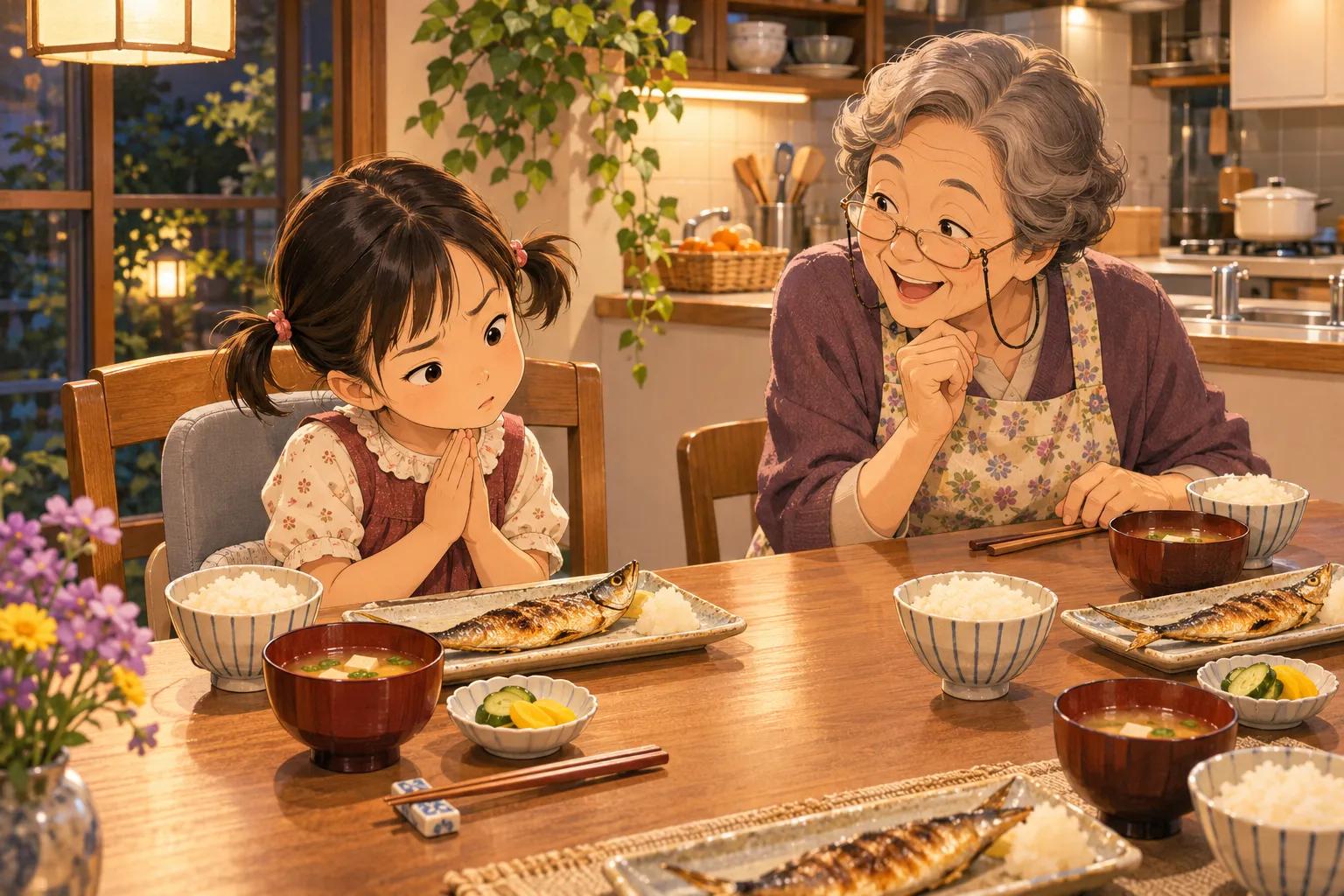
Illustration for the Japanese story Itadakimasu

Five-year-old Mio asks who she is talking to when she says itadakimasu, and her grandmother has an answer.

Tap any word for its meaning and sound.

夕ゆうごはんのテーブルに、やき魚ざかなとみそしるとごはんがならんだ。5さいの美緒みおは手てを合あわせて、「いただきます」と言いった。それから少すこし考かんがえて、おばあちゃんに聞きいた。

Grilled fish, miso soup and rice were lined up on the dinner table. Five-year-old Mio put her hands together and said, "Itadakimasu." Then she thought for a moment and asked her grandma.

「おばあちゃん、『いただきます』って、だれに言いってるの?」

"Grandma, who are we saying 'itadakimasu' to?"

「いいことを聞きくねえ。」

"Now that's a good question."

おばあちゃんは、持もっていたお箸はしをおいた。

Grandma put down her chopsticks.

「『いただく』っていうのは、『もらう』をていねいに言いう言こと葉ばなの。」

"'Itadaku' is a polite way of saying 'to receive.'"

「何なにをもらうの?」

"Receive what?"

「いのちだよ。この魚さかなも、お米こめも、やさいも、みんな生いきていたでしょ。」

"Life. This fish, the rice, the vegetables, they were all alive, weren't they?"

「そのいのちをもらって、わたしたちは生いきているの。だから、ありがとうって言いうんだよ。」

"We receive those lives, and that's how we live. So we say thank you."

美緒みおは自じ分ぶんの魚さかなを見みた。魚さかなも、美緒みおを見みているようだった。

Mio looked at her fish. The fish seemed to be looking back at her.

「それから、魚さかなをとった人ひと、お米こめを作つくった人ひと、ごはんを作つくった人ひとにもね。」

"And thank you to the person who caught the fish, the person who grew the rice, and the person who cooked the meal, too."

食しょく事じがおわったら、「ごちそうさま」と言いう。「ごちそう」は、むかし、「走はしり回まわる」という意い味みの言こと葉ばだったと言いわれている。お客きゃくさんにおいしい物ものを出だすために、あちこち走はしり回まわって食たべ物ものを集あつめたからだ。だから「ごちそうさま」は、走はしり回まわってくれた人ひとへのお礼れいの言こと葉ばになる。学がっ校こうの昼ひるごはんの時じ間かんにも、子こどもたちは声こえを合あわせて「いただきます」と言いう。一人ひとりで食たべるときに、小ちいさい声こえで言いう人ひとも多おおい。

When the meal is over, people say "gochisosama." It is said that "gochiso" was once a word that meant "to run around." That is because people ran here and there gathering food so they could serve a guest something good. So "gochisosama" is a word of thanks to the person who did all that running around. At school lunch, too, the children say "itadakimasu" all together. Many people say it quietly even when they eat alone.

その夜よる、美緒みおは魚さかなをきれいに食たべた。

That night, Mio ate every bit of her fish.

「ごちそうさまでした。おばあちゃん、走はしり回まわってくれてありがとう。」

"Gochisosama deshita. Thank you for running around, Grandma."

「今日きょうはスーパーまで歩あるいただけだよ。」

"All I did today was walk to the supermarket."

おばあちゃんはわらって、美緒みおの頭あたまに手てをおいた。

Grandma laughed and put her hand on Mio's head.

Check your understanding

3 questions about “Itadakimasu”. Tap an answer to check it.

1. 美緒みおは、おばあちゃんに何なにを聞ききましたか。

2. おばあちゃんの話はなしでは、「いただきます」は何なにへのありがとうですか。

3. 「ごちそう」は、むかし、どんな意い味みだったと言いわれていますか。

Words in this story

The first 40 of 87 different words in “Itadakimasu”, in the order you meet them, in dictionary form, with reading and English. Particles are left out.

WordReadingMeaning
夕ゆうご飯はんゆうごはんevening meal; dinner; supper
テーブルテーブルtable
焼やき魚ざかなやきざかなgrilled fish
ととif; when; and; as well as; with
味み噌そ汁しるみそしるmiso soup
ご飯はんごはんcooked rice; meal
並ならぶならぶto line up; to stand in a line; to rival; to match; to equal
五ごごfive; 5
歳さいさい... years old; age (of) ...
美緒みおみおMio (female given name)
手ててhand; arm; forepaw; foreleg; handle
合あわせるあわせるto match (rhythm, speed, etc.); to join together; to unite; to combine; to add up
いただきますいただきますthank you (for the meal just served); I receive (this meal)
言いういうto say; to utter; to declare; to name; to call
それからそれからand then; after that
少すこしすこしa little; a bit; a small amount; a few; some
考かんがえるかんがえるto think (about, of); to think over; to ponder; to contemplate; to reflect (on)
おばあちゃんおばあちゃんgranny; grandma; gran; old lady; old woman
聞きくきくto hear; to listen (e.g. to music); to ask; to enquire; to query
誰だれだれwho
いいいいgood; excellent; fine; nice; pleasant
ことことthing; matter; incident; occurrence; event
持もつもつto hold (in one's hand); to take; to carry; to possess; to have
おおhonorific/polite/humble prefix
箸はしはしchopsticks
置おくおくto put; to place; to leave (behind) …
いただくいただくto receive; to get; to accept; to take; to buy
もらうもらうto receive; to take; to accept; to get someone to do something …
丁てい寧ねいていねいpolite; courteous; civil; careful; close
言こと葉ばことばlanguage; dialect; word; phrase; expression
だだbe; is
何なになにwhat; you-know-what; that thing; whatsit; whachamacallit
命いのちいのちlife; life force; lifetime; lifespan; most important thing
このこのthis; last (couple of years, etc.); these; past; this
魚さかなさかなfish
米こめこめ(husked grains of) rice; staple (product, etc.); necessity; (online) comment
野や菜さいやさいvegetable; marijuana; cannabis
みなみなeveryone; everybody; all; everything; all
生いきるいきるto live; to exist; to make a living; to subsist; to be in effect
そのそのthat; the; part (as in "part two"); um ...; er ...

Readings and meanings are adapted from JMdict and KANJIDIC2, property of the Electronic Dictionary Research and Development Group, used under its licence (CC BY-SA 4.0). Still learning the kana? See the hiragana chart and the katakana chart.

Keep reading

This is one of the free stories in Japanese reading practice. In the Literate Japanese app every word you tap is saved for review, a natural Japanese voice reads each sentence, and the next story is matched to the kanji you know. The app is coming soon to iOS and Android.

Read your way to 300 kanji

Literate Japanese has 280+ graded stories from kana-only to estimated N2, with furigana you can turn off, every word one tap away, and flashcards built from what you read. The 60-chapter Reading Trail to your first 300 kanji is free. Coming soon to iOS and Android.

Email me when it launches

Start today in the browser: read a free Japanese story →