
More Empty Houses Than People 人より空き家が多い村
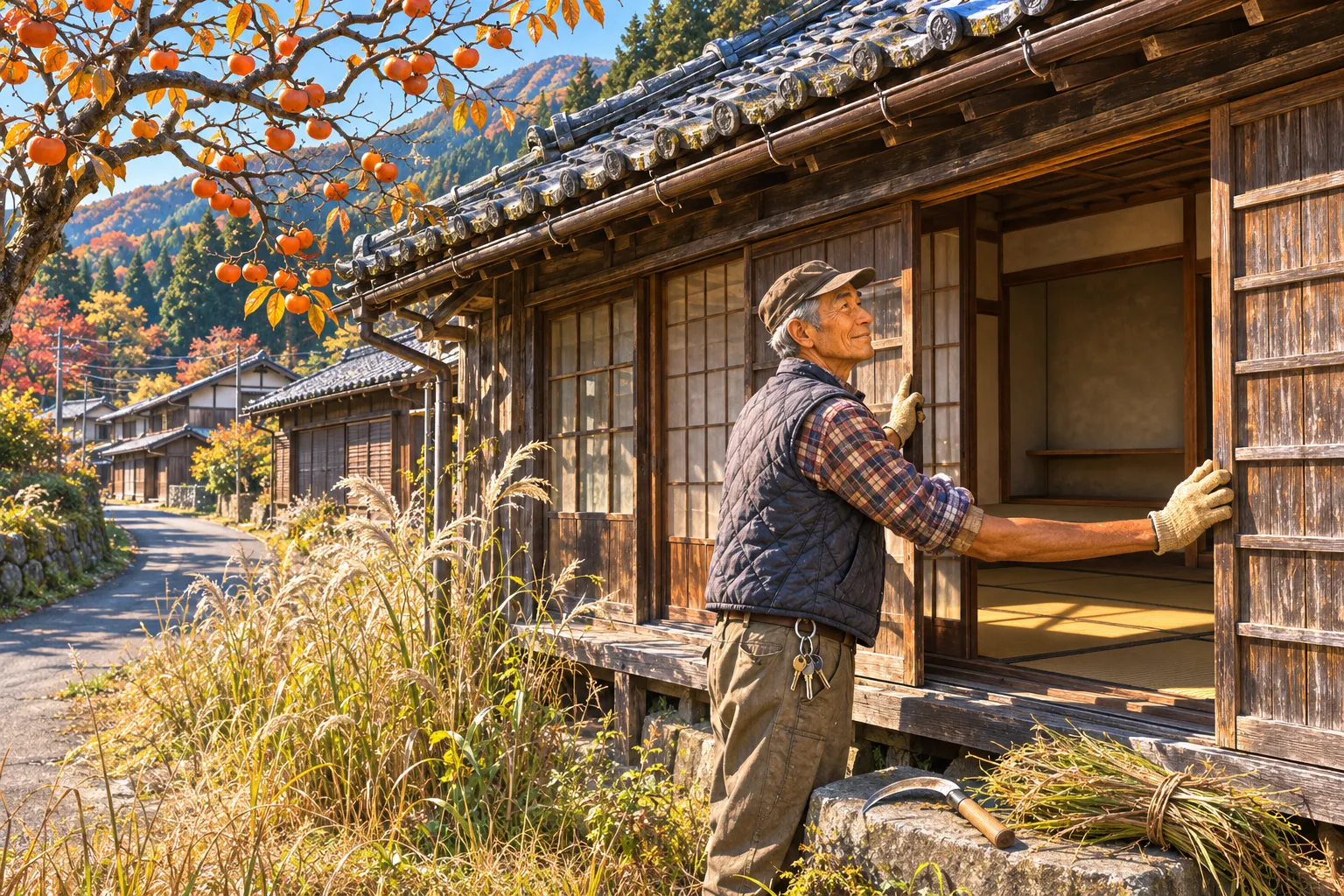
In a mountain hamlet where empty houses outnumber people, a 78-year-old airs out his neighbors' homes.
県道を外れて、細い坂道を車で20分ほど上ると、谷に沿って古い家が並ぶ集落に着く。数えてみると家は40軒ほどあるが、今も人が暮らしているのは12軒にすぎない。住民は19人で、空き家の数のほうが人の数より多いことになる。空き家は雨戸が閉められたままで、庭には草が伸び、柿の木だけが毎年実をつけている。
Turn off the prefectural highway, drive twenty minutes up a narrow, sloping road, and you reach a hamlet of old houses strung along a valley. Count them and you find about forty houses, but people still live in only twelve. There are nineteen residents, which means the empty houses outnumber the people. The empty houses have their storm shutters closed and grass growing tall in their yards, and only the persimmon trees still bear fruit each year.
この集落で生まれ育った78歳の山田さんは、空き家の見回りを続けている。月に一度、遠くに住む持ち主に代わって窓を開け、風を通し、屋根や壁が傷んでいないかを確かめる。郵便受けにたまった広告を片づけ、庭の草を刈ることもある。
Mr. Yamada, 78, who was born and raised here, makes regular rounds of the empty houses. Once a month, on behalf of owners who live far away, he opens the windows, lets the air through, and checks the roofs and walls for damage. Sometimes he also clears out the flyers piled up in the mailbox and cuts the grass in the yard.
「家は人が住まなくなると、あっという間にだめになる。」と山田さんは言う。
"Once nobody lives in a house, it goes to ruin in no time," Mr. Yamada says.
お金をもらってしている仕事ではない。子どものころ遊びに行った友人の家が崩れていくのを、黙って見ていられなかったのだという。
He isn't paid for any of this. He says he simply couldn't stand by and watch a friend's house, one he had played in as a child, fall apart.
空き家が増えているのは、この集落に限った話ではない。若い世代が進学や就職をきっかけに都市へ出て行き、親が亡くなると、家だけが残される。相続した人にとっても、遠くの古い家を管理するのは簡単ではない。壊すには費用がかかり、売ろうとしても買い手が見つからない。思い出のある家を手放す決心がつかない人も多い。こうして、だれも住まない家が、地方だけでなく都市の住宅地でも少しずつ増えてきた。
Empty houses are not on the rise in this hamlet alone. Young people leave for the cities to study or to work, and when their parents pass away, only the house is left. For those who inherit one, looking after an old house far away is no simple matter. Tearing it down costs money, and when they try to sell, no buyer can be found. Many also can't bring themselves to let go of a house full of memories. And so, little by little, houses where no one lives have multiplied, not only in the countryside but in city neighborhoods as well.
一方で、空き家を新しい形で生かそうとする動きもある。多くの自治体は「空き家バンク」と呼ばれる制度を設け、貸したい人や売りたい人と、住みたい人を結びつけている。この集落にも3年前、都会から若い夫婦が移り住み、古い家を直してパン屋を開いた。夫婦は、空き家バンクで見つけたこの家を、近所の人に手伝ってもらいながら半年かけて直した。週末になると、町からわざわざ車で買いに来る客もいるという。
At the same time, there are efforts to put empty houses to new use. Many local governments have set up what are called "vacant house banks," which match people who want to rent out or sell a house with people who want to live in one. Three years ago a young couple from the city moved to this hamlet too, fixed up an old house, and opened a bakery. The couple found the house through the vacant house bank and spent half a year repairing it, with help from the neighbors. On weekends, they say, some customers drive all the way up from town to buy their bread.
もちろん、一軒の店で集落の人口が元に戻るわけではない。それでも、夕方に明かりのつく家が一軒増えたことを、山田さんはうれしそうに話す。
Of course, one shop is not going to bring the hamlet's population back. Even so, Mr. Yamada looks pleased when he talks about there being one more house with its lights on in the evening.
「人が減るのは仕方がない。」「でも、村が終わるかどうかを決めるのは、まだ先でいい。」
"There's no helping the fact that people are leaving." "But deciding whether the village is finished can wait a while yet."
帰り道、坂の途中で振り返ると、谷にはもう霧がかかりはじめ、パン屋の窓だけが明るかった。
On the way back, I turned around partway down the slope: mist was already settling over the valley, and only the bakery's windows were bright.