
The Last Bathhouse in the Neighborhood 町で最後の銭湯
N2 (est.) From “Japan Up Close” · 819 characters · 172 different kanji

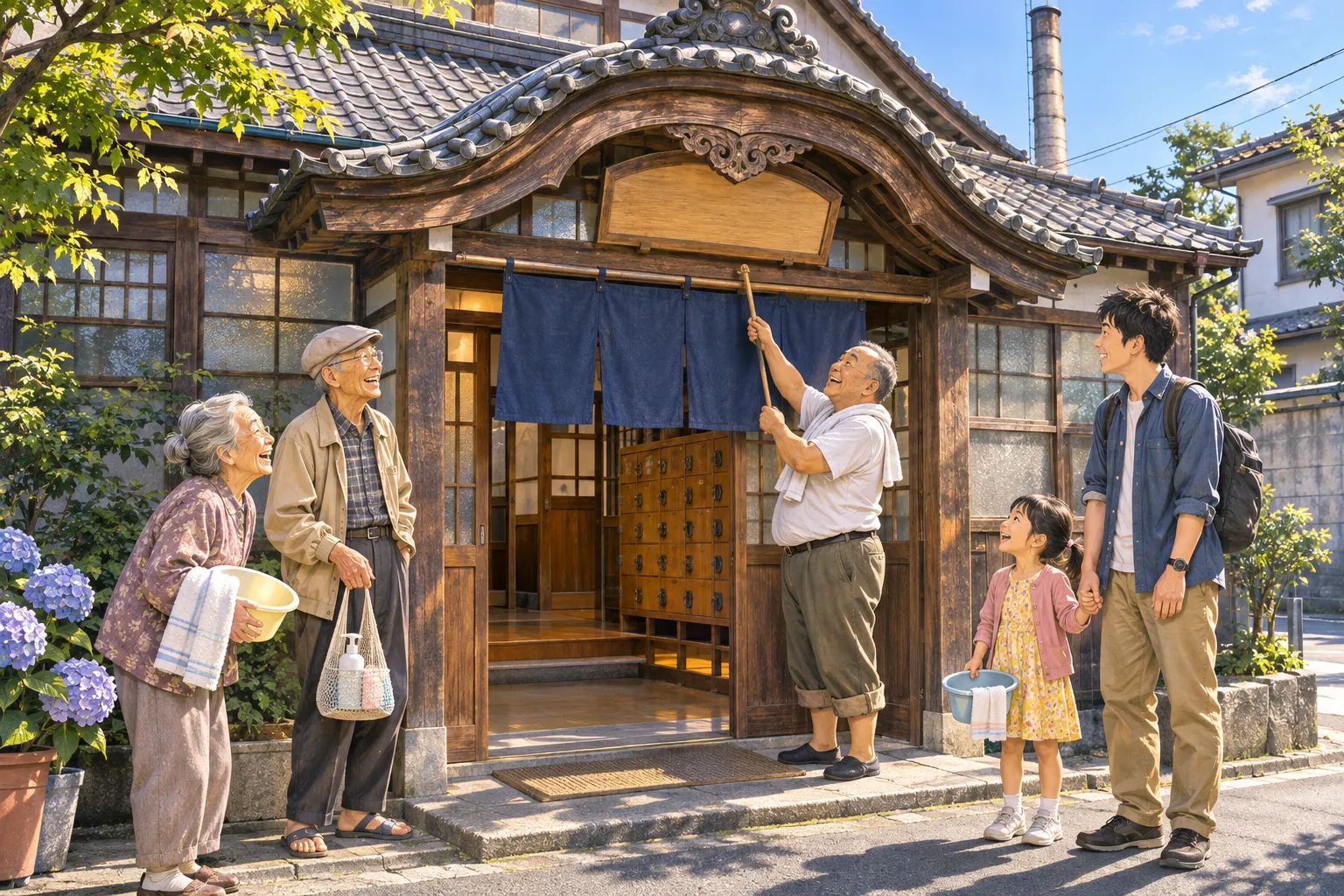
Illustration for the Japanese story The Last Bathhouse in the Neighborhood

The last public bath in the neighborhood, kept running for regulars who come for more than hot water.

Tap any word for its meaning and sound.

午ご後ご3時さんじ、入いり口ぐちにのれんが出でると、外そとで待まっていた常じょう連れん客きゃくが次つぎ々つぎに入はいっていく。東とう京きょうの古ふるい住じゅう宅たく地ちにあるこの銭せん湯とうは、90年ねん近ちかく、同おなじ場ば所しょで湯ゆを沸わかしてきた。かつてこの町ちょう内ないには銭せん湯とうが5軒けんあったが、今いまも営えい業ぎょうを続つづけているのはここだけだ。高たかい天てん井じょうと、壁かべいっぱいに描えがかれた富ふ士じ山さんの絵えは、建たてられた当とう時じのままだという。

At three in the afternoon, when the curtain goes up over the entrance, the regulars who have been waiting outside file in one after another. This public bathhouse, in an old residential part of Tokyo, has been heating its water on the same spot for nearly ninety years. There were once five bathhouses in this neighborhood, but this is the only one still in business. The high ceiling and the painting of Mt. Fuji that fills one wall are said to be just as they were when the place was built.

3代だい目めの主しゅ人じんは65歳さいで、毎まい朝あさ、ボイラーの点てん検けんと浴よく室しつの掃そう除じから仕し事ごとを始はじめる。

The owner, the third generation of his family to run it, is 65, and every morning his work starts with checking the boiler and cleaning the bathing rooms.

「体からだはきついけれど、のれんが出でるのを待まっている人ひとの顔かおが浮うかぶと、休やすめないんですよ。」

"It's hard on the body, but when I picture the faces of the people waiting for the curtain to go up, I just can't take a day off."

銭せん湯とうが減へり始はじめたのは、風ふ呂ろのある家いえが当あたり前まえになってからだ。客きゃくが減へる一いっ方ぽうで、燃ねん料りょうの値ね段だんは上あがり、古ふるい設せつ備びの修しゅう理りにも多おおくの費ひ用ようがかかる。後継あとつぎが見みつからないまま、主しゅ人じんの引いん退たいをきっかけに営えい業ぎょうをやめる銭せん湯とうも少すくなくない。

Bathhouses began to disappear once it became normal for homes to have their own baths. While customers keep dwindling, fuel prices go up, and repairing old equipment costs a great deal. Quite a few bathhouses, unable to find a successor, close for good when the owner retires.

それでも銭せん湯とうに通かよい続つづける人ひとがいるのは、広ひろい風ふ呂ろが気き持もちいいからだけではない。一人ひとり暮ぐらしの高こう齢れい者しゃにとって、ここは毎まい日にちだれかと言こと葉ばを交かわせる貴き重ちょうな場ば所しょでもある。いつも来くる人ひとが何なん日にちも顔かおを見みせないと、主しゅ人じんや常じょう連れん客きゃくが心しん配ぱいして、様よう子すを見みに行いくこともある。

Still, the people who keep coming do so not only because a big bath feels good. For elderly people who live alone, it is also a precious place where they can exchange a few words with someone every day. When someone who always comes doesn't show up for several days, the owner or one of the regulars gets worried and sometimes goes to check on them.

最さい近きんは、新あたらしい客きゃくを呼よび込こむための工く夫ふうも広ひろがっている。古ふるい建たて物ものを生いかしながらサウナを新あたらしくしたり、ロビーで地じ元もとの牛ぎゅう乳にゅうやアイスを売うったり、音おん楽がくのイベントを開ひらいたりする銭せん湯とうが現あらわれた。この銭せん湯とうでも、去きょ年ねんから月つきに一いち度ど、小しょう学がく生せいが無む料りょうで入にゅう浴よくできる日ひを設もうけている。初はじめて来きた子こどもは、まず湯ゆの熱あつさに驚おどろき、それから自じ分ぶんの声こえが大おおきく響ひびくのを面おも白しろがるそうだ。

Lately, more and more bathhouses are finding inventive ways to draw new customers. Some have kept their old buildings while putting in new saunas, selling local milk and ice cream in the lobby, or holding music events. This bathhouse, too, has since last year set aside one day a month when elementary school children can bathe for free. Children who come for the first time are startled by how hot the water is, he says, and then delighted by how loudly their voices echo.

「うるさいと怒おこるお年とし寄よりもいますが、子こどもの声こえがしない銭せん湯とうはさびしいですからね。」

"Some of the older folks get angry about the noise, but a bathhouse with no children's voices is a lonely place, you know."

夜よる10時じを過すぎると、仕し事ごと帰がえりの会かい社しゃ員いんや学がく生せいが増ふえる。風ふ呂ろから上あがった客きゃくは、ロビーのいすで瓶びんの牛ぎゅう乳にゅうを飲のみながら、知しらない者もの同どう士しで天てん気きや野や球きゅうの話はなしをしている。家いえに風ふ呂ろがあるのに、わざわざお金かねを払はらって、他た人にんと同おなじ湯ゆにつかる。考かんがえてみれば不ふ思し議ぎな習しゅう慣かんだが、そこには家いえの風ふ呂ろでは得えられないものがあるに違ちがいない。町まちから銭せん湯とうが消きえるとき、失うしなわれるのは風ふ呂ろだけではないのだろう。

After ten at night, more office workers on their way home and students come in. Fresh out of the bath, customers sit in the lobby drinking milk from glass bottles, strangers chatting with each other about the weather and baseball. They have baths at home, and yet they go out of their way to pay money and soak in the same water as other people. It is a curious custom when you think about it, but there must be something here that a bath at home cannot give. When a bathhouse vanishes from a neighborhood, it is surely not only a bath that is lost.

午ご前ぜん0時れいじ、主しゅ人じんはのれんを下おろし、だれもいなくなった浴よく室しつの床ゆかをまた磨みがき始はじめた。

At midnight, the owner took down the curtain and began once again to scrub the floor of the empty bathing room.

Check your understanding

3 questions about “The Last Bathhouse in the Neighborhood”. Tap an answer to check it.

1. この町ちょう内ないで、今いまも営えい業ぎょうしている銭せん湯とうはいくつあるか。

2. 一人ひとり暮ぐらしの高こう齢れい者しゃにとって、この銭せん湯とうはどんな場ば所しょか。

3. 主しゅ人じんは、子こどもの声こえについてどう考かんがえているか。

Words in this story

The first 40 of 192 different words in “The Last Bathhouse in the Neighborhood”, in the order you meet them, in dictionary form, with reading and English. Particles are left out.

WordReadingMeaning
午ご後ごごごafternoon; p.m.
三さん時じさんじ3 o'clock; afternoon snack (eaten around 3 o'clock) …
入いり口ぐちいりぐちentrance; entry; gate; approach; mouth
のれんのれん(short) curtain hung at shop entrance; split curtain used to divide spaces in a house …
出でるでるto leave; to exit; to go out; to come out; to get out
ととif; when; and; as well as; with
外そとそとoutside; exterior; the open (air); other place; somewhere else
待まつまつto wait; to await; to look forward to; to anticipate; to depend on
常じょう連れんじょうれんregular customer; regular patron; regular visitor; frequenter; constant companion
客きゃくきゃくguest; visitor; customer; client; shopper
次つぎ々つぎつぎつぎin succession; one by one
入はいるはいるto enter; to come in; to go in; to get in; to arrive
東とう京きょうとうきょうTokyo
古ふるいふるいold; aged; ancient; antiquated; antique
住じゅう宅たく地ちじゅうたくちhousing district; residential district
あるあるto be; to exist; to live; to have; to be located
このこのthis; last (couple of years, etc.); these; past; this
銭せん湯とうせんとうpublic bath; bathhouse
九きゅう十じゅうきゅうじゅうninety; 90
年ねんねんyear; counter for years (e.g. of an era), grades (e.g. school) …
近ちかくちかくnear; neighbourhood; neighborhood; vicinity; nearly (e.g. "it took nearly one year")
同おなじおなじsame; identical; equal; alike; equivalent
場ば所しょばしょplace; location; spot; position; area
湯ゆゆhot water; hot bath; hot spring; molten iron
沸わかすわかすto boil; to heat (a liquid); to prepare (a bath, hot drink); to excite; to rouse
かつてかつてonce; before; formerly; ever; former
町ちょう内ないちょうないneighborhood; neighbourhood; street; block; town
五ごごfive; 5
軒けんけんcounter for buildings (esp. houses); suffix for a pen name, stage name, etc.
今いまいまnow; the present time; just now; soon; immediately
営えい業ぎょうえいぎょうbusiness; trade; operations; sales
続つづけるつづけるto continue; to keep up; to keep on; to continue ...; to keep on ...
ここここhere; this place; this point; here; now
だだbe; is
高たかいたかいhigh; tall; expensive; high-priced; high (level)
天てん井じょうてんじょうceiling; ceiling (e.g. of share price); ceiling price
壁かべかべwall; partition; barrier; obstacle; hindrance
一いっ杯ぱいいっぱいone cup (of); one glass (of); one bowl (of); cupful; glassful
描えがくえがくto draw; to paint; to sketch; to depict; to describe
富ふ士じ山さんふじさんMount Fuji; Mt. Fuji; Fujiyama; Fuji-san

Readings and meanings are adapted from JMdict and KANJIDIC2, property of the Electronic Dictionary Research and Development Group, used under its licence (CC BY-SA 4.0). Still learning the kana? See the hiragana chart and the katakana chart.

Keep reading

This is one of the free stories in Japanese reading practice. In the Literate Japanese app every word you tap is saved for review, a natural Japanese voice reads each sentence, and the next story is matched to the kanji you know. The app is coming soon to iOS and Android.

Read your way to 300 kanji

Literate Japanese has 280+ graded stories from kana-only to estimated N2, with furigana you can turn off, every word one tap away, and flashcards built from what you read. The 60-chapter Reading Trail to your first 300 kanji is free. Coming soon to iOS and Android.

Email me when it launches

Start today in the browser: read a free Japanese story →