
The Painter and the Horse-Tiger
Story behind the idiom 馬馬虎虎 - horse horse tiger tiger
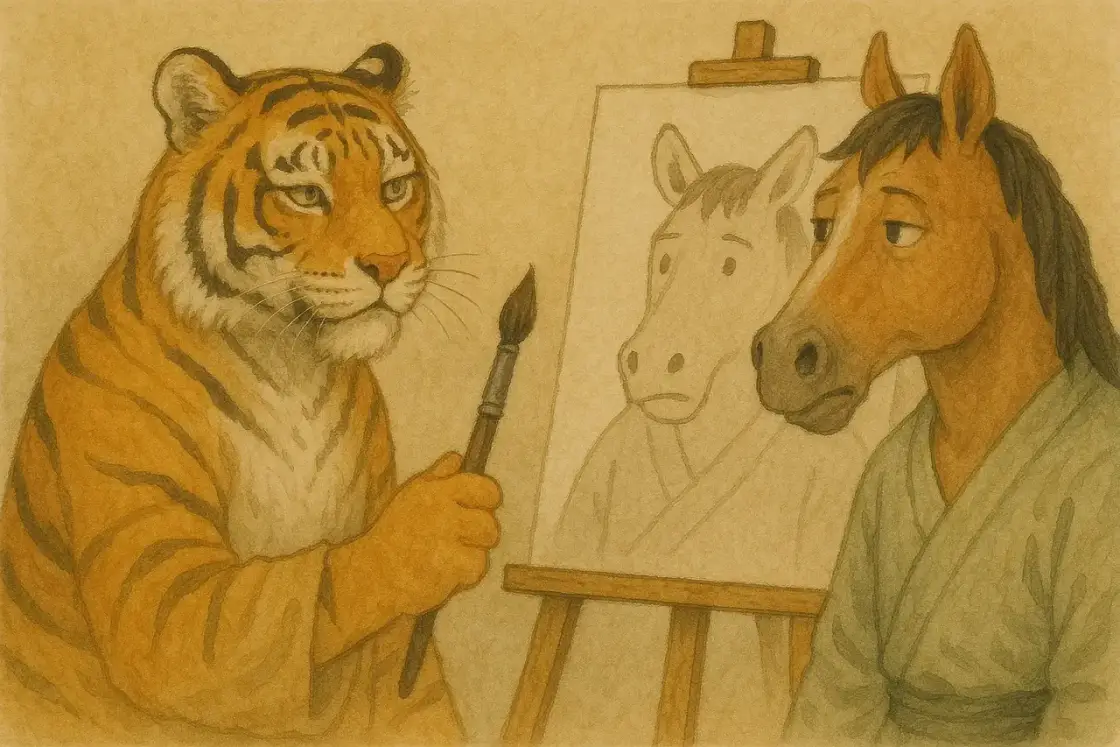
从前有一位画家,他擅长画动物。Once upon a time, there was a painter who was good at painting animals.
有一天,他正在画一只老虎,画到一半的时候,另一个人来请他画一匹马。One day, while he was painting a tiger and had painted half of it, another person came to ask him to paint a horse.这位画家不想重新画,就在原来那幅老虎画上加了马的耳朵和蹄子,试图让这幅画同时看起来像马又像老虎。The painter did not want to start over, so he added horse ears and hooves to the original tiger painting, trying to make it look like both a horse and a tiger at the same time.
后来,他的儿子看到这幅画后搞不清楚那是马还是老虎。Later, his son saw the painting and could not figure out whether it was a horse or a tiger.有一天,儿子在野外遇到了一只真正的老虎,以为那是马,结果被老虎吃掉了。One day, the son encountered a real tiger in the wild and thought it was a horse, and as a result, he was eaten by the tiger.
画家非常后悔,从此以后人们用「马马虎虎」来形容做事不认真、草草了事,可能会带来严重后果。The painter was very regretful, and from then on, people used '馬馬虎虎' to describe doing things carelessly or half-heartedly, which could lead to serious consequences.
「马马虎虎」这个成语的意思,就是形容事情做得不够仔细、态度不认真,有时也可以指一般般、还过得去。The idiom '馬馬虎虎' means to describe doing things not carefully enough, with a lack of seriousness, and sometimes it can also mean something is just so-so or passable.例如,有人问你今天的考试怎么样,你可能会说:「马马虎虎吧,不难也不简单。」意思是成绩可能不会太差,但也没特别好。For example, if someone asks you how your exam was today, you might say: '馬馬虎虎吧, not too hard, not too easy,' meaning your score might not be too bad, but also not particularly good.这个成语提醒我们,做事情不能随便,否则可能会带来不好的后果。This idiom reminds us that we should not be careless in doing things, otherwise it may lead to bad consequences.
Want to read along with audio? Every story in the Literate Chinese app is narrated by a native speaker — in Mainland or Taiwan Mandarin — so you can listen while you read, and tap any word to save it as a flashcard. See what's in the app.