
Breaking Pots and Sinking Boats
Story behind the idiom: 破釜沉舟 - to break the cauldrons and sink the boats.
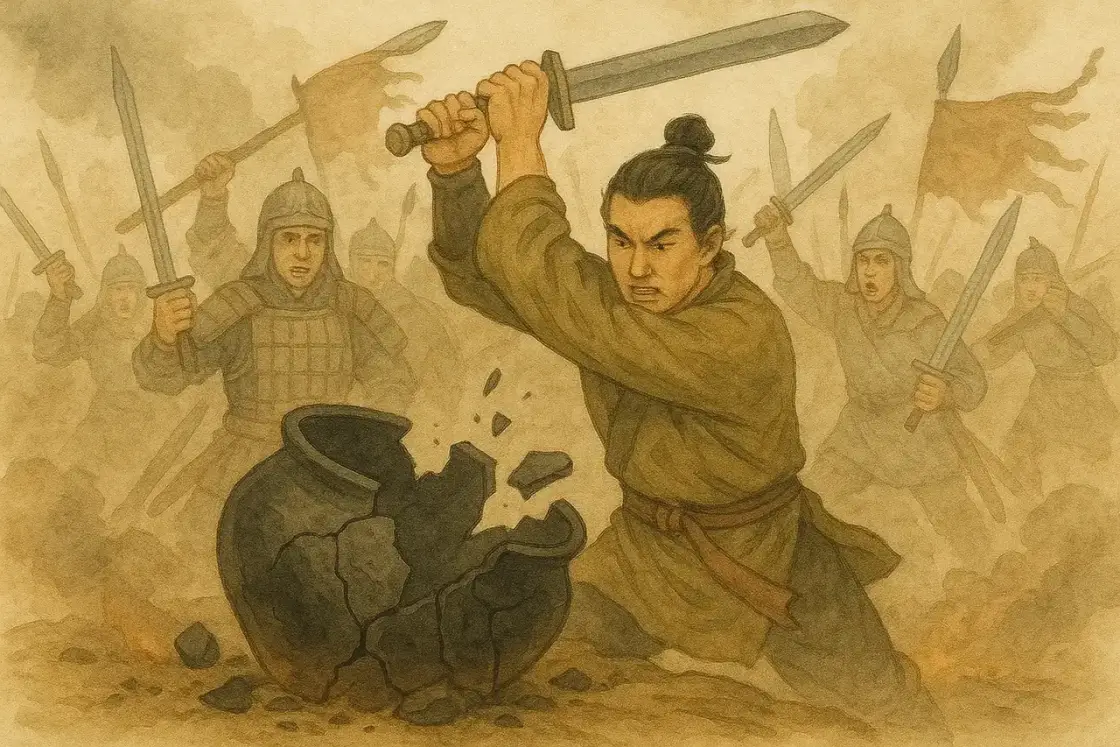
很久以前,在古代中国,勇敢的将军项羽带着士兵渡过宽阔的江河。A long time ago, in ancient China, the brave general Xiang Yu led his soldiers across the wide river.大家站在对岸,看着前方整齐排队的敌军,心里不免害怕——如果打败了,就再也回不了家。Everyone stood on the opposite bank, looking at the enemy's neatly lined troops in front, and couldn't help but feel afraid—if they were defeated, they would never be able to return home.
深夜,项羽举刀高喊:「破釜沉舟!」Late at night, Xiang Yu raised his saber and shouted: "Break the cauldrons and sink the boats!"士兵们互相看着:锅子是煮饭用的,船是回家的工具,如果砸锅、沉船,还怎么活?The soldiers looked at each other: the cauldrons were for cooking, the boats were for going home; if they smashed the cauldrons and sank the boats, how could they survive?不过他们知道将军的意思,于是开始动手:有人抬起沉重的铁锅砸在岩石上,有人一起把木船推进江里,让它翻覆、沉没。But they understood the general's meaning, so they began to take action: some lifted heavy iron cauldrons and smashed them on the rocks, others pushed the wooden boats into the river together, letting them capsize and sink.当最后一艘船沉到江中心,大家明白,退路没了,只能向前。When the last boat sank to the center of the river, everyone understood that there was no retreat, only to move forward.
天亮后,风呼呼吹,战鼓隆隆响。After dawn, the wind blew fiercely, and the war drums thundered.没有退路的士兵拔刀冲上去,刀光像闪电,喊声震天。The soldiers with no retreat drew their sabers and charged forward, their blade lights like lightning, their shouts shaking the sky.他们都知道:胜利是唯一的出路。They all knew: victory was the only way out.打到黄昏,项羽终于大破敌军,凯旋回营。Fighting until dusk, Xiang Yu finally defeated the enemy army and returned to camp in triumph.
从此,「破釜沉舟」就成了下定决心、不留后路的代名词。From then on, "breaking the cauldrons and sinking the boats" became a synonym for making up one's mind and leaving no way back.就像莎拉辞掉稳定工作,卖掉汽车,全心经营自己的烘焙坊——她也是真正地破釜沉舟,只能往前,没有回头。Just like Sarah, who quit her stable job, sold her car, and wholeheartedly ran her own bakery—she truly broke the cauldrons and sank the boats, only able to move forward, with no turning back.
Want to read along with audio? Every story in the Literate Chinese app is narrated by a native speaker — in Mainland or Taiwan Mandarin — so you can listen while you read, and tap any word to save it as a flashcard. See what's in the app.