
Sai Weng Loses His Horse
Story behind the idiom: 塞翁失马,焉知非福 - Misfortune may be blessing in disguise
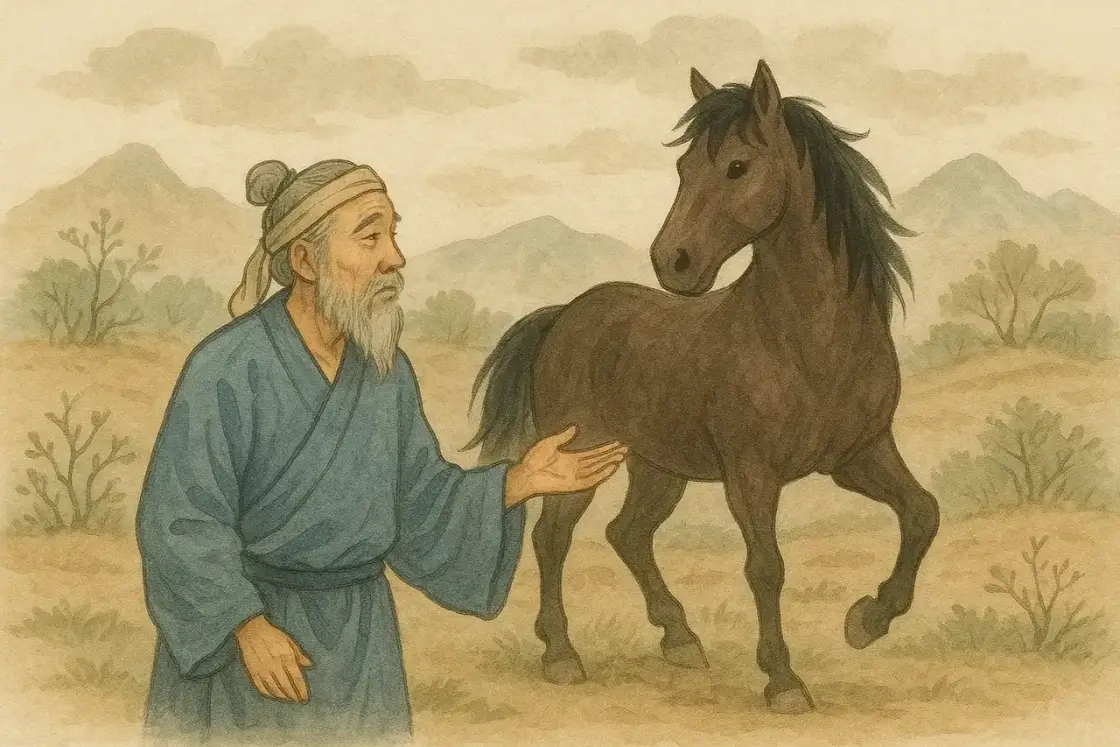
很久以前,在中国的边境,有一个老人叫塞翁。Long ago, at China's border, there lived an old man named Sai Weng.他养了一匹马。He owned a horse.一天,这匹马突然跑到山里去了,不见踪影。One day, the horse suddenly ran into the mountains and disappeared.邻居们听说后,都来安慰他:“你丢了马,真是不幸啊!”When neighbors heard, they came to comfort him: 'Losing your horse is terrible luck!'
但塞翁平静地说:“谁知道呢?也许这会变成好事。”But Sai Weng calmly said: 'Who knows? This might turn out well.'
没过几天,塞翁的马回来了,还带回一匹漂亮的野马。Days later, the horse returned with a beautiful wild horse.邻居们赶来恭喜他:“你真幸运啊!”Neighbors rushed to congratulate him: 'How lucky you are!'
塞翁只是微笑:“谁知道呢?也许这会带来麻烦。”Sai Weng smiled: 'Who knows? This might bring trouble.'
果然,塞翁的儿子骑那匹野马时,摔断了腿。Soon after, Sai Weng's son broke his leg while riding the wild horse.邻居们又来安慰他:“这真不幸!”Neighbors came again: 'This is so unfortunate!'
塞翁依旧平静:“谁知道呢?也许这会带来好处。”Sai Weng remained calm: 'Who knows? This might bring benefits.'
没多久,边境发生战争,所有年轻人都必须当兵,许多人再没回来。Soon war broke out. All young men had to fight, and many never returned.但塞翁的儿子因为受伤,留在家里,保住了性命。But Sai Weng's son stayed home safely because of his injury.
这个故事的成语叫“塞翁失马,焉知非福”,意思是:坏事可能变成好事,好事可能带来麻烦。This story's idiom '塞翁失马,焉知非福' means: Bad things may bring good results, and good things may bring trouble.例如,一个女生叫丽莎失去工作后,利用时间创业,最后非常成功。For example, Lisa lost her job but started a business during that time, eventually becoming very successful.这就是“塞翁失马”——看起来的坏事,结果却变好了。This shows how 'Sai Weng's lost horse' works - what seemed bad actually brought good results.
Want to read along with audio? Every story in the Literate Chinese app is narrated by a native speaker — in Mainland or Taiwan Mandarin — so you can listen while you read, and tap any word to save it as a flashcard. See what's in the app.