
HSK 2 Stories: 40 Free Short Stories with Pinyin & English
Every free story on this site at an estimated HSK 2 level (HSK 3.0): HSK 2 reading practice sorted easiest first and grouped by theme. Three are readable right on this page. Each one has pinyin, sentence translations, tap-to-look-up and a Simplified/Traditional switch, with no sign-up.
- 40free stories
- 499words through HSK 2
- 371characters through HSK 2
- 117characters in a typical story
繁 Prefer Traditional characters? Read this level in Traditional, with zhuyinTest yourself: HSK 2 reading comprehension
What HSK 2 reading looks like
At HSK 2, sentences get longer and start to carry time and sequence: 了 for finished actions, 过 for experiences, 在 for things happening right now, 比 comparisons, and modal verbs like 要, 想, 会 and 能. Vocabulary moves into routines, transport, food, weather and work. This is also where graded stories turn into real plots — a lost phone, a cooking contest, a first day at a new job — and many come as multi-part series you can follow.
- 499 words / 371 characters: everything in the 2026 HSK 3.0 lists through HSK 2.
- 117 characters in a typical story here (47–221), with sentences averaging 12.4 characters.
- 87% of the characters in these stories are among those 371 HSK 1–2 characters. Any word with an unfamiliar character is one tap away from its meaning.
- 570 different characters appear across all 40 stories, 5,035 characters of reading in total.
New to this level, or not sure you're at it? Try the beginner path (15 hand-picked stories in order), or take the 2-minute character test to see where you are.
Read 3 HSK 2 stories right now
Start with pinyin off and switch it on only if you get stuck. Tap any word for its meaning; turn on Translation to check yourself, then answer the quiz under each story. Your settings carry over to every story.
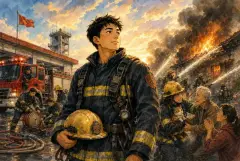
1Ā Róng's Day Begins (Part 1)
Firefighter Ā Róng starts his day early at the fire station.
今天早上,阿荣五点就起床。This morning, Ā Róng woke up at five.他洗脸、刷牙,然后吃了一点面包。He washed his face, brushed his teeth, and then ate some bread.
今天的天气很热,但是他还是要去工作。The weather was very hot today, but he still had to go to work.阿荣是一名消防员,他每天都很忙。Ā Róng is a firefighter, and he is busy every day.
他到消防队时,同事们已经在整理工具。When he arrived at the fire station, his coworkers were already organizing the tools.他们一起检查水管、头盔和制服。They checked the hoses, helmets, and uniforms together.
阿荣喜欢这份工作,因为他可以帮助很多人。Ā Róng likes this job because he can help many people.他想:今天应该会是平静的一天。He thought: today should be a peaceful day.
但他不知道,新的任务很快就要来了。But he didn't know a new mission would come soon.
Check your understanding
阿荣的工作是什么?
阿荣为什么喜欢这份工作?
阿荣到消防队时,同事们在做什么?

2The Frog in the Well
A frog at the bottom of a well is sure he knows how big the sky is. A little bird disagrees.
一只青蛙住在井里。A frog lived in a well.它每天从井里看天。Every day it looked at the sky from inside the well.它说:“天只有一点点大。”It said, "The sky is only a tiny bit big."
一只小鸟飞来,坐在井边。A little bird flew over and sat at the edge of the well.小鸟说:“不对,天很大很大。”The bird said, "That's not right. The sky is very, very big."
青蛙不相信,笑了起来。The frog did not believe it and started to laugh.小鸟说:“你跳出来看看吧。”The bird said, "Jump out and take a look."
青蛙跳出井,看到了很大的天。The frog jumped out of the well and saw the huge sky.它说:“原来我知道的太少了!”It said, "So I knew far too little!"
这个成语是“井底之蛙”。This idiom is "a frog at the bottom of a well."意思是:一个人看到的很少,懂的也很少。It means: a person who has seen very little and understands very little.例句:不要做井底之蛙,多出去看看吧!Example: Don't be a frog in a well — go out and see more!
Check your understanding
What did the frog think about the sky at first?
Who told the frog the sky was big?
What did the frog learn after jumping out?

3Xiao Bai's Night (Part 1)
Xiao Bai's Story: a stray cat finds a cardboard box, and a kind stranger.
小白是一只流浪猫,他走在安静的街上。Xiao Bai was a stray cat, walking down a quiet street.他正在找吃的,因为今天还没吃东西。He was looking for food, because he hadn't eaten anything all day.
路边有一个小餐厅,里面的人正在说话。There was a small restaurant by the road, with people talking inside.小白走过去,希望能找到一点饭。Xiao Bai walked over, hoping to find a little food.
餐厅外有一个纸盒,小白跳进去休息。Outside the restaurant was a cardboard box, and Xiao Bai jumped in to rest.天气有点冷,他把身体缩得小小的。The weather was a little cold, so he curled up into a small ball.
不多久,一个女孩走出来。Before long, a girl came out.她看见小白,轻轻说:“你饿了吗?”She saw Xiao Bai and said softly, "Are you hungry?"女孩放了一点饭在纸盒前。The girl put a little food in front of the box.小白慢慢走过去,心里变得暖暖的。Xiao Bai slowly walked over, and his heart grew warm.
Check your understanding
小白为什么在街上找吃的?
小白在餐厅外做了什么?
小白为什么心里暖暖的?
How to practice reading at HSK 2
- Follow a series instead of jumping around: characters, places and words repeat, so each part is easier than the last.
- Try a story without pinyin first. Turn it on only for the sentences that stop you.
- Use the translation toggle to check yourself after each paragraph, not before.
- Re-read a story you finished last week. Noticing how much faster it goes is the best motivation there is.
Grammar you will practice here
Patterns from our Chinese grammar guide that have a story on this page built around them:
- Verb + 过Past experiences with 过practiced in Grandpa's Map (Part 1)
- A + 没有 + B (+ 这么/那么) + Adj.Not as … as: 没有practiced in We Stop Comparing (Part 1)
- Subj. + 给 + Person + VerbDoing something for someone: 给practiced in Checking into a Hotel (Part 1)
- A + 离 + B + 近 / 远Distance with 离practiced in A Student's Morning (Part 1)
- 从 A 到 BFrom … to …: 从…到…practiced in A Busy School Day (Part 1)
- Verb + 得 + (很) Adj.How well? Verb + 得practiced in Playing Ball Together
- A 还是 B? / A 或者 BOr: 还是 vs 或者practiced in At the Pharmacy (Part 1)
- Verb + (了) + DurationHow long: duration after the verbpracticed in The Phone on the Bench (Part 1)
All 40 HSK 2 stories
Start with these 5
The five gentlest HSK 2 stories on this page that stand on their own, shortest and easiest first, each with a picture and a quick quiz.
- 1
 Playing Ball TogetherThe puppy is playing ball, and the kitten wants in. Who's faster?
- 2
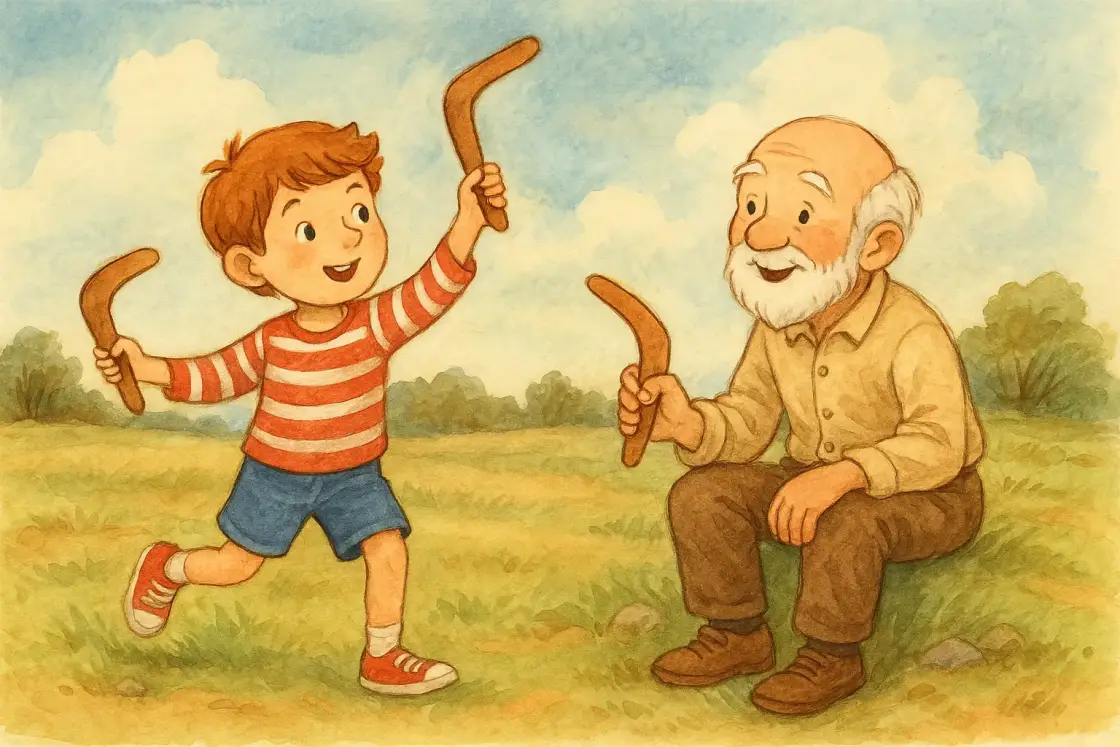 Benny and the BoomerangGrandpa says a boomerang always comes back. Benny's just keeps landing in the grass.
- 3
 Grandpa's Map (Part 1)Grandpa's Travels: a map covered in little red stars.
- 4
 We Stop Comparing (Part 1)A little sister and her big brother compare everything, and discover they each win at something.
- 5
 A Student's Morning (Part 1)A Day in the Life of a Student: Xiao Lin and his three alarms.
Grouped by theme and sorted from easiest to hardest within each group (by length and word difficulty). Parts of a series stay together and in order. Reading times are rough estimates at a comfortable HSK 2 pace.
Grammar in Context 13 stories
- Grandpa's Map (Part 1)小雨的爷爷家里有一张大地图。地图上有…
- The Old Photos (Part 2)爷爷拿出一本老相册。“这张照片是我在…
- We Stop Comparing (Part 1)哥哥比我大两岁。我没有他这么高。我跑…
- Morning Runs (Part 2)我和哥哥不比了,现在他教我跑步。每天…
 A Busy School Day (Part 1)从星期一到星期五,我都要上学。从我家…
 Learning to Swim (Part 2)我会画画,可是我不会游泳。星期六,哥…
 The Phone on the Bench (Part 1)星期天,小丁在公园跑步。他在长椅上看…
- Looking for Clues (Part 2)小丁看了看手机的屏幕。桌面的照片是在…
 Mom Knows Best (Part 1)明天我要一个人坐火车去看朋友,妈妈比…
 Back to Dad's City (Part 1)放假的时候,我跟爸爸回了他小时候住的…
 Who Ate the Cake? (Part 1)昨天晚上,我在冰箱里放了一块蛋糕,准…
 Little Habits (Part 1)我们家每个人都有一点自己的小习惯。爷…
 A Saturday of Choices (Part 1)星期六早上,我问弟弟今天想做什么。他…
Survival Chinese 7 stories
 Ordering at a Restaurant (Part 1)中午,李明和朋友走进一家小餐厅。服务…
- That's Not What We Ordered (Part 2)一个星期后,李明跟朋友又来到那家餐厅…
 Checking into a Hotel (Part 1)晚上八点,王小姐到了酒店。她对前台说…
- A Problem at Midnight (Part 2)半夜,王小姐醒了,房间里太冷了。空调…
 At the Pharmacy (Part 1)李明有点感冒,头疼,还咳嗽。他走进一…
- Seeing a Doctor (Part 2)三天过去了,李明的感冒还没有好。晚上…
 A Gift for Mom (Part 2)小美想给妈妈买一个生日礼物。周末,她…
AP Chinese Themes 11 stories
 Fish and Meat (Part 2)一个女孩从餐厅里走出来。她是小白的好…
- New Friends (Part 1)今天天气很好。小猫和小狗出去玩。他们…
 The Astronauts Come Home三个宇航员回家了。他们在太空住了八个…
- A New Home for the Pandas北京动物园有十只大熊猫。七月,熊猫们…
 The Kitten and Puppy Arrive (Part 2)约翰和小婷坐在餐厅外面。这时,一只小…
- A Walk on a New Street (Part 1)星期六,天气很好。约翰:我们带米饭去…
 Getting Ready (Part 2)爸爸妈妈明天就到了。今天,约翰和小婷…
 Lele Learns the House (Part 2)乐乐想帮忙做事。它先学扫地。它扫得又…
- Good News for Elephants在非洲,有一个很大很大的公园。这个公…
- The Frog in the Well一只青蛙住在井里。它每天从井里看天…
- The Robot Games这个月,北京有一个很特别的运动会。运…
Daily Life & Work 4 stories
- A Student's Morning (Part 1)小林是一名高中生。他早上六点半起床…
 An Engineer's Morning (Part 1)林工程师早上七点半起床。他在台北工作…
 A New Morning (Part 1)早上七点,奕翔起了个早。他洗脸、刷牙…
- Ā Róng's Day Begins (Part 1)今天早上,阿荣五点就起床。他洗脸、刷…
More Stories 5 stories

Key HSK 2 words in these stories
These are the HSK 2 words (HSK 3.0 list) that turn up most often across the stories on this page, so they are the ones worth knowing before you start — you'll see each of them again and again. Browse the full HSK 2 word list for everything else.
- 走zǒuto walkin 12 of 40 stories
- 就jiùthenin 12 of 40 stories
- 一起yī qǐtogetherin 7 of 40 stories
- 拿náto takein 7 of 40 stories
- 得deused after a verb to indicate degreein 7 of 40 stories
- 从從cóngfromin 6 of 40 stories
- 已经已經yǐ jīngalreadyin 6 of 40 stories
- 比bǐcompared toin 6 of 40 stories
- 跟gēnwithin 6 of 40 stories
- 快kuàifastin 6 of 40 stories
- 白色bái sèwhitein 5 of 40 stories
- 着著zhe(aspect particle) indicating ongoing actionin 5 of 40 stories
- 还是還是hái shiorin 5 of 40 stories
- 出来出來chū láito come outin 5 of 40 stories
- 开始開始kāi shǐto beginin 5 of 40 stories
- 跑pǎoto runin 5 of 40 stories
- 别別biédon'tin 5 of 40 stories
- 外面wài miànoutsidein 4 of 40 stories
- 过去過去guò qùthe pastin 4 of 40 stories
- 一会儿一會兒yī huìra whilein 4 of 40 stories
- 门口門口mén kǒudoorwayin 4 of 40 stories
- 进去進去jìn qùto go inin 4 of 40 stories
- 爷爷爺爺yé yepaternal grandfatherin 4 of 40 stories
- 教jiāoto teachin 4 of 40 stories
More HSK 2 stories, with audio, in the app
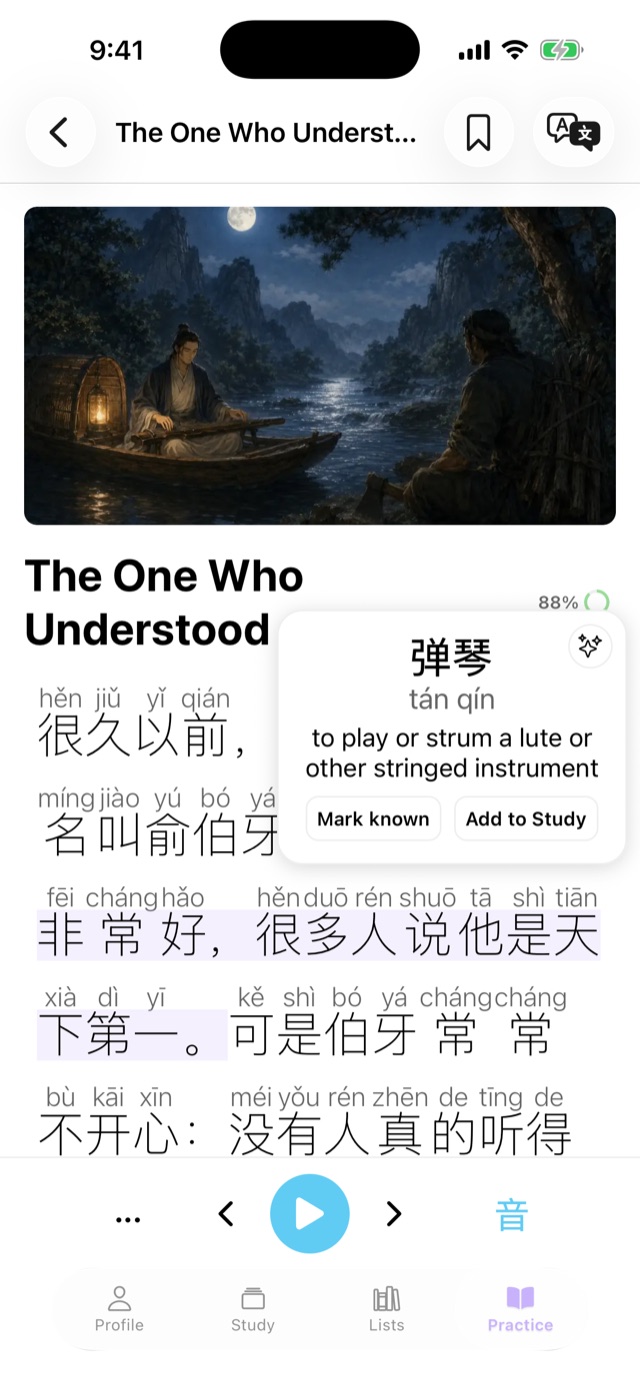
The Literate Chinese app has 209 more stories at this estimated level beyond the 40 here, out of 1,000+ graded stories in total. It doesn't sort them by HSK band, though: it tracks the words you actually know and shows how familiar each story is, so you can pick ones that are just hard enough.
Every story is narrated by native speakers in Mainland or Taiwan Mandarin, in Simplified or Traditional characters, and any word you tap can become a flashcard.


Frequently asked questions
How many characters do I need for HSK 2 reading?
The 2026 HSK 3.0 syllabus has 499 words through HSK 2, written with 371 different characters. You can start these stories well before you know them all: 87% of the characters in the 40 stories on this page are HSK 1–2 characters, and you can tap any word for a definition.
Is HSK 2 reading hard?
It is the level where reading starts to feel like reading. HSK 2 stories are three to five times longer than HSK 1 dialogues, so the challenge is stamina, not grammar. If a story feels slow, that is normal; the second story in a series is always easier than the first because the names and setting repeat.
How long are HSK 2 reading passages?
The 40 stories here run from 47 to 221 characters, with a typical story of about 117 characters and sentences averaging 12.4 characters. Together they add up to 5,035 characters of reading at this level.
Can I read these stories in traditional characters?
Yes. Every story has a 简/繁 switch at the top; it changes the whole text to traditional characters and remembers your choice. There is also a Traditional version of this page, with a zhuyin option, and more on traditional reading practice.
Do the stories have audio?
In the browser you can hear any single word with your device's voice from the tap-to-define card. Full narration by native speakers, in Mainland or Taiwan Mandarin, is in the free Literate Chinese app.
Also useful: Not sure of your level? Take the 2-minute character test · HSK 2 word list · HSK 2 stories in Traditional · HSK 2 reading comprehension · All Chinese reading practice